Literature & Poetry
Writing fiction or poetry demands more than inspiration—it requires deliberate craft. Whether you’re constructing an intricate fantasy realm, weaving multiple storylines through a thriller, or wrestling with iambic pentameter, certain principles separate amateur work from publishable manuscripts.
This category explores the full journey from initial draft to final publication and beyond. You’ll find practical guidance on building believable fictional worlds, structuring complex narratives, understanding poetic form, approaching literary agents, and adapting written work for screen. Each topic addresses specific challenges that cause manuscripts to stall or face rejection.
The articles gathered here draw on patterns observed across thousands of submissions, competition entries, and adaptation projects. Rather than offering abstract theory, they tackle precise problems: why a magic system fails to convince readers, how subplots become distractions, what makes certain query letters land in rejection piles. Consider this your map to the interconnected skills every serious writer must develop.
Building Fictional Worlds That Feel Authentically Lived-In
Creating a fantasy or science fiction setting involves far more than drawing maps and inventing names. Readers sense immediately when a world functions like a genuine society versus a themed backdrop for action scenes. Think of your fictional world as an iceberg—readers see only ten percent, but the submerged ninety percent must exist for that visible portion to feel solid.
Economics, Religion, and Daily Life
Convincing worlds require invisible infrastructure. How does your magic system affect trade? Who grows the food while heroes quest? Fictional religions feel authentic when they influence behaviour beyond ceremonial scenes—shaping taboos, calendar systems, and social hierarchies without directly copying existing faiths.
Consider building outward from practical questions:
- What resources does magic consume, and who controls them?
- How do ordinary people interact with supernatural elements?
- What conflicts arise from competing belief systems?
- Which social classes benefit from the status quo?
The History Lesson Trap
Many manuscripts lose readers through lengthy exposition. Reader behaviour studies reveal that dense historical prologues spanning several pages cause significant drop-off—sometimes losing up to forty percent of readers before the story properly begins. The solution involves weaving backstory through action, dialogue, and environmental details rather than front-loading information.
Map First or Story First?
World-builders divide into cartographers who design geography before characters, and story-first writers who discover settings through plot needs. Neither approach guarantees coherence—what matters is systematic revision that reconciles both elements before submission. A story bible, whether created before drafting or developed during revision, helps maintain consistency across complex narratives.
Structuring Complex Narratives Without Losing Readers
Plot architecture determines whether your novel feels propulsive or chaotic. This challenge intensifies with multiple viewpoints, intercut timelines, or elaborate subplot webs. Structure isn’t a cage constraining creativity—it’s the skeleton that allows your story to stand upright.
Making Subplots Earn Their Place
Secondary storylines should illuminate the main narrative rather than distracting from it. When a B-plot feels unrelated—perhaps a sister’s storyline in a murder mystery—the problem typically lies in missing thematic or causal connections. Every subplot must alter how readers understand the central conflict.
Test each subplot by asking: if removed entirely, would the main story collapse? If nothing changes, either strengthen the connection or cut the thread.
Viewpoint and Timeline Decisions
Choosing between single perspective and multiple voices shapes every other structural decision. A 100,000-word thriller might benefit from tight focus or panoramic scope depending on where tension originates. Five perspectives suit stories where dramatic irony—readers knowing what characters don’t—drives suspense.
Narratives spanning different time periods require clear markers and purposeful juxtaposition. If readers need a flowchart to follow your structure, simplification is necessary. Each timeline shift should create meaning through contrast or revelation, not merely display cleverness.
Planning Versus Discovery
Writers differ on whether detailed chapter outlines improve their work. Planners gain structural clarity; discovery writers access spontaneity. Most successful novelists develop hybrid approaches, loosely outlining major beats while allowing scene-level improvisation. The critical insight: either method requires revision to identify plot threads that resolve too early and drain remaining tension.
Poetry: Why Form Still Matters in a Free Verse Era
Contemporary poets often question whether traditional techniques remain relevant. Yet understanding metre, rhyme, and fixed forms strengthens all poetry—including free verse. Form provides tools, not constraints; mastering them expands your choices rather than limiting them.
The Memorability Question
Children remember nursery rhymes decades later while prose passages fade within hours. This phenomenon reveals something fundamental about how rhythm and sound pattern aid retention. Free verse that ignores these tools often lacks the staying power of metrically informed work, regardless of its intellectual sophistication.
Internalising Metre
Mastering iambic pentameter or other traditional patterns requires practice, not just study. Brief daily exercises—perhaps fifteen minutes of reading formal verse aloud, tapping rhythms, writing imitations—build intuitive understanding within weeks. Once internalised, these patterns become available for strategic variation rather than accidental stumbling.
Strategic Variation in Contemporary Sonnets
The strongest contemporary formal poetry balances predictable patterns with purposeful disruption. Metronomic regularity quickly bores sophisticated readers; constant variation dissolves form’s advantages entirely. Skilled poets establish expectations, then break them at emotionally significant moments—like a jazz musician who knows the standards well enough to improvise around them.
Competition judges frequently cite clumsy rhyming couplets as reasons for rejection, even when surrounding work shows promise. Technical control must serve emotional truth.
Navigating Literary Publishing
Beautiful writing alone doesn’t guarantee publication. Understanding agent expectations and submission strategy significantly improves your chances of moving from desk drawer to bookshelf.
Why Workshop Praise Doesn’t Ensure Agent Interest
Writing groups evaluate craft differently than literary agents. Workshops often reward experimental prose, while agents must consider commercial viability alongside literary merit. Manuscripts praised in workshops may lack the pacing, voice consistency, or hook that attracts professional representation.
Query Letters That Work
Effective queries demonstrate both literary quality and market awareness without making grandiose comparisons. Claiming your novel reads like the work of a recently prominent author typically triggers immediate rejection—agents recognise this as both presumptuous and vague. Instead, describe your book’s specific appeal: its premise, protagonist, and stakes.
Key query elements include:
- A compelling hook establishing premise and stakes
- Brief contextual positioning within your genre
- Relevant credentials without padding
- Professional tone throughout
Timing and Publisher Pathways
Agent reading patterns follow predictable rhythms. August holidays and post-holiday backlogs in early January mean slower response times. Major publishing imprints and independent presses offer different advantages—large publishers provide advances and distribution; smaller presses may offer more editorial attention and longer backlist commitment.
Adapting Literature for Screen
Translating novels to film or television presents challenges distinct from original screenwriting. Different media privilege different storytelling tools, and fidelity to source material doesn’t guarantee successful adaptation.
The Voiceover Problem
Cinema struggles to convey rich interior consciousness that novels handle effortlessly. Adapting a protagonist’s complex inner life often tempts writers toward voiceover—yet excessive narration creates the feeling of someone simply reading the book aloud. Successful adaptations externalise internal states through action, dialogue, and visual metaphor.
Compression, Format, and Documentary Challenges
A four-hundred-page novel compressed into ninety minutes requires ruthless decisions. Scene-by-scene fidelity has caused expensive adaptation failures; capturing essence matters more than replicating plot. Complex character studies may suit six-part series better than feature films, allowing gradual development that two hours cannot accommodate.
Documentary filmmakers face parallel challenges when seeking broadcast homes. Even festival-winning work fails to find distribution when it lectures rather than engages, or when production approaches mismatch broadcaster preferences—whether observational or interview-led styles.
The disciplines explored across this category—world-building, narrative structure, poetic form, publishing strategy, and adaptation—represent interconnected skills rather than isolated specialisms. Strengthening one area often illuminates others: understanding why subplots fail improves world-building integration; recognising metre’s power enhances prose rhythm. Approach each article as part of a larger education, returning to subjects as your work evolves.

From Festival Laurels to Broadcast Deals: Cracking the Code of the UK Documentary Market
Your festival awards are currency, not a sales contract. Broadcasters reject beautiful, important films because they don’t solve a specific commercial problem. A commissioner’s primary job is to manage risk and fill a specific programming slot, not to acquire « good…
Lire la suite
Why Does Your Novel Adaptation Feel Like Someone Reading the Book Aloud?
Great adaptation is not about faithfully transcribing plot, but about a radical translation of emotional DNA into the specific language of film or audio. Embrace compression not as a loss, but as a strategic tool for thematic focus. Translate a…
Lire la suite
Why Do Literary Agents Reject Manuscripts That Win Workshop Praise?
The hard truth is that literary agents don’t reject beautiful writing; they reject manuscripts that fail to present a viable business case. Your writing workshop praises your art, but an agent’s job is to evaluate your manuscript as a commercial…
Lire la suite
Why Does Your Free Verse Lack the Memorability of Formal Poetry?
Contrary to the belief that metre is a creative straitjacket, it’s actually a cognitive technology for engineering resonance and memory in your reader’s mind. Metrical patterns create a « cognitive scaffold » that makes language neurologically pleasing and far easier to remember…
Lire la suite
Subplot Architecture: How to Stop Distracting Readers and Build a Resonant Narrative
The solution to disconnected subplots isn’t about finding more « connections, » but about designing them as integral, load-bearing components of a single narrative structure from the outset. Subplots must be causally integrated, meaning their events directly force decisions and consequences within…
Lire la suite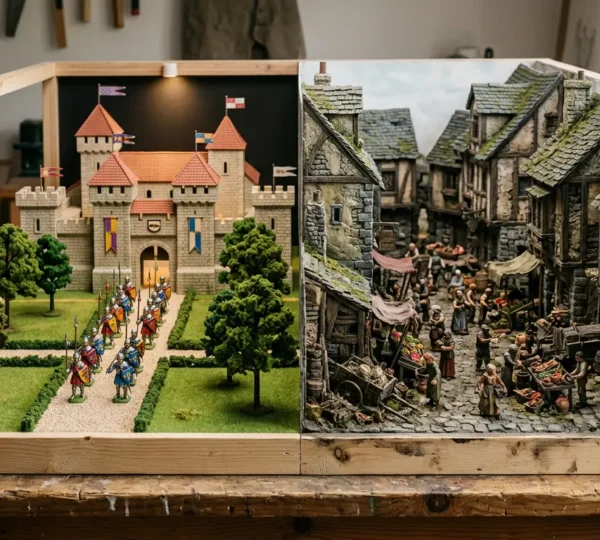
Why Does Your Fantasy World Feel Like a Medieval Theme Park Instead of a Living Society?
Many writers believe detailed maps, histories, and magic systems create a believable world. In reality, this often builds a lifeless theme park. True believability comes from the consequences of your world’s systems, not the systems themselves. Subplots and secondary characters…
Lire la suite