Crafts & Craftsmanship
The difference between a piece of furniture that commands £5,000 at a London gallery and one that gathers dust in a charity shop often comes down to craftsmanship—that intangible quality where skill, material knowledge, and decades of practice converge. Whether you work with wood, clay, metal, or textiles, understanding the principles that separate amateur work from professional-grade making can transform both your creative output and your livelihood.
Craftsmanship encompasses far more than technical competence. It involves understanding why Georgian joiners achieved results that still outshine modern equivalents displayed at the V&A, why a hand-planed surface catches light differently than machine-sanded wood, and why interior designers willingly pay £2,000 for a vase they could source for £200 elsewhere. These questions touch on material science, historical technique, business acumen, and the philosophical debate about what handmade truly means in an era of CNC routers and digital fabrication.
This resource explores the essential dimensions of contemporary craft practice: from mastering traditional techniques to sourcing sustainable materials, from pricing your work appropriately to preserving skills for future generations. Whether you are establishing your first workshop or refining a practice developed over decades, the insights gathered here address the real challenges facing makers today.
Why craftsmanship commands premium prices in a mass-produced world
When customers hesitate to pay £300 for a bowl that took fifteen hours to make, they are often comparing your work against factory-produced alternatives without understanding the fundamental differences. The value of craftsmanship lies not merely in the time invested, but in the accumulated knowledge that informs every decision—from selecting a board with optimal grain orientation to knowing precisely when humidity conditions favour final lacquer coats.
Interior designers working with top London firms recognise this distinction immediately. They specify handcrafted pieces not for exclusivity alone, but because skilled makers solve problems that mass production cannot address: precise dimensions for awkward spaces, finishes that reference specific historical periods, or forms that respond to a particular architectural context. A signature glaze developed over years of kiln experimentation carries provenance that limited editions simply cannot replicate.
Collectors, too, perceive differences that extend beyond visual inspection. Research consistently demonstrates that people can feel the difference between hand-carved and CNC-cut wood, even without seeing the piece. This tactile dimension—the subtle irregularities that evidence human touch—creates emotional connection that justifies premium positioning. The challenge for makers lies in communicating this value effectively, ensuring that project briefs and client conversations convey the expertise embedded in every finished object.
Technical mastery: materials, methods, and finishing
Excellence in craft demands intimate knowledge of materials and the techniques that reveal their potential. This understanding separates competent work from truly exceptional making.
Understanding material behaviour
Every material possesses characteristics that reward careful study. Woodworkers learn why English oak sourced directly from woodland owners behaves differently from timber merchant stock, and why reclaimed pitch pine outperforms new Douglas fir for certain load-bearing applications. Ceramicists understand how kiln temperatures interact with glaze chemistry, while painters discover why cold wax medium holds knife marks differently than alkyd alternatives over extended periods.
Material knowledge also encompasses hidden risks. An estimated 30% of reclaimed timber sold through UK salvage yards contains lead paint layers requiring careful handling. The drying rule violations that destroy heavy impasto paintings within two years stem from misunderstanding oil paint chemistry. These technical foundations protect both maker and client from costly failures.
Historical techniques meeting modern needs
Georgian furniture techniques are appearing in cutting-edge London design studios precisely because historical methods solve problems that modern approaches cannot. Hand-cut dovetailing looks different from CNC-routed joints even to untrained eyes—the subtle variations in angle and spacing create visual rhythm that algorithms struggle to replicate.
Studying V&A collection pieces allows makers to reverse-engineer eighteenth-century joints, while guild records often teach joinery fundamentals more effectively than modern textbooks. The investment of two hundred hours in historical technique pays dividends throughout a career, though timing matters: some makers benefit from early immersion, while others find commercial stability provides better conditions for deep study.
Surface finishing and detail work
A hand-planed surface reflects light differently than machine-sanded wood because the blade severs fibres cleanly rather than abrading them. Achieving a mirror finish with a hand plane requires approximately fifty hours of dedicated practice, but the resulting surface accepts finishes more evenly and displays figure more dramatically.
Finishing choices carry long-term consequences:
- Shellac matches Georgian furniture patina more accurately than water-based lacquers
- Filler shortcuts make oak projects resemble cheap pine within two years
- Final lacquer coats applied during summer humidity or after heating season produce different results
These details distinguish professional work from amateur attempts, building reputation through objects that improve with age rather than deteriorating.
Sourcing materials sustainably and economically
UK makers currently pay approximately 40% more for certified sustainable timber than European counterparts, creating pressure to balance environmental responsibility with commercial viability. Understanding sourcing strategies helps makers maintain margins while upholding ethical standards.
Direct relationships with woodland owners can reduce English oak and ash costs by 25% compared to merchant pricing. Timing purchases strategically—stockpiling after storm damage sales or during winter felling gluts—further improves economics. However, loyalty to single timber merchants may cost makers 15% more than necessary; diversifying suppliers while maintaining quality relationships offers better value.
Environmental considerations extend beyond materials to workshop operations:
- Solar panels versus green electricity tariffs present different cost-benefit profiles for kiln-intensive studios
- Solvent disposal shortcuts that violate UK environmental regulations create legal and ethical risks
- Material specifications for public installations must account for UK weather conditions and potential vandalism
Sustainable practice increasingly influences collector and designer purchasing decisions, making environmental credentials a commercial asset rather than merely an ethical obligation.
Building a sustainable craft business
Technical excellence alone does not guarantee commercial success. Approximately 70% of UK pottery workshops close within three years of opening, often despite the owner’s considerable skill. Understanding business fundamentals proves equally important as mastering craft techniques.
Pricing and production economics
When kiln firing costs £45 per load, pricing must account for energy, materials, studio overhead, and appropriate compensation for skilled labour. Many makers undercharge because they calculate only material costs, ignoring the years of training embedded in their expertise. Skilled woodworkers frequently earn less than plumbers despite longer training—a market failure that strategic positioning can address.
Batch production offers one solution. Producing ten dining tables simultaneously preserves handmade aesthetic while achieving economies that individual commissions cannot match. The decision to purchase CNC routing equipment typically makes sense after securing three repeat large orders rather than as speculative capacity investment.
Working with designers and collectors
Writing project briefs that attract specification by top interior firms requires understanding their priorities: reliability, problem-solving capability, and aesthetic alignment. Building collector loyalty involves strategic choices between signature glazes that create recognition and seasonal limited editions that generate urgency.
Knowing when to decline commissions proves equally valuable. A full kiln schedule or misaligned creative vision both justify saying no, protecting reputation and wellbeing simultaneously.
Teaching and workshop income
Designing six-session courses that achieve 80% return rates for subsequent levels creates sustainable supplementary income. Wheel classes and hand-building workshops attract different markets—corporate away-day bookings favour accessible hand-building, while serious students prefer wheel instruction. Launch timing matters: January wellness energy and September fresh-start motivation both generate strong enrolments.
Preserving craft knowledge for future generations
Master bookbinders across Britain are retiring without apprentices, taking irreplaceable knowledge with them. This pattern repeats across craft disciplines, threatening techniques developed over centuries. Addressing this challenge requires deliberate action from established makers.
Video recording a master potter’s process before their knowledge is lost creates invaluable documentation, though capturing tacit knowledge—the adjustments made instinctively—demands thoughtful filming approaches. City and Guilds qualifications and private workshop apprenticeships produce different outcomes; neither approach universally produces better craftspeople, but each suits different learning styles and career objectives.
Established makers face difficult timing decisions about training successors. Beginning at fifty risks losing energy before knowledge transfer completes; waiting until orders exceed capacity risks inadequate attention to teaching. Heritage-trained makers sometimes struggle to sell at contemporary design fairs despite superior technical skills—successors benefit from learning both traditional excellence and contemporary market positioning.
Traditional craft meets digital fabrication
Digital fabrication technologies prompt urgent questions for every maker: does CNC routing threaten to make handcraft skills irrelevant? The answer proves more nuanced than either techno-optimism or traditionalist resistance suggests.
Collectors consistently pay premiums for pure handcraft over digital-assisted making, yet hybrid approaches offer compelling possibilities. Using CNC for rough cuts while preserving hand-finished authenticity captures efficiency benefits without sacrificing the qualities that distinguish handmade work. The visible differences between hand-carved and CNC-cut surfaces—perceptible even to untrained observers—confirm that technology complements rather than replaces traditional skill.
Teaching traditional techniques while demand exists makes strategic sense; revival interest may prove too late for comprehensive knowledge transfer. Redesigning heritage forms like Windsor chairs to suit Scandinavian-style interiors demonstrates how traditional knowledge enables contemporary relevance. Minimalist handles outsell traditional pulls at design fairs by three to one, suggesting that technical mastery combined with contemporary aesthetic sensibility creates optimal market positioning.
The future of craft lies neither in rejecting technology nor abandoning tradition, but in thoughtful integration that preserves the human qualities collectors and designers prize while addressing practical realities of contemporary making.

Why Do Heritage-Trained Makers Struggle to Sell at Designjunction?
The commercial struggle of heritage craft is not a failure of skill, but a mis-translation of its value in the modern market. Contemporary buyers operate in a « Desire Economy, » valuing narrative and aesthetic relevance over pure historical accuracy or labour…
Lire la suite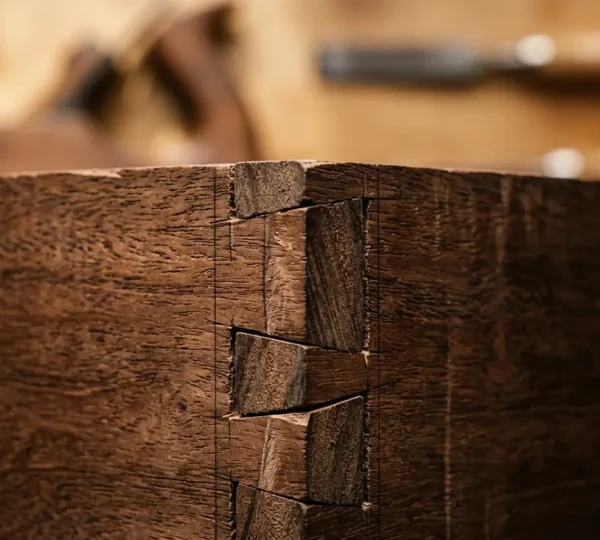
Why Are Georgian Furniture Techniques Appearing in Cutting-Edge London Design Studios?
The revival of Georgian craft in London isn’t about nostalgia; it’s a strategic move to embed a sensory richness into modern design that digital fabrication cannot replicate. Hand-tooling creates unique « visual and haptic signatures »—subtle imperfections and textures—that our senses perceive…
Lire la suite
Why Do Customers Hesitate to Pay £300 for a Bowl That Took 15 Hours to Make?
The customer’s hesitation has little to do with your 15 hours of labour and everything to do with a failure to communicate perceived value. Simply showing your process can sometimes devalue your work by framing it as a commodity (labour)…
Lire la suite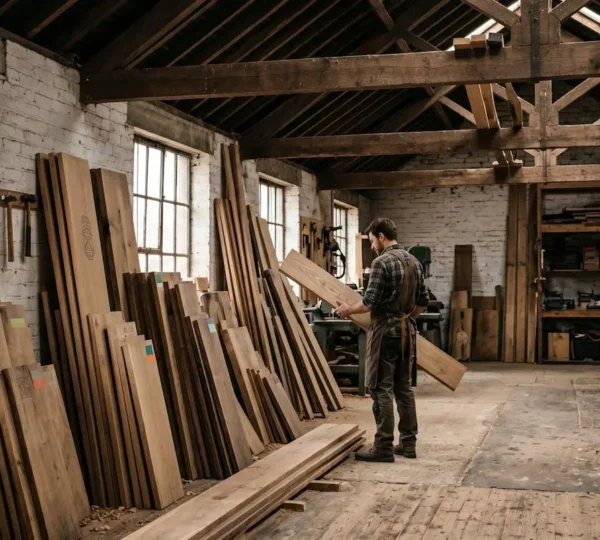
Why UK Makers Pay a 40% Premium for Sustainable Timber—And How to Beat It
The high cost of sustainable timber in the UK isn’t just about certification; it’s a symptom of deeper supply chain frictions you can strategically navigate. Post-Brexit « friction » and inefficient certification models inflate UK prices significantly more than in the EU….
Lire la suite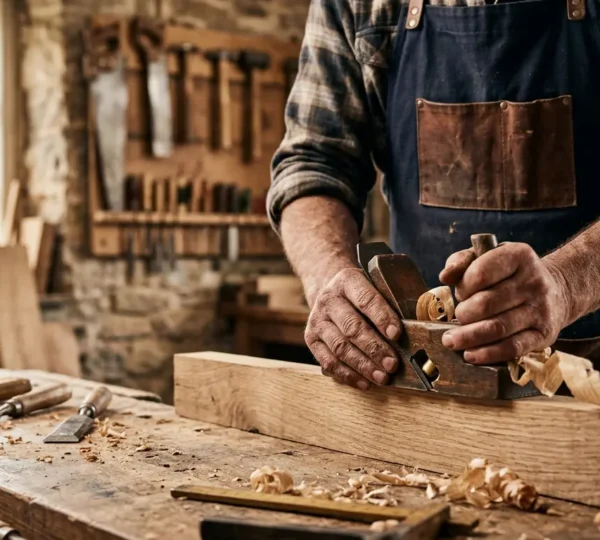
Why Do Skilled Woodworkers Earn Less Than Plumbers Despite Longer Training?
The chronic undervaluation of skilled woodworkers is not a personal failure but a systemic problem of market positioning, which can be solved by strategically re-engineering your business model. Shifting from a « carpenter » to a « designer-maker » identity unlocks significant pricing power…
Lire la suite
Why Do Interior Designers Pay £2,000 for a Vase They Could Source for £200?
The £1,800 price difference between a craft object and a specified design piece is not found in the clay or labour hours; it is strategically constructed through psychological positioning and narrative. Perceived value is amplified by manufactured scarcity, compelling object…
Lire la suite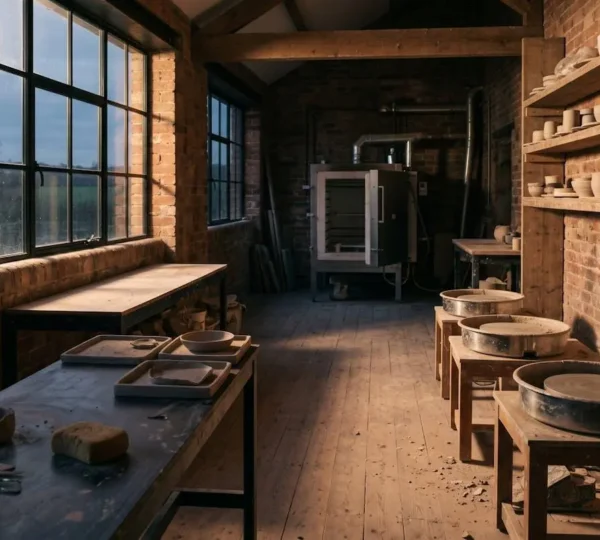
Why Do Many UK Pottery Workshops Close Within 3 Years of Opening?
The high failure rate of UK pottery studios is not due to a lack of artistic talent, but a failure to implement a system of robust operational levers. Profitability hinges on moving beyond basic cost-plus pricing to strategic curriculum design…
Lire la suite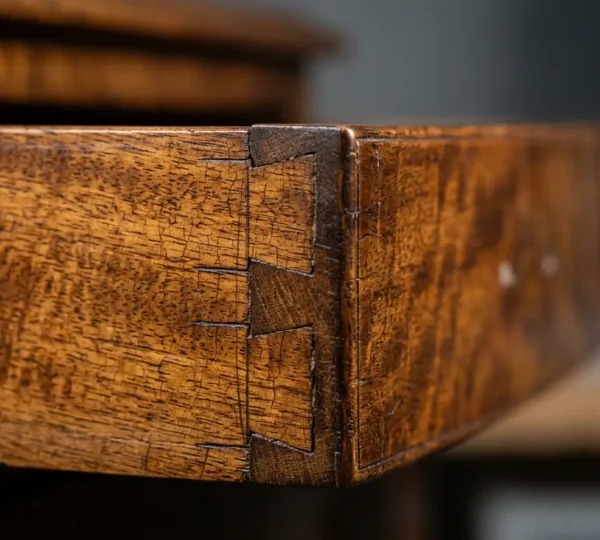
Why Does Your Joinery Look Amateur Next to 18th-Century Originals in the V&A?
The visual gulf between competent modern woodwork and an 18th-century masterpiece is not a matter of secret techniques, but of mastering the underlying science of light, materials, and geometry. A hand-planed surface is not just smoother; it is optically different,…
Lire la suite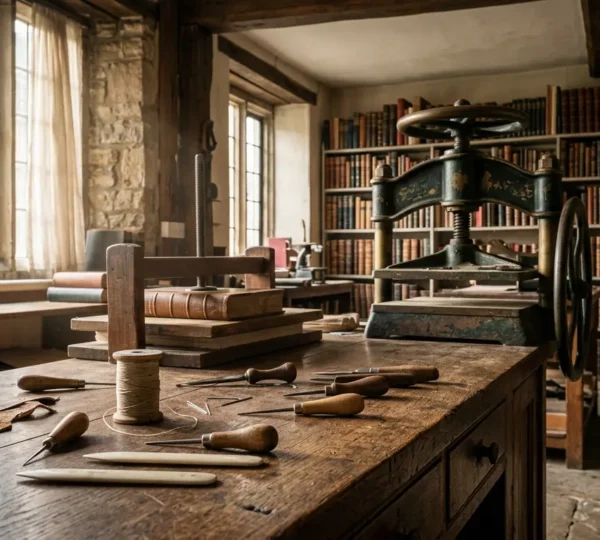
The Last Generation: Why Are Britain’s Master Craftspeople Retiring Without Heirs?
The crisis facing Britain’s heritage crafts is not a lack of interest, but a catastrophic failure in the mechanics of transferring skill from one generation to the next. Formal apprenticeship schemes are collapsing, particularly at the crucial intermediate level needed…
Lire la suite