
Great adaptation is not about faithfully transcribing plot, but about a radical translation of emotional DNA into the specific language of film or audio.
- Embrace compression not as a loss, but as a strategic tool for thematic focus.
- Translate a character’s internal monologue into observable behaviour, evocative sound, and meaningful visual texture.
Recommendation: To succeed, you must stop thinking like a novelist and start thinking like a director or a sound designer.
There is a specific kind of disappointment unique to the lover of books: watching a cherished novel adapted for the screen and feeling as if you’re witnessing a dutiful, yet soulless, recitation. The plot points are there, the characters have the right names, but the magic—that rich, internal world that made the novel sing—is gone. It feels flat, literal, like a lengthy audiobook accompanied by moving pictures. This common failure stems from a fundamental misunderstanding of the task. Many writers, and indeed producers, approach adaptation as an act of transcription, a simple transfer of scenes from page to screen.
The usual advice, « show, don’t tell, » is offered as a panacea, but it barely scratches the surface. The challenge isn’t merely to convert internal thought into external action. The true craft lies in a far deeper process, one I call radical translation. It involves dismantling the novel to its core emotional DNA and then painstakingly reassembling it using an entirely different set of tools: the medium-specific languages of cinema and sound. It’s about understanding that what prose achieves with a paragraph of interiority, a film must achieve with a sliver of light, a choice of lens, or a pregnant pause. What a chapter accomplishes in developing a theme, a radio drama must convey through the subtle shift in an actor’s proximity to the microphone.
This isn’t about being unfaithful to the source material. On the contrary, it is the only way to be truly faithful to its heart. It’s about honouring the *effect* of the novel, not the letter of its text. This requires a shift in mindset from novelist to multi-disciplinary storyteller—a translator who is fluent in the grammars of both literature and the intended new medium. Understanding this is the first step away from creating a book report and toward crafting a resonant, living piece of art that stands on its own.
This guide explores the key decisions and craft-based techniques required for this translation, moving from the philosophical traps to the practical tools of the trade used in the UK’s vibrant film, television, and audio drama sectors.
Summary: The Art of Translating a Novel’s Soul for Screen and Audio
- Why Can’t Film Capture Your Protagonist’s Rich Inner Life Without Voiceover?
- How to Compress a 400-Page Novel into a 90-Minute Film Without Losing the Heart?
- Feature Film vs 6-Part Series: Which Format Serves a Complex Character Study Better?
- The Scene-by-Scene Fidelity That Killed a £2 Million Literary Adaptation
- When to Sell Film Rights: Before Publication or After Critical Success?
- Why Does 16mm Film Still Look More Cinematic Than Your 8K Digital Footage?
- The 12-Inch Microphone Shift That Transforms a Thin Recording into a Rich One
- Why Does Your 4K Footage Look Like Corporate Video Instead of Cinema?
Why Can’t Film Capture Your Protagonist’s Rich Inner Life Without Voiceover?
The first and greatest challenge in adaptation is the problem of interiority. A novel lives inside a character’s head, weaving thought, memory, and sensation into the narrative fabric. Film and audio, however, are external mediums; they can only show what is seen and heard. The lazy solution is the voiceover, a direct lift from the prose that often feels like an admission of failure. It tells the audience what to feel instead of letting them discover it. True adaptation requires translating this internal world into external, observable language.
For film, this means converting thought into behaviour. What does your character *do* because of what they are thinking? A clenched jaw, a glance held too long, the meticulous arrangement of objects on a desk—these are the visual equivalents of a paragraph of internal conflict. In audio drama, we have a unique tool: sonic interiority. The space around a voice is as important as the words spoken. A character whispering directly into the listener’s ear creates an intimacy that is far more powerful than a narrator explaining their feelings from a distance. Sound design—a specific footstep, the hum of a refrigerator, the oppressive silence—becomes the character’s internal landscape made manifest.
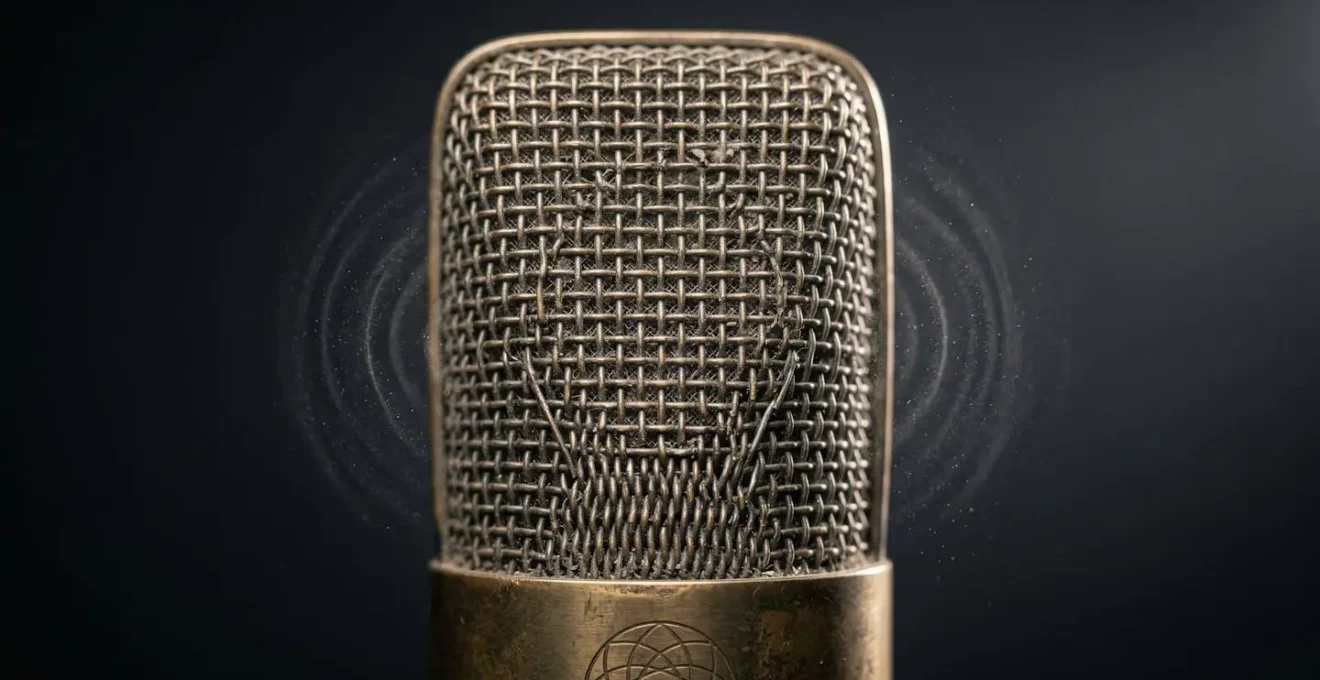
The goal is to create an experience of interiority, not a description of it. It’s about finding the cinematic or auditory objective correlative for a feeling. Instead of being told a character is anxious, the audience hears their breathing become shallow or sees them through a slightly distorted wide-angle lens. This is the essence of radical translation: finding the native language of the new medium to express the old one’s soul.
How to Compress a 400-Page Novel into a 90-Minute Film Without Losing the Heart?
If interiority is the philosophical hurdle, compression is the brutal, practical one. A 400-page novel contains multitudes more material than can fit into a 90 or 120-minute film. Given the industry-standard rule of one page of screenplay equaling one minute of screen time, the task seems like an exercise in butchery. But effective compression is not about randomly hacking away subplots; it’s a strategic process of identifying and amplifying the novel’s core essence. It is an act of focus, not of loss.
The process begins by asking one ruthless question: What is the single, central emotional journey of the protagonist? Every scene, every character, every line of dialogue that remains in the screenplay must serve this journey. If it doesn’t, it has to go, no matter how beloved it was in the book. This often means merging characters. Two of the protagonist’s friends might become one composite character, intensifying that relationship and saving valuable screen time. Subplots that explore secondary themes, while enriching in the novel, are often the first to be sacrificed for the sake of a clear, propulsive narrative spine.
This process of « keeping the truth while changing the incident » is key. You might remove a specific event but ensure the emotional beat it provided is delivered in another, more concise scene. The timeline itself is malleable; events can be reordered if it creates a more dramatic or coherent cinematic structure. The goal is to distil the novel down to its most potent, emotionally resonant form, creating a powerful shot of espresso from a large pot of coffee. It’s a different experience, but the essential flavour must remain.
Feature Film vs 6-Part Series: Which Format Serves a Complex Character Study Better?
The decision between a feature film and a limited series is one of the most significant an adapter will face, profoundly impacting the story’s depth and structure. In the current UK landscape, this choice is also a commercial one. High-End Television (HETV) is booming, with official BFI statistics for 2024 showing that of the combined £5.5 billion spend on film and HETV production, a staggering £3.4 billion (62%) was in HETV spend, dwarfing the £2.1 billion for feature films.
This financial reality has a direct creative consequence. A feature film, typically running 90-120 minutes, demands ruthless compression. It is best suited for novels with a strong, singular narrative thrust and a focused protagonist’s journey. It’s a format of intensity and concentration. A six-part series, on the other hand, offers approximately six hours of screen time. This expansive canvas is ideal for dense, polyphonic novels with multiple points of view, sprawling timelines, or deep, novelistic character studies. It allows for the exploration of subplots, secondary characters, and thematic nuances that a film must inevitably excise.
The commissioning body itself often dictates the format, a crucial piece of industry knowledge for any writer in the UK. As one BFI industry analysis notes:
A BFI/Film4 backed project is more likely to be a 90-110 minute feature, whereas a commission from Sky Atlantic or the BBC inherently favours the multi-episode structure, directly influencing the depth of character development possible.
– Industry analysis, BFI Research and Statistics Unit – Official Statistics 2024
Therefore, the question is not simply « which format is better? » but « which format best serves the emotional DNA of this specific book, and which market is most likely to embrace it? » For a complex character study where the journey is meandering and internal, the breathing room of a series often provides the only way to do it justice without fatally compromising its soul.
The Scene-by-Scene Fidelity That Killed a £2 Million Literary Adaptation
There’s a pervasive myth that the most respectful adaptation is the most faithful one, a scene-for-scene recreation of the book. This approach, born of a fear of « getting it wrong, » is almost always a creative death sentence. A novel and a film are fundamentally different languages. A scene that sings on the page, powered by elegant prose and the reader’s imagination, can fall completely flat on screen if it’s simply transcribed. It becomes a tableau, a lifeless diorama of events.
The problem is that this kind of fidelity ignores the act of translation. It treats cinematic tools—composition, editing, lighting, performance, sound—as mere recording devices rather than what they truly are: a grammar for constructing meaning and emotion. As experts at Raindance Film School explain, « A scene that works on the page through prose and imagination must be reinvented using cinematic language… A scene-for-scene copy ignores this fundamental translation step. » The adapter’s job is not to replicate the scene, but to replicate the *effect* of the scene.
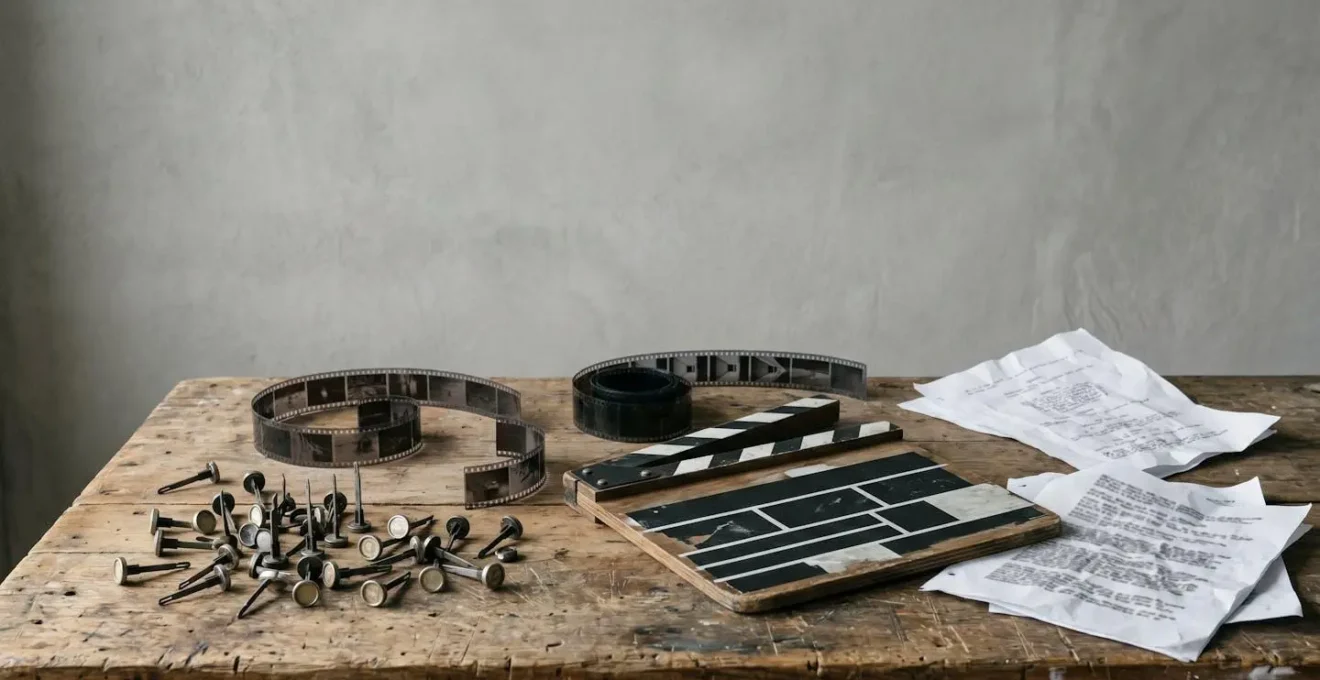
Consider a hypothetical £2 million UK indie adaptation of a critically acclaimed novel. If the director slavishly follows the book, staging every scene exactly as written, they are not being faithful; they are being lazy. They are refusing to do the hard work of invention. The real art is in asking: « What is this scene *doing*? Is it revealing character? Increasing tension? Developing a theme? » Once you know its function, you are free to reinvent its form. A character’s internal realisation, conveyed over three pages of prose, might become a single, wordless shot of them looking at their reflection in a rain-streaked bus window. That is true fidelity.
When to Sell Film Rights: Before Publication or After Critical Success?
For the novelist, the question of when to engage with the film and TV world is fraught with strategic dilemmas. Do you sell the rights to your manuscript before it’s even been published, or do you wait for the potential leverage of a bestseller list or a major prize nomination? Each path carries its own risks and rewards. Selling early, often to an independent producer, can offer the writer more creative involvement and control. The producer may have a smaller budget but a greater passion for the project, and they may be more willing to collaborate on the adaptation.
However, the financial upside is typically lower. An « option agreement, » which gives a producer the exclusive right to develop the project for a set period (usually 12-18 months), may not pay much upfront. Payments can range anywhere from $500 to $5,000 for standard options on unproven works. Waiting until after publication, especially if the book achieves critical or commercial success, dramatically shifts the power dynamic. A nomination for a major UK award like the Booker Prize can trigger a bidding war, driving the option price and the eventual purchase price significantly higher.
Case Study: Navigating Option vs. Shopping Agreements
An analysis of negotiation strategies highlights the core differences for authors. An option agreement provides an upfront fee for exclusivity, while a « shopping agreement » often involves no fee but gives a producer a shorter period to « shop » the project to studios and financiers. The writer retains more control with a shopping agreement, but the producer is less financially invested. For a post-publication success, a writer’s agent can negotiate a much higher purchase price, often tied to a percentage (typically 2-3%) of the production budget, with specified floor and ceiling amounts. The leverage gained from a prize nomination allows the agent to demand a higher floor, a greater share of « back-end » profits, and more meaningful creative consultation rights for the author.
The choice depends on the author’s goals. If creative control and early involvement are paramount, a pre-publication deal with a trusted indie producer might be ideal. If maximising financial return and negotiating from a position of strength is the priority, the strategic gamble is to wait for the verdict of critics and the market.
Why Does 16mm Film Still Look More Cinematic Than Your 8K Digital Footage?
In an age of crystal-clear 8K digital video, it seems counterintuitive that some of the most visually and emotionally resonant adaptations are shot on older, « imperfect » formats like 16mm film. The reason lies in texture. The hyper-realism of modern digital cameras can feel sterile and cold, akin to a corporate video or a news report. It documents reality with unflinching clarity, but it often struggles to evoke a mood or a memory. Film, particularly 16mm, possesses an inherent poetry through its imperfections.
The key element is film grain. This organic, randomised texture that is part of the celluloid itself breaks up the clean digital image, adding a layer of tactile reality. As one film aesthetics analysis notes, « The organic, unpredictable nature of film grain mirrors the messy, imperfect nature of human memory and emotion, making it a perfect tool for adapting novels focused on subjective experience. » It feels less like an objective recording and more like a subjective memory, instantly adding a layer of psychological depth. The softness and unique colour rendition of 16mm stock can also place a story in a specific emotional or historical space, tapping into our collective cultural memory of what « the past » looks like on film.
This aesthetic choice is deeply connected to a sense of authenticity. The 16mm format has historical ties to documentary and social realist cinema in the UK and beyond. Using it can lend an adaptation a feeling of grit, truth, and immediacy that pristine digital video struggles to replicate. This is how a technical choice becomes a powerful narrative tool. It transforms the medium from a simple recording device into an active participant in the storytelling, imbuing the images with a feeling, a time, and a place before a single line of dialogue is even spoken.
The 12-Inch Microphone Shift That Transforms a Thin Recording into a Rich One
Just as visual texture shapes a film’s emotional impact, sonic texture defines an audio adaptation. In radio drama, the most powerful tool for conveying intimacy and interiority is not the script, but the space between the actor’s mouth and the microphone. A subtle shift of even a few inches can completely transform the listener’s relationship with the character, moving them from a distant observer to an intimate confidant. This is the power of the proximity effect.
When a directional microphone is placed very close to a sound source, it artificially boosts the low-frequency response. In human speech, this translates to a rich, warm, and bass-heavy sound that we associate with closeness and intimacy. It’s the sound of someone speaking directly into your ear. When a narrator is recorded from several feet away, their voice is clear but distant—they are a storyteller. When you move that microphone to within a few inches, capturing the subtle mouth sounds and the bass boost of the proximity effect, they become the character’s inner voice. The listener is no longer being told a story; they are inside the protagonist’s head.
This technique is a cornerstone of the BBC’s world-renowned radio drama production. As one audio production analysis points out:
Moving a high-quality condenser mic closer captures the ‘proximity effect’ and subtle mouth sounds, transforming a narrator from a distant storyteller into the intimate inner voice of the protagonist.
– Audio production analysis, BBC Radio Drama Production Techniques
This is sonic language at its most potent. Without changing a single word of the script, the audio engineer and director can manipulate psychological distance. A character’s descent into paranoia can be charted by moving the microphone progressively closer, making their whispered thoughts feel increasingly claustrophobic. It’s the audio equivalent of a cinematic close-up, and a vital technique for translating a novel’s psychological depth into pure sound.
Key Takeaways
- Adaptation is an act of translation, not transcription; it requires reinventing the story in a new medium-specific language.
- Compression is a tool for focus, forcing you to identify and amplify the novel’s core emotional journey.
- The choice between film and a TV series is a crucial strategic decision influenced by story complexity and UK market realities (BFI, BBC, Sky).
- Visual and sonic texture (film grain, lighting, microphone proximity) are non-verbal tools for conveying the interiority and emotion that prose handles with words.
Why Does Your 4K Footage Look Like Corporate Video Instead of Cinema?
You’ve avoided the trap of literal fidelity, compressed your story beautifully, and made the right format choice. Yet, the final images look sterile. Your pristine 4K footage has the clean, well-lit, but ultimately soulless quality of a corporate training video, not a cinematic experience. This common problem arises when digital technology is used merely to capture, rather than to create. Cinema is not about achieving perfect clarity; it’s about shaping perception through the deliberate manipulation of light, colour, and composition.
The « corporate look » comes from an over-reliance on flat, even lighting and the clinical sharpness of modern digital lenses. It shows everything but reveals nothing. To break this digital sterility and create a truly cinematic texture, you must think like a painter, not a technician. This involves intentionally « dirtying » the perfect image to give it character and emotional weight. It’s about subtraction as much as addition: embracing shadow, letting parts of the frame fall into darkness, and using a single key light source to model a face and create mood.
Choosing vintage lenses for their unique, imperfect optical qualities—like organic lens flares or a softer focus—can instantly add character that a technically perfect modern lens lacks. Adding a subtle layer of high-quality film grain in post-production breaks the uniform smoothness of the digital sensor. These are not gimmicks; they are deliberate brushstrokes that add a tactile, emotional quality to the image, making it feel crafted and subjective, rather than objectively recorded.
Action Plan: Achieving a UK Cinematic Texture
- Lighting Strategy: Use single-source lighting with negative fill (using black flags to absorb light and create shadow) to emulate the quality of overcast British light.
- Lens Selection: Test vintage British lenses (e.g., Cooke) for their unique flares and organic softness, prioritising character over clinical sharpness.
- Post-Production Grain: Apply a subtle, high-quality 16mm or 35mm film grain overlay in your editing software to break the « digital sterility » of the 4K image.
- Colour Grading: Develop a specific colour palette that serves the story, drawing inspiration from UK aesthetics (e.g., muted greens/greys for rural drama, sodium-lit nights for urban thrillers).
- Compositional Intent: Treat the camera as a storytelling tool. Use deliberate composition, lens choice (wide vs. telephoto), and movement to reflect the protagonist’s emotional state.
Ultimately, a successful adaptation is an act of profound empathy—empathy for the source material’s core emotion, and empathy for the unique language of the new medium you are working in. Start by treating your novel not as a sacred text to be copied, but as a vibrant source of emotional and thematic DNA, ready to be reborn in a new and exciting form.