Visual Arts
Visual arts represent humanity’s oldest and most enduring form of creative expression. From cave paintings to AI-generated imagery, this discipline continues to evolve whilst maintaining its fundamental purpose: communicating ideas, emotions and perspectives through visual means. Whether you wield a brush, sculpt in clay, or manipulate pixels, understanding the breadth of this field transforms how you approach your own practice.
Today’s visual artist navigates an unprecedented landscape. Galleries increasingly embrace screen-based work alongside traditional media, VR exhibitions attract younger audiences in record numbers, and artificial intelligence tools raise profound questions about authorship and creativity. Yet amidst this technological revolution, mastery of fundamental techniques remains the foundation upon which all meaningful visual work is built.
This resource explores the essential pillars of visual arts practice—from traditional painting and sculpture techniques to digital tools, immersive technologies and career sustainability. Whether you’re confronting your first digital project after years of classical training or wondering why your impasto lacks the luminosity of the Old Masters, you’ll find practical insights grounded in both historical wisdom and contemporary reality.
Why mastering traditional techniques still matters
In an age of digital shortcuts and AI assistance, traditional techniques might seem obsolete. Nothing could be further from the truth. The physical understanding of materials—how oil paint behaves when layered over multiple sessions, why thick impasto can absorb light rather than reflect it—provides knowledge that transfers across every medium, digital included.
Paint application and texture control
Many painters wonder why their impasto looks muddy when Renaissance and Baroque masters achieved such luminous texture. The answer lies in understanding fat over lean principles and timing. Applying thick paint over insufficiently dry layers causes sinking and colour dulling. Successfully layering impasto over three sessions without cracking requires patience and an understanding of drying times that varies with pigment, medium and environment.
Consider oil paint’s peculiar timing: there’s a precise window when paint becomes too dry to blend conventionally yet perfect for knife work. Recognising this moment comes only through repeated practice and observation. This tactile knowledge—knowing when to push paint and when to let it rest—separates competent work from exceptional work.
Precision and line control
Renaissance masters achieved hairline precision that modern artists often struggle to replicate. The culprit frequently lies in mechanics rather than talent. Many self-taught painters move their entire arm when only fingers should guide fine detail, creating wobble and inconsistency. The solution involves targeted practice: as little as fifteen minutes daily of deliberate line exercises can produce noticeably steadier results within eight weeks.
Other technical pitfalls include:
- Over-reliance on magnification tools, which disrupts natural hand-eye coordination over time
- Attempting detail work without adequate warm-up sketches
- Failing to identify whether weakness stems from pressure, angle or speed
From canvas to sculpture: thinking in three dimensions
Painters attempting sculpture for the first time face a particular challenge: a piece that looks impressive from one angle may collapse visually from others. This happens because painters instinctively compose for a single viewpoint. Sculptural thinking requires designing work that rewards 360-degree viewing without weak sides—a fundamentally different cognitive approach that takes deliberate cultivation.
How artists overcome the self-taught plateau
A pattern emerges repeatedly: self-taught artists progress rapidly for several years before hitting a frustrating plateau. This typically occurs around the five-year mark, when intuitive gains from practice begin yielding diminishing returns without structured technical intervention.
Watching one hundred tutorials rarely matches the impact of ten hours of guided brush practice. The difference lies in immediate feedback. Video content cannot observe your specific grip flaw—the same flaw that causes wrist injury in a significant percentage of self-taught painters—and correct it in real time.
Training options vary significantly in cost and effectiveness:
- Atelier residencies offer immersive, traditional instruction with intensive feedback
- Online mentorship programmes provide flexibility with personalised guidance
- Self-directed study requires careful structuring, alternating between line work and tonal control based on identified weaknesses
The most efficient path depends on individual circumstances, but nearly all plateaued artists benefit from some form of external assessment. Identifying whether your weak point is pressure, angle or speed requires an experienced eye observing your actual practice.
The shift towards digital and screen-based art
Major institutions are dedicating substantially more floor space to digital art than ever before. The Tate Modern’s recent reallocation of gallery space reflects a broader industry shift: screen-based pieces are no longer peripheral experiments but central to contemporary visual culture.
This doesn’t render traditional media obsolete. Instead, innovative artists explore hybrid approaches—adding projection mapping to canvas work without losing painterly integrity, for instance. Such integration requires understanding both traditional craft and digital tools sufficiently to make them converse rather than compete.
Digital tools for traditionally trained artists
Classically trained artists often fail their first several digital projects. Photoshop can feel alienating even to those with sophisticated colour theory knowledge, because the software’s logic differs fundamentally from physical media behaviour. The solution isn’t mastering every feature but identifying the essential five or six tools needed to enhance scanned paintings effectively.
Hardware choices matter significantly. Tablets designed for illustration divide into two camps: devices like Wacom products offer precision and industry-standard integration, whilst iPad Pro provides portability and an increasingly capable creative ecosystem. For fine artists transitioning from traditional drawing, the question becomes which device most closely replicates the resistance and response of physical media.
VR, virtual galleries and immersive experiences
Certain VR exhibitions have attracted dramatically higher attendance from under-35 visitors compared to traditional gallery rooms. This demographic shift carries profound implications for how visual art reaches new audiences. Creating gallery-ready VR environments no longer requires coding expertise—tools like Unity now offer visual scripting approaches accessible to artists without computer science backgrounds.
Virtual galleries present both opportunities and pitfalls:
- Visitor engagement: poorly designed virtual spaces feel lonely rather than immersive; successful ones sustain average visit times exceeding five minutes
- Technical considerations: image compression can destroy brushwork detail if not carefully managed
- Platform selection: options range from browser-based solutions to custom WebGL implementations, each with distinct trade-offs
Timing decisions matter too. Launching a virtual extension simultaneously with a physical exhibition versus after it closes produces different audience behaviours and marketing opportunities.
Moving image: cinematography, VFX and AI tools
Visual artists working in moving image face questions that parallel traditional painting concerns: why does 4K footage often look like corporate video rather than cinema? Why does 16mm film still appear more cinematic than 8K digital? The answers involve understanding colour science, dynamic range and intentional imperfection.
Achieving cinematic aesthetics
Creating a signature colour look in grading software requires understanding colour relationships rather than applying presets. The Instagram-filter aesthetic immediately signals student work to industry viewers. Developing a distinctive palette that serves narrative purpose separates professional moving image work from amateur efforts.
Equipment debates—whether higher-priced cinema cameras justify their cost over capable mirrorless options—miss the essential point: understanding real-world light behaviour matters more than sensor specifications. The same principle applies to VFX: using identical software to Hollywood productions doesn’t guarantee results if fundamental lighting knowledge is absent.
AI-assisted creation: finding originality
AI art tools present a paradox. After several months, many users’ portfolios become virtually indistinguishable from each other. This homogenisation occurs because most practitioners stop at the prompt stage rather than pushing the technology’s boundaries.
Developing recognisably personal AI imagery requires deeper engagement:
- Understanding how diffusion models actually function, which fundamentally changes prompting approach
- Training custom models for distinctive outputs
- Using computational tools beyond consumer-facing interfaces for greater creative control
The artists producing compelling AI-assisted work typically combine technical understanding with traditional visual arts knowledge—composition, colour theory, conceptual rigour—that the tools themselves cannot supply.
Building a sustainable career in visual arts
Half of new galleries close within three years despite strong programming. This sobering statistic reflects the challenging economics of visual arts careers. However, artists increasingly build sustainable incomes—reaching substantial annual earnings—without relying on gallery representation.
Direct sales strategies include:
- Accepting commissions directly, bypassing costly e-commerce platforms
- Open studio events, which often convert better for higher-value works than online sales
- Maintaining collector relationships between purchases without constant sales pressure
Large-scale public commissions present additional opportunities and challenges. Many artists find their sketches translate poorly to building-sized murals due to scaling issues invisible at smaller dimensions. Successfully completing major outdoor works within tight timeframes requires logistical planning that extends well beyond artistic skill.
Visual arts practice today demands unprecedented versatility. Technical mastery, digital fluency, business acumen and conceptual sophistication must work in concert. Yet this complexity creates opportunities for artists willing to engage seriously with both tradition and innovation, building practices that sustain creative work across decades rather than burning brightly and briefly.
Why Does Your Virtual Gallery Feel Lonely Instead of Immersive?
The pervasive loneliness in virtual galleries stems not from poor graphics, but from a fundamental misunderstanding of the medium: we replicate empty rooms instead of engineering shared human experiences. The perceived value of digital art (like NFTs) plummets when it…
Lire la suite
Why Does Your AI Artwork Stop at the Prompt Instead of Pushing the Technology?
True artistic control in AI lies beyond the prompt, in understanding and shaping the technical process itself. Understanding how diffusion models work allows for nuanced control that text prompts alone cannot achieve. Mastering accessible tools like Google Colab and training…
Lire la suite
Your AI Art Looks Like Everyone Else’s. Here’s How to Forge a Unique Visual Signature.
The frustrating similarity in AI art stems not from a lack of prompt-craft, but from a failure to impose a unique artistic vision upon the machine. The default settings and popular models of dominant platforms naturally lead to an « aesthetic…
Lire la suite
Beyond the Software: Why Your Visual Effects Look Fake and How to Fix Them
Your visual effects feel fake not because you lack the right software, but because you’re missing the integration mindset. The key to believability isn’t in complex modelling or high-end render settings; it’s in the meticulous observation and replication of how…
Lire la suite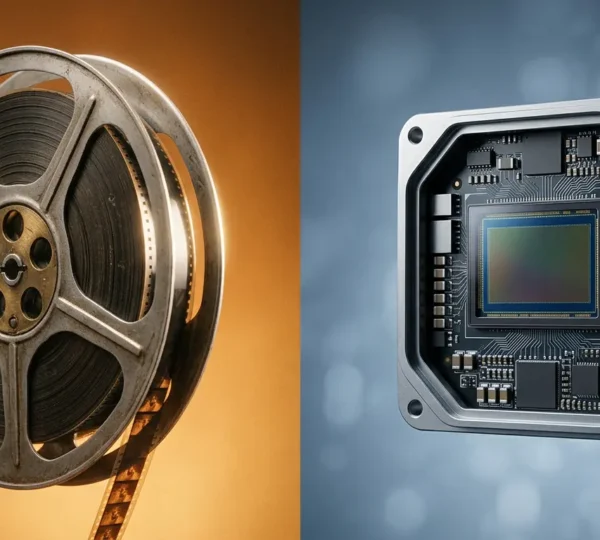
Why Does Your 4K Footage Look Like Corporate Video Instead of Cinema?
The common belief that better tech like 8K cameras creates a « cinematic » look is a trap; true cinema is born from intentional artistic abstraction, not hyper-realistic clarity. The « soul » of cinema lies in textural integrity—like film grain—which creates psychological closeness,…
Lire la suite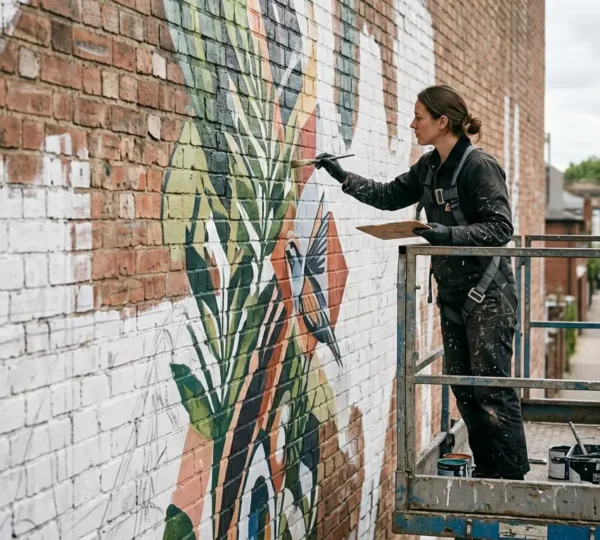
Why Does Your Mural Look Amateur Next to Internationally Commissioned Walls?
The leap from a skilled street artist to a commissioned muralist isn’t about artistic talent—it’s about mastering a new set of disciplines. The flaws in your large-scale work don’t come from a shaky hand, but from a misunderstanding of perceptual…
Lire la suite
Why Do 50% of New London Galleries Close Within 3 Years Despite Strong Programming?
Strong art programming alone does not guarantee a gallery’s survival; it is the financial model that dictates success or catastrophic failure. Massive revenue often hides crippling unprofitability due to high fixed costs and inefficient structures, creating a dangerous « Revenue Illusion. »…
Lire la suite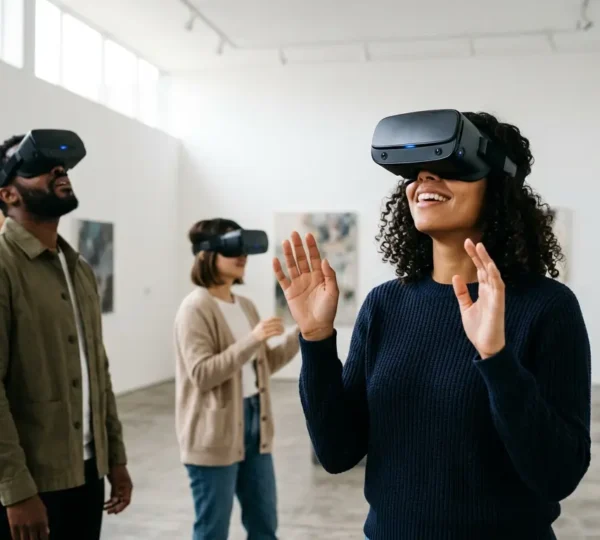
Why Did the V&A’s VR Exhibition Attract 3x More Under-35 Visitors Than Traditional Rooms?
The V&A’s success wasn’t about technology; it was a masterclass in cognitive design. VR’s power to attract younger audiences lies in leveraging « embodied cognition » to create lasting memories, not just fleeting spectacle. Memory retention in VR is neurological, not just…
Lire la suite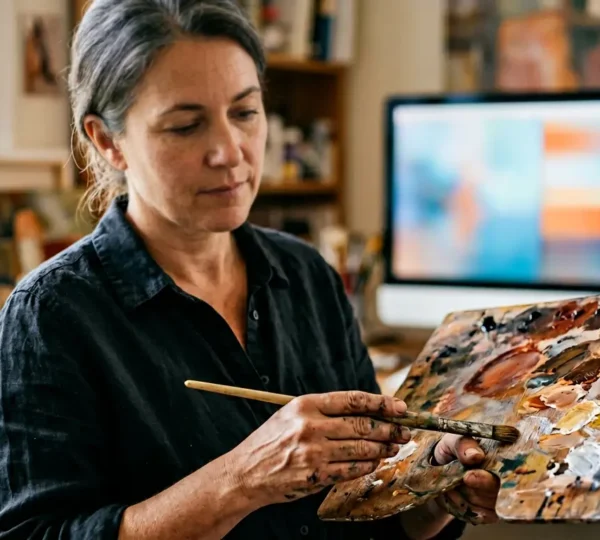
Why Do Classically Trained Artists Fail Their First 3 Digital Projects?
The common failure of classically trained artists in digital art isn’t a lack of skill, but a misunderstanding of how to translate their physical intuition into a non-linear, non-physical medium. Your knowledge of colour theory is valid, but it’s clashing…
Lire la suite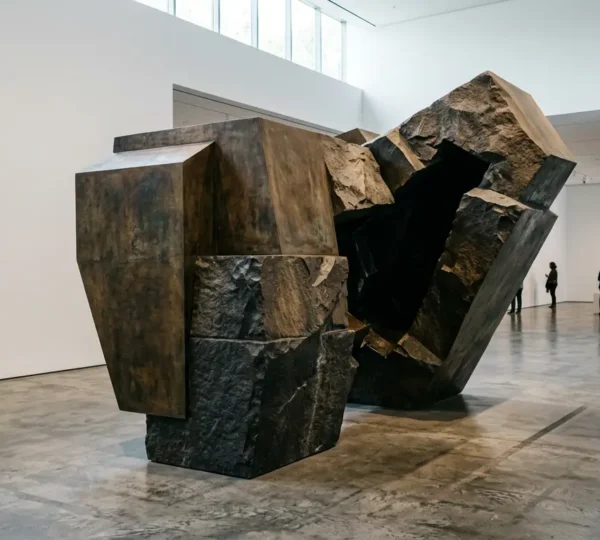
Why Does Your Sculpture Look Impressive from One Angle but Collapse from Others?
The problem isn’t that you can’t ‘think in 3D’; it’s that you’re still composing for a static, 2D photograph—a habit inherited from painting. A sculpture’s success in a physical space depends on designing the transitional voids between views, not just…
Lire la suite