Contrary to the belief that metre is a creative straitjacket, it’s actually a cognitive technology for engineering resonance and memory in your reader’s mind.
- Metrical patterns create a « cognitive scaffold » that makes language neurologically pleasing and far easier to remember than prose.
- Mastery comes not from rigid adherence, but from strategically varying the rhythm to create tension and emotional emphasis.
Recommendation: Stop treating form as an historical artefact and start using it as a deliberate tool to give your contemporary poems unforgettable power.
You feel it, don’t you? The quiet frustration when a poem you’ve laboured over, one filled with precise images and authentic emotion, simply vanishes from the reader’s mind the moment they turn the page. It feels slack, ephemeral. Meanwhile, you recall lines of Shakespeare or Heaney learned years ago, their rhythm and weight seemingly fused to your memory. You admire the architecture of a sonnet, the satisfying click of a well-made couplet, but the common wisdom in many contemporary poetry circles is that these forms are restrictive, anachronistic, and belong to another era. The freedom of free verse is paramount, and any attempt to impose a beat feels like a step backward.
This perspective, while understandable, overlooks a fundamental truth about how the human brain processes language. The power of formal verse isn’t just a matter of tradition or a preference for « musicality. » It’s rooted in cognitive science. The recurring patterns of metre are not a cage for your words; they are a powerful mnemonic device, a delivery system for emotion that you can learn to control and deploy with precision. But what if the real key wasn’t abandoning form, but understanding its underlying mechanics to make your work, whether free or formal, more resonant and enduring?
This guide moves beyond the simple « da-DUM » explanation of iambic pentameter. We will explore the cognitive reasons why metre is so effective, provide a practical, daily method for internalising its rhythm, and analyse how contemporary masters use strategic variation to make formal verse feel utterly modern. By understanding form not as a set of rules but as a powerful creative tool, you can learn to build poems that don’t just express a feeling, but are engineered to last in the reader’s memory.
To achieve this, we will delve into the core principles that separate fleeting words from unforgettable verse. The following sections offer a roadmap, from the neurological basis of rhythm to the strategic decisions involved in structuring a full collection.
Summary: How to Weave the Unforgettable Power of Metre into Your Verse
- Why Do Children Remember Nursery Rhymes but Forget Prose Passages Instantly?
- How to Internalise Iambic Pentameter Through 15 Minutes of Daily Practice?
- Metronomic Regularity vs Strategic Variation: Which Creates Better Contemporary Sonnets?
- The Rhyming Couplet That Made a Competition Judge Reject an Otherwise Strong Entry
- When to Introduce Metrical Poems into a Free Verse Collection: Scattered or Clustered?
- How to Extend Your Upper Range by a Minor Third Without Straining in 6 Months?
- Why Did UK Furniture Making Lose 60% of Its Apprenticeships Since the 1990s?
- Why Do Some Singers Lose Their Top Notes by 40 While Others Maintain Range into Their 60s?
Why Do Children Remember Nursery Rhymes but Forget Prose Passages Instantly?
The answer lies not in magic, but in neuroscience. The human brain is a pattern-seeking machine. When it encounters a predictable, repeating structure—like the simple, strong rhythm of a nursery rhyme—it experiences a form of cognitive pleasure. This is the same neurological reward system that responds to melody in music. The metre and rhyme of « Twinkle, Twinkle, Little Star » provide a cognitive scaffold, a mental framework onto which the words are hung. This structure makes the information easier to encode, store, and retrieve. Prose, by contrast, typically lacks this scaffold. It presents information as a linear sequence, demanding more cognitive effort to memorise.
This isn’t just about childhood learning; it’s a fundamental aspect of human cognition. The predictable pattern of unstressed and stressed syllables in a metrical line creates an expectation in the reader’s brain. Fulfilling that expectation provides a subtle dopamine hit, a micro-reward that says, « This makes sense. I understand this pattern. » This process of pattern recognition and reward is what makes metered language feel so satisfying and, crucially, so memorable. It’s an ancient technology embedded in our language, one that turns simple words into an experience.

As the image above suggests, this isn’t a rigid, mechanical process but an organic one, like the spiralling patterns found in nature. The pleasure is in recognising a structure that feels both inevitable and beautiful. When you write in metre, you are not just arranging words; you are tapping into this deep-seated cognitive preference for order and rhythm. You are providing the reader’s brain with a framework that helps it hold onto your ideas long after the page is turned. This is the foundational reason why formal verse possesses an inherent « stickiness » that most free verse has to work much harder to achieve.
Ultimately, a nursery rhyme is a simple machine for remembering itself. A sophisticated poem uses the same principle but for much more complex emotional and intellectual ends.
How to Internalise Iambic Pentameter Through 15 Minutes of Daily Practice?
Understanding metre intellectually is one thing; feeling it in your bones is another. The key to writing natural-sounding metrical verse is to internalise the rhythm so that it becomes second nature, an intuitive sense rather than a mathematical calculation. This is achieved through consistent, deliberate practice. The goal is to develop an embodied rhythm, where the iambic beat (an unstressed syllable followed by a stressed one: da-DUM) is as familiar as your own heartbeat. You don’t need hours of study, just a focused 15-minute daily exercise to train your ear and your compositional reflexes.
The process isn’t about forcing your thoughts into a pre-made box. It’s about learning to hear the natural rhythms in everyday speech and gently shaping them into a metrical line. Start with the mundane world around you. Describe what you see, what you feel, in a plain sentence. Then, listen to it. Where do the natural stresses fall? From there, you begin to adjust, to substitute, to rephrase, not to lose your meaning, but to align it with the iambic pulse. This daily habit transforms scansion from a dry academic exercise into a creative game, a puzzle you solve each day until the patterns become instinctive.
Below is a practical, step-by-step plan you can integrate into your daily writing routine. Committing to this for even a few weeks will fundamentally change your relationship with poetic form.
Your Daily Plan for Mastering Iambic Pentameter
- Write a Mundane Sentence: Start with a simple observation about your immediate surroundings (e.g., ‘The coffee in my cup is getting cold’).
- Scan for Natural Stress: Read the sentence aloud and mark the syllables that you naturally emphasise. Don’t force it; listen to your own voice.
- Adjust for Iambic Pattern: Rework the sentence by adding, removing, or changing words to fit the unstressed-stressed iambic rhythm (e.g., ‘The cof-fee in my cup grows ev-er cold’).
- Build the Full Line: Repeat the iambic foot five times to create a complete ten-syllable line of iambic pentameter.
- Embody the Rhythm: Practice reciting the line while walking, tapping, or nodding to physically connect the rhythm to movement. This is crucial for internalisation.
This consistent practice demystifies the process. As The Poetry Place notes in its guide to writing with metre, the reward for this dedication is creative freedom. You move from consciously counting syllables to intuitively composing in form. As they put it:
Eventually, if you practice enough, you’ll even find yourself writing in meter automatically, barely stopping to think about it.
– The Poetry Place, Learning Meter #4: Writing with Meter
This automated skill is the foundation upon which true artistry is built, freeing your conscious mind to focus on image, metaphor, and meaning.
Metronomic Regularity vs Strategic Variation: Which Creates Better Contemporary Sonnets?
A common mistake for poets new to form is to pursue metronomic perfection. They strive to make every single line a flawless example of iambic pentameter, believing that this regularity is the hallmark of a well-made poem. In reality, perfect regularity is often monotonous and lifeless. The energy and sophistication of a great contemporary sonnet lie not in its perfection, but in its strategic variation. The true art is in establishing a clear rhythmic pattern and then knowing precisely when and how to break it for emotional and semantic effect.
Think of it as a « metrical contract. » In the first few lines of a poem, you establish a dominant rhythm. This tells the reader, « This is the beat you can expect. » Once that contract is in place, any deviation from it becomes significant. A spondee (STRESS-STRESS) can add weight and gravity, a pyrrhic foot (unstress-unstress) can quicken the pace, and a trochaic substitution (STRESS-unstress) at the start of a line can create a jolt of attention. These are not mistakes; they are deliberate choices that create tension and interest. The perfectly regular line becomes the baseline, and the variations create the music.
This principle of earned variation is a hallmark of modern formalist poetry, allowing poets to harness the power of the sonnet form without being imprisoned by it. A prime example is the work of a celebrated contemporary Scottish poet.
Case Study: Don Paterson’s Contemporary Sonnet Variations in ’40 Sonnets’
In his 2015 collection ’40 Sonnets’, the award-winning UK poet Don Paterson masterfully demonstrates the power of strategic metrical variation. As noted in a review by The London Magazine, Paterson both honours and deconstructs the sonnet form. He establishes a clear iambic framework but then introduces variations that serve the poem’s content, from minimalist lines to surprising rhyme schemes. The collection shows that the most effective contemporary sonnets establish a clear metrical promise early on, which then gives the poet the authority to break that promise for emphasis. This « formal innovation » allows the form’s inherent resonance to coexist with a modern, flexible voice.
The key is control. The variation must feel intentional, not accidental. As the theorist Reuven Tsur explains, there is a fine line between effective tension and chaos:
The greater the deviation, the greater the tension generated—up to a certain point; beyond that point, the verse line falls apart.
– Reuven Tsur, Metricalness and Rhythmicalness: What Our Ear Tells Our Mind
For the contemporary poet, the goal is not to write like Shakespeare, but to use the same tools he did to create a voice that is uniquely, and powerfully, your own.
The Rhyming Couplet That Made a Competition Judge Reject an Otherwise Strong Entry
For many contemporary poets, the biggest fear associated with formal verse is not metre, but rhyme. Specifically, the fear of producing a clumsy, forced rhyming couplet that sounds like a greeting card or a relic from the 19th century. This anxiety is well-founded. A bad rhyme can torpedo an otherwise excellent poem, signalling to an editor or competition judge that the poet has allowed the form to dictate their content, rather than the other way around. This often manifests as syntactic tension of the worst kind: inverted syntax, or « Yoda-speak, » where the word order is twisted unnaturally just to land a rhyme.
A judge for a major poetry competition is not looking for perfect rhymes; they are looking for poems that feel authentic and inevitable in their language. A forced rhyme instantly breaks that spell. It exposes the machinery of the poem in the most unflattering way, showing the reader the effort rather than the effect. The challenge is to make rhyme and metre serve the natural cadence and vocabulary of modern speech, not to contort speech to fit a pre-determined sound. A successful formal poem in the 21st century must sound like it was written today.

The image above perfectly captures this awkwardness—the tension between a natural, organic form and a rigid, artificial constraint. This is exactly what happens when a poet writes, « My love for you, I can’t deny, » instead of the more natural, « I can’t deny my love for you. » The solution is to prioritize natural word order and let some rhymes be « slant » or « near » rhymes if necessary. A slightly imperfect rhyme that feels natural is always superior to a perfect rhyme that feels forced. As a judge for the UK’s prestigious National Poetry Competition explains, the issue is not rhyme itself, but its clumsy application.
The issue is avoiding writing rhyming verse in a way reminiscent of a 100 or 150 years ago, full of inversions and an older diction. The issue is not allowing the form to dictate your subject matter.
– Gerry Cambridge, National Poetry Competition Judge, The Poetry Society
Your poem must be the master of its form, never its servant. This means being willing to revise tirelessly until the rhyme feels as essential and effortless as a breath.
When to Introduce Metrical Poems into a Free Verse Collection: Scattered or Clustered?
Once you’ve developed confidence in writing formal verse, a new strategic question arises: how do you integrate these poems into a larger collection dominated by free verse? Should they be clustered together in a dedicated « formal » section, or scattered throughout the manuscript? There is no single right answer, but the choice you make will have a significant impact on the reader’s experience and the overall architecture of your book. Clustering them can highlight your technical skill, creating a powerful, focused display of craft. However, it can also risk ghettoizing the formal poems, making them feel separate from the main body of your work.
Scattering them, on the other hand, can create moments of rhythmic anchoring and formal resonance throughout the collection. A well-placed sonnet or villanelle can act as a gravitational centre, a point of structural and thematic weight that lends coherence to the surrounding free verse poems. It can provide a satisfying sense of return and stability, a rhythmic echo that reverberates through the manuscript. This approach often feels more integrated and organic, suggesting that form is not a separate activity but another tool in your versatile poetic toolkit. The key is to place them where they can do the most structural work, perhaps at the end of a sequence or as a thematic lynchpin.
The strategic placement of formal verse is a technique used by many of the most respected poets writing today, demonstrating a deep understanding of manuscript construction.
Case Study: Don Paterson’s Structural Use of Form
The Scottish poet Don Paterson, a winner of multiple Scottish Arts Council awards and a prominent voice of his generation, often uses formal poems as structural anchors within his broader collections. His work, which combines postmodern wit with a deep sense of lyricism, shows how sonnets can function as pillar pieces. Whether in his own collections or his influential editing of ‘101 Sonnets’, Paterson demonstrates a belief in the sonnet’s power to create a thematic and rhythmic core, providing a centre of gravity that gives the surrounding free verse poems a greater sense of coherence and purpose.
This approach is rooted in a fundamental understanding of what form does. As Paterson himself articulated in the introduction to his anthology, the function of all poetic devices is ultimately mnemonic. They are tools for making a poem stick.
The poem is no more or less than a little machine for remembering itself: every device or trope, whether rhyme or metre, metaphor or anaphora, can be said to have a mnemonic function.
– Don Paterson, Introduction to ‘101 Sonnets’, referenced in a review on Formalverse.com
A strategically placed sonnet can be the single element that transforms a loose collection of poems into a unified, resonant book.
How to Extend Your Upper Range by a Minor Third Without Straining in 6 Months?
This question, typically posed by a singer, holds a powerful metaphorical truth for a poet. What is a poet’s « upper range » if not their ability to tackle more complex subjects, emotions, and ideas with grace and power? And what is « straining » if not the sound of a poet forcing an effect, reaching for a significance that their technical ability cannot support? The surprising answer, for poets, is that one of the best ways to extend your expressive range is not through more freedom, but through the discipline of form. Committing to a form like a sonnet or a villanelle for a period of time forces you to solve creative problems you would otherwise avoid.
In free verse, it is easy to default to your habitual vocabulary and syntactic patterns. When a line doesn’t work, you can simply change it. But a formal constraint—a specific rhyme scheme, a set number of syllables, a repeating line—removes that easy escape. It forces you to dig deeper into the language. You must find a different word, a new image, a cleverer turn of phrase to satisfy the formal demand without sacrificing your meaning. This process is like resistance training for your creative muscles. It builds linguistic strength and flexibility.
This « training » prevents the poetic equivalent of a singer straining for a high note. A strained line in a poem is one that feels overwritten or cliché, where the desire for a big emotional moment is transparent. By working within the « limits » of a form, you learn to generate power and emotion through subtle, controlled means—through a clever enjambment, a surprising internal rhyme, or a perfectly executed metrical variation. You learn that true creative freedom is not the absence of constraints, but the mastery of them. The form becomes a collaborator, pushing you to discover what you didn’t know you were capable of saying.
By spending six months wrestling with a challenging form, you may find you’ve extended your expressive range far more than you would have in years of unconstrained writing.
Why Did UK Furniture Making Lose 60% of Its Apprenticeships Since the 1990s?
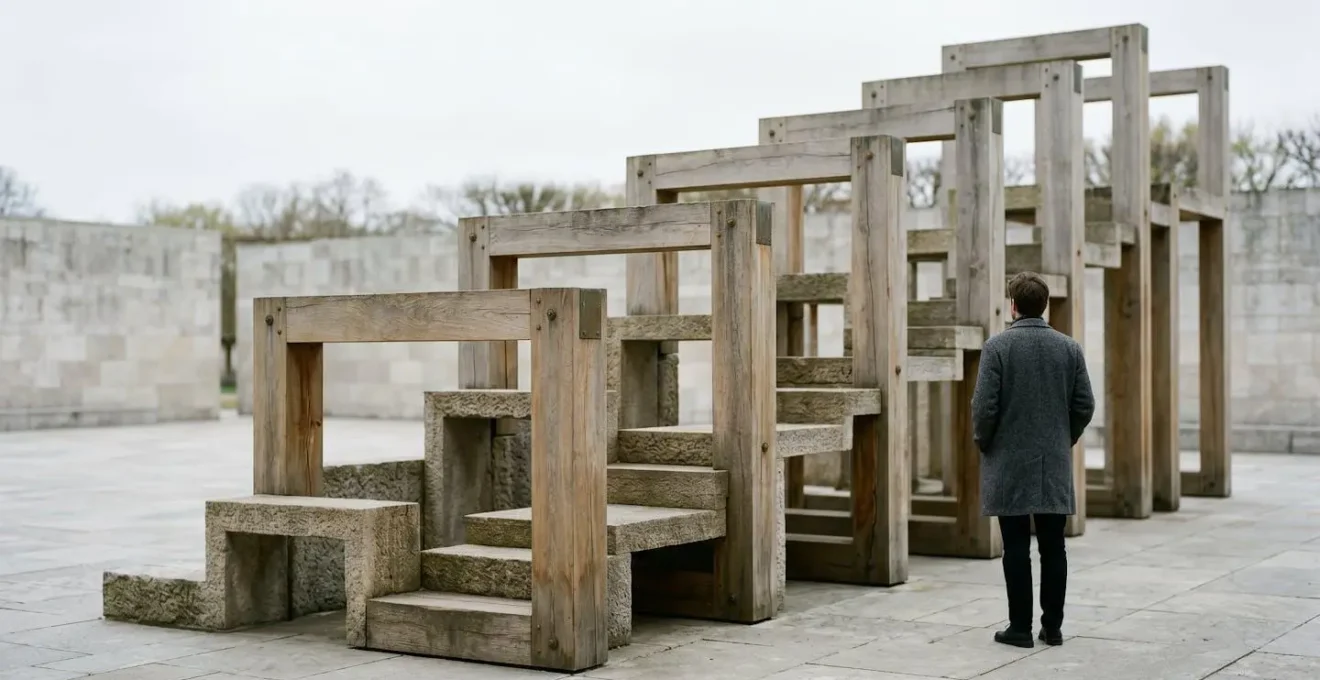
The decline in a traditional craft like furniture making offers a sobering parallel for the world of contemporary poetry, particularly in the UK. The erosion of the apprenticeship model, where skills are passed down directly from master to student through years of hands-on practice, has a direct equivalent in many poetry workshops. For decades, the focus has often shifted from the transmission of technical « craft » to the prioritization of personal « voice » and self-expression. While voice is essential, this shift has sometimes come at the cost of a shared technical language. A generation of poets has emerged who can speak eloquently about their intentions but may lack the tools to scan a line of verse or articulate the mechanics of a sestina.
Just as a cabinet maker must learn about joinery, wood grain, and finishing, a poet benefits from a deep understanding of their trade’s tools: metre, rhyme, stanzaic form, and rhetorical devices. When this « apprenticeship » in craft is neglected, we risk losing something vital. The result can be a poetry that feels less « well-made, » less durable, and less connected to the long tradition it inherits. The « slackness » you might feel in your own work could be a symptom of this wider trend—an intuitive sense that the structural integrity, the poetic joinery, is not as solid as it could be.
This is not an argument for returning to a rigid, academic past. It is a call to reintegrate craft into our creative practice. It means seeking out the knowledge that may not have been central to your formal education. It involves reading not just for content, but for technique. How did Keats achieve that effect? How does Alice Oswald manage her line breaks? This self-directed apprenticeship is about reclaiming a legacy of skill. In the UK, where the poetic lineage is so rich and deep, ignoring the craft of poets from Shakespeare to Ted Hughes is like a furniture maker ignoring the work of Chippendale. It’s a voluntary severing from a powerful source of knowledge and strength.
By choosing to become a student of the craft, you are not just improving your own work; you are helping to ensure the vitality of the art form itself.
Key Takeaways
- Metre is not an outdated rulebook but a cognitive tool rooted in neuroscience, designed to make language memorable and emotionally resonant.
- The art of modern formal verse lies in strategic variation—establishing a metrical contract and then breaking it with intent—not in metronomic perfection.
- To sound contemporary, formal poetry must prioritize natural, modern syntax and diction, avoiding forced inversions or archaic language just to fit a rhyme or rhythm.
Why Do Some Poetic Voices Fade While Others Endure for Decades?
This question gets to the heart of a poet’s deepest anxiety: the fear of irrelevance. Why do some poets, so vital and celebrated in their moment, seem to fade, their style becoming a period piece, while others—like Seamus Heaney or Geoffrey Hill in the UK—maintain their power and continue to evolve over a long career? The answer often lies in their technical foundation. Poets whose work is built solely on the zeitgeist of a particular free-verse style are vulnerable. When the cultural moment shifts, their work can suddenly seem dated, their « top notes » lost.
Poets who endure, however, almost always possess a deep and flexible understanding of poetic form. Their grounding in the fundamentals of metre, rhyme, and structure gives them a robust technical core. This doesn’t mean they only write sonnets; it means they understand the mechanics of what makes a poem work on a fundamental level. This knowledge provides creative resilience. It allows them to adapt, innovate, and reinvent their style without losing its essential power. Their « range » is not fixed; it is sustained by a deep well of craft from which they can draw throughout their career.
Mastering form is therefore not about learning to write old-fashioned poetry. It is about future-proofing your own poetic voice. It gives you more tools, more options, and a more profound understanding of the language. When you can write a compelling sonnet, you bring a greater appreciation for structure and concision to your free verse. When you understand the power of a metrical foot, you can deploy rhythmic effects in your free verse with more purpose and precision. This versatility is what ensures longevity. It is the difference between a voice that is merely fashionable and one that is truly timeless.
Start today not by abandoning your voice, but by giving it the technical foundation it needs to endure. Begin the daily practice, analyse the masters, and treat form not as a constraint, but as the key to your own lasting relevance.