Music & Sound Arts
Music and sound arts represent far more than melodies and rhythms. They encompass an intricate web of disciplines where physics meets creativity, where centuries-old craftsmanship intersects with cutting-edge technology. Whether you are a vocalist wondering why your high notes disappear at certain ages, a composer puzzled by thin orchestral textures, or a producer battling muddy mixes, the answers lie in understanding the underlying principles that govern how sound behaves, how instruments resonate, and how human perception shapes our experience of music.
This resource serves as your entry point into the major pillars of music and sound arts. From the immersive world of spatial audio to the molecular science behind violin tonewoods, from the acoustics of performance spaces to the craft of building signature electronic textures—each section introduces fundamental concepts while pointing toward deeper explorations. The goal is not merely to inform but to equip you with the conceptual framework necessary to make better creative and technical decisions.
Think of sound as a three-dimensional sculptor working in invisible material. Understanding that material—how it propagates, reflects, resonates, and ultimately reaches human ears—transforms you from someone who simply makes music into someone who truly shapes sonic experience.
The Science of Spatial Audio and Immersive Sound
Traditional stereo sound places listeners in front of a flat sonic canvas. Spatial audio technologies—including binaural recording and ambisonic encoding—transform that canvas into a sphere, surrounding the listener with sound from every direction. This shift represents one of the most significant developments in how we experience recorded music and sound art.
Why Binaural Sound Creates Unique Emotional Responses
Binaural recordings use two microphones placed at ear-distance apart, mimicking how humans naturally perceive sound. When played through headphones, this technique triggers the brain’s spatial processing systems in ways stereo cannot. Research suggests that listeners report stronger emotional engagement with binaural content because the brain interprets the sound as genuinely present rather than reproduced. The difference resembles watching a photograph versus standing inside the scene.
Ambisonic Encoding and Common Pitfalls
Ambisonics captures sound in a format that can be decoded for any speaker arrangement or headphone playback. However, approximately 60% of first-time ambisonic mixes suffer from mono collapse errors—problems that emerge when the spatial information collapses into a flat, centered image. Understanding phase relationships and proper encoding workflows prevents these issues from undermining otherwise excellent recordings.
- Budget-friendly ambisonic workflows exist using free plugins in standard DAWs
- Gallery installations often require different playback formats than headphone-based experiences
- Release timing for spatial albums depends on whether physical installations will accompany the music
What Makes Acoustic Instruments Sound the Way They Do?
The difference between a £500 violin and a £50,000 instrument extends far beyond brand prestige. The science of organology—the study of musical instruments—reveals how materials, construction techniques, and even storage conditions shape an instrument’s voice.
Tonewood Selection and Regional Variations
Alpine spruce harvested from specific high-altitude valleys produces demonstrably brighter tones than generic spruce. The reason lies in growth patterns: slow-growing trees in harsh conditions develop denser, more uniform cell structures. Makers have understood this intuitively for centuries, but modern acoustic analysis confirms that tonewood origin significantly affects resonance characteristics.
Construction Patterns and Their Sonic Consequences
Contemporary graduation patterns—the way a luthier thins the violin’s plates—differ from historical Stradivari patterns. Each approach produces distinct projection and tonal color. Soloists requiring maximum projection in large halls may benefit from certain contemporary approaches, while those seeking a more complex, nuanced sound might prefer historically informed construction.
Instrument Care and Environmental Threats
Central heating poses a significant threat to string instruments. Rapid humidity fluctuations cause wood to expand and contract unevenly, potentially cracking soundboards or shifting glue joints. Studies suggest that roughly 20% of instruments stored in centrally heated environments experience some form of humidity-related damage during winter months. Simple humidity control measures—room humidifiers, case-based systems—prevent costly repairs.
Room Acoustics: Where Sound Lives and Dies
Why does your instrument sound magnificent in a concert hall yet cramped and dull in your practice room? The answer lies in room acoustics—the study of how enclosed spaces shape sound through reflection, absorption, and diffusion.
The Physics of Problematic Frequencies
Low frequencies behave differently than high frequencies in small rooms. A low E string might boom excessively in one corner while nearly disappearing in another due to room modes—standing wave patterns determined by room dimensions. Understanding these patterns allows musicians and engineers to position themselves, their instruments, or their microphones strategically.
Acoustic Treatment Without Over-Dampening
A common mistake involves covering every surface with absorption material, creating an unnaturally dead acoustic. Effective treatment balances absorption with diffusion and preserves the room’s natural liveliness. The goal is accuracy, not silence. Practical guidelines include:
- Address first reflection points on side walls and ceiling
- Use bass traps in corners to control low-frequency buildup
- Preserve some reflective surfaces to maintain spatial cues
- Test microphone positions—even a 12-inch shift can transform a thin recording into a rich one
Vocal Technique and Long-Term Vocal Health
The human voice is the only instrument we cannot replace or upgrade. Understanding vocal mechanics—particularly how they change over time—determines whether a singer maintains their range into their sixties or loses their top notes by forty.
The Passaggio Problem
The passaggio—the transition zone between vocal registers—remains challenging even for experienced singers. Voice cracks in this region often indicate muscular coordination issues rather than fundamental technical flaws. Specific exercises targeting the passaggio can add a minor third to a singer’s upper range within months when practiced consistently.
Repertoire Decisions and Career Longevity
Premature transitions to heavier repertoire have ended promising careers. A lyric soprano pushing into dramatic repertoire before her voice has naturally developed the necessary weight risks permanent damage. The decision to transition should be based on vocal weight and development rather than age alone. Pedagogical approaches also matter—both bel canto tradition and speech-level techniques offer paths to operatic development, each with distinct advantages.
Harmony, Voicings, and the Craft of Composition
Why do some chord progressions sound like every pop song ever written despite using complex voicings? The answer involves voice leading, harmonic rhythm, and the signature patterns that define a composer’s sound.
Building a Personal Harmonic Vocabulary
Generic ii-V-I progressions sound generic because they follow predictable voice leading without personal inflection. Developing a palette of 15-20 signature voicings creates compositional identity. These might draw from extended jazz harmony, romantic chromatic language, or modal interchange—the practice of borrowing chords from parallel modes.
Common Arrangement Errors
Certain parallel motions—particularly hidden fifths—immediately flag arrangements as student-level to professional ears. These errors persist because notation software allows anything without complaint. Training the ear to recognize problematic voice movement requires active score study combined with careful listening.
Orchestration: Writing for Real Instruments
Orchestral scores often sound thin despite using sixty instruments because composers treat the orchestra as a giant synthesizer rather than a collection of distinct voices. Effective orchestration requires understanding idiomatic writing—what each instrument does well and what it struggles with.
The Doubling Fallacy
Doubling a melody in thirds does not double its impact. This common assumption ignores how instrumental timbres blend or clash. Strategic doubling enhances, but indiscriminate doubling creates mud. The principle extends to texture density: having every instrument play simultaneously produces less impact than careful entrances and exits.
Writing Idiomatically Without Playing
Composers who have never held a violin can still write idiomatic string parts by studying scores, consulting players, and understanding physical limitations. A violinist’s arm can only move so fast; certain double stops are physically impossible; specific registers project differently. This knowledge separates orchestration that sings from orchestration that merely sounds.
Electronic Sound Design and Production
Electronic textures date quickly not because of software limitations but because of factory preset dependence. That recognizable pad appearing in hundreds of tracks this year uses identical parameters in every instance.
Building Signature Sounds
Creating distinctive electronic textures begins with basic oscillators rather than complex presets. A signature pad built from fundamental synthesis elements—oscillator wave selection, filter modulation, layered envelopes—belongs uniquely to its creator. The process takes roughly thirty minutes once the concepts are understood.
The Headroom Problem
Approximately 70% of bedroom producer mixes sound congested because of headroom mismanagement. Levels pushed too hot before mixing begins leave no space for processing. The solution involves conservative gain staging from the start, reserving headroom for the mastering stage.
Music and sound arts reward both intuition and understanding. The topics explored here—spatial audio, instrument science, room acoustics, vocal technique, harmony, orchestration, and electronic production—represent interconnected disciplines rather than isolated subjects. A composer who understands room acoustics writes differently. A producer who grasps vocal mechanics mixes vocals more effectively. Each area of knowledge enriches the others, building toward a comprehensive understanding of sound as both physical phenomenon and artistic medium.

Why Do Your Electronic Textures Sound Dated When Using Current Software?
Your music sounds generic not because your plugins are poor, but because you are trapped in the default workflows they were designed to encourage. Preset-scrolling and trend-chasing lead to predictable, homogenous sounds that lack a personal signature. True sonic identity…
Lire la suite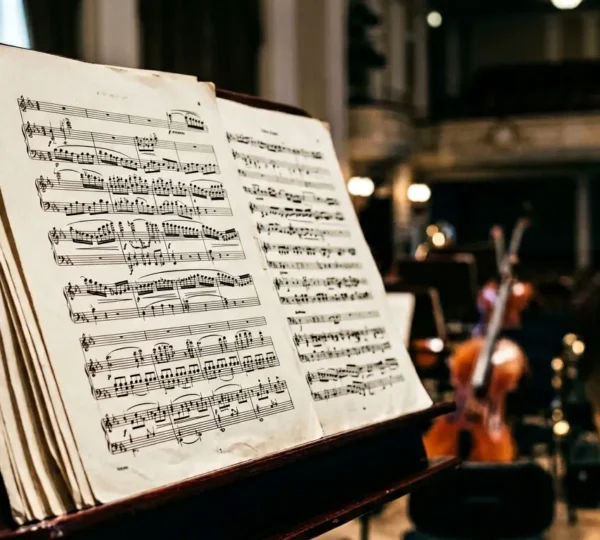
Why Do Your Orchestral Scores Sound Thin Despite Using 60 Instruments?
Orchestral fullness is not achieved by adding more instruments; it is achieved by using fewer, more intelligently. Poor interval choices and register placement cancel out timbres, creating a homogenous, « grey » sound rather than a rich one. Professional texture relies on…
Lire la suite
Why Does Your Chord Progression Sound Like Every Pop Song Despite Using Complex Voicings?
Adding complex voicings isn’t the key to a unique sound; it’s understanding the deeper principles of harmonic function and context that truly breaks the cycle of predictability. Generic progressions often stem from predictable root motion and rhythmic placement, problems that…
Lire la suite
Why Do Some Singers Lose Their Top Notes by 40 While Others Maintain Range into Their 60s?
Contrary to common wisdom, vocal longevity is not a lottery nor is it simply a matter of ‘not pushing’. It is the direct result of mastering a dynamic equilibrium between breath support, laryngeal stability, and intelligent repertoire choices. This article…
Lire la suite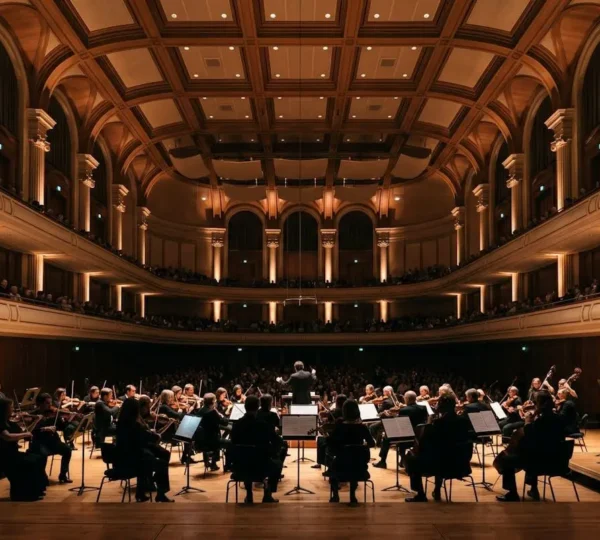
Why Do Some Concert Halls Make Your Instrument Sound Better Than Your Practice Room?
The sonic gap between your practice room and a concert hall isn’t magic; it’s a predictable set of physical phenomena that you, as a performer, can understand and even manipulate. Small rooms create powerful low-frequency « room modes » that cause notes…
Lire la suite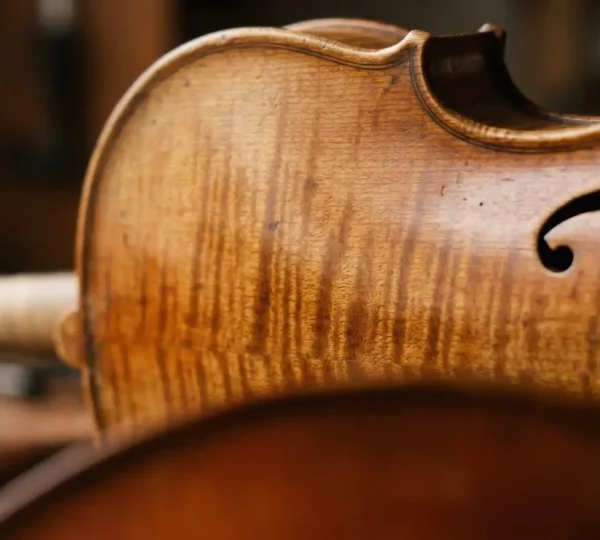
Why Does a £500 Violin Sound Different from a £50,000 Instrument with the Same Strings?
A violin’s sound quality is not magic; it’s a predictable outcome of measurable physical properties, from the cellular structure of its wood to its interaction with the room. Superior tonewood possesses a high stiffness-to-weight ratio, determined by slow, high-altitude growth,…
Lire la suite
How to Build a 360-Degree Soundscape for Under £500 in a Home Studio?
Creating a truly immersive soundscape on a sub-£500 budget is not about expensive hardware, but about mastering the physics of sound and the psychology of hearing. Professional-grade ambisonic tools are available for free, integrating directly into DAWs like Reaper. Understanding…
Lire la suite