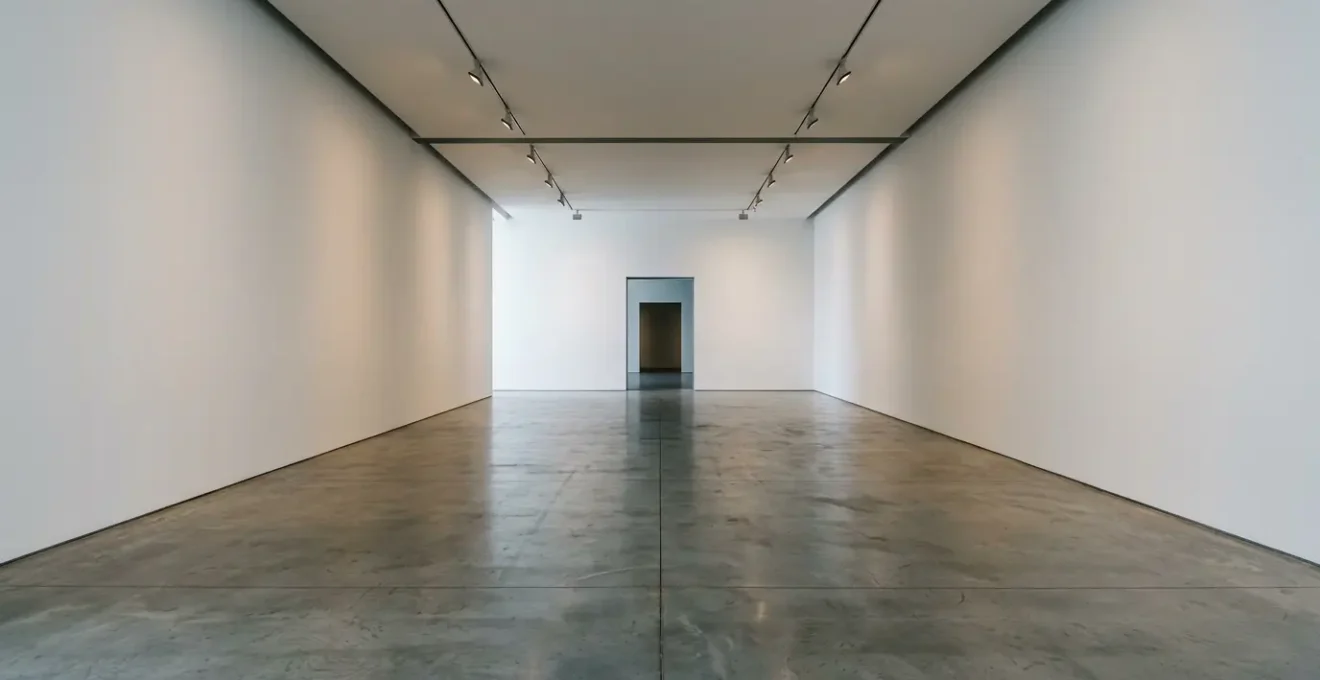
The pervasive loneliness in virtual galleries stems not from poor graphics, but from a fundamental misunderstanding of the medium: we replicate empty rooms instead of engineering shared human experiences.
- The perceived value of digital art (like NFTs) plummets when it lacks the context of patronage and human connection that physical art provides.
- Extending visitor time past five minutes requires « sensory engineering »—using spatial audio and interactive elements to create a sense of presence, not just a slideshow.
Recommendation: Stop cloning physical architecture and start designing for communal discovery and sensory richness. The goal is a shared moment, not a sterile showroom.
You’ve meticulously designed it. The virtual walls are pristine, the lighting is perfect, and the high-resolution artworks are hung with digital precision. Yet, the analytics tell a brutal story: visitors arrive, glance around, and leave within a minute. The space you envisioned as an immersive new frontier for art feels less like a bustling gallery and more like a beautiful, silent tomb. This familiar feeling of digital silence isn’t a technical failure; it’s a human one. We’ve become experts at building 3D models of rooms but have forgotten how to make them feel inhabited.
The common advice is to use higher quality images or add « interactive » buttons. But these are superficial fixes for a deeper problem. The core issue is that most virtual exhibitions mimic the form of a physical gallery while completely neglecting its social and sensory function. A real gallery is rarely silent; it’s a space of quiet footsteps, murmured conversations, and the shared act of looking. It’s about being in a space with others, even strangers. Without this sense of co-presence, a digital space is just a lonely webpage.
But what if the true potential of a virtual gallery isn’t to replicate the physical, but to transcend its limitations? What if the key to fighting this loneliness wasn’t better graphics, but the deliberate engineering of human presence and sensory richness? This is not about building a better digital museum; it’s about designing a new kind of shared experience. It’s about moving from isolated viewing to communal discovery.
This guide will deconstruct why so many digital exhibitions fail to create connection and provide a strategic framework to transform them. We will explore how to restore value to screen-based art, design for longer engagement, choose the right platform for human interaction, and ultimately create virtual spaces that feel alive, captivating, and deeply human.
This article provides a comprehensive look at the strategies and platforms that can transform a solitary digital space into a vibrant hub of artistic engagement. Explore the sections below to understand each critical component.
Summary: Why Does Your Virtual Gallery Feel Lonely Instead of Immersive?
- Why Do Collectors Value NFTs Less When They Only Exist on Screens?
- How to Create a Virtual Gallery Where Average Visit Time Exceeds 5 Minutes?
- Mozilla Hubs vs Spatial vs Custom WebGL: Which Platform Suits Art Shows Best?
- The Image Compression That Destroyed Brushwork in Your Virtual Gallery
- When to Launch Virtual Extension: Simultaneously or After Physical Show Closes?
- How to Create a Gallery-Ready VR Environment in Unity Without Writing Code?
- Why Does Nobody Read Those 150-Word Labels You Spent Weeks Perfecting?
- Why Did the V&A’s VR Exhibition Attract 3x More Under-35 Visitors Than Traditional Rooms?
Why Do Collectors Value NFTs Less When They Only Exist on Screens?
The initial explosion of the NFT market was built on a promise of digital authenticity and ownership. Yet, as the hype subsided, a fundamental disconnect emerged. A purely screen-based existence strips an artwork of its traditional context and, with it, much of its perceived value. When an NFT is just a file on a server, indistinguishable from a right-clicked copy, its « aura »—that sense of unique presence—vanishes. The result is a market collapse, where recent market analysis reveals that the NFT art market has seen a 93% decline in trading volume from its peak in 2021.
The problem is not the digital nature of the work itself, but the lack of a meaningful experience surrounding it. In the physical world, value is built through provenance, exhibition history, and the social act of collecting. Virtual galleries that are mere digital repositories fail to replicate this. They present the asset but not the story or the human connection. True collectors often seek more than just an investment; they seek a relationship with the artist and their creation. As investor Mark Cuban observed, the market is maturing towards a different kind of motivation.
These collectors aren’t primarily driven by potential gains but are motivated more by a desire to engage in patronage and directly support the artists behind the work.
– Mark Cuban, The Art Newspaper
To restore value, virtual exhibitions must therefore shift focus from being sterile showcases to becoming platforms for this patronage and connection. It’s about creating a sense of perceived proximity to the artist—through virtual studio visits, live-streamed talks within the gallery space, or exclusive content that builds a narrative. The value isn’t in the pixels alone; it’s in the experience you build around them, giving the collector a role not just as a buyer, but as a supporter.
How to Create a Virtual Gallery Where Average Visit Time Exceeds 5 Minutes?
The five-minute mark is a critical threshold. Crossing it means you’ve moved a visitor from passive browsing to active engagement. The secret isn’t more art or shinier walls; it’s sensory engineering. A lonely gallery is a sensorily deprived one. To keep visitors immersed, you must engage more than just their eyes. You need to create an environment that feels responsive, textured, and alive, replacing the digital silence with a rich, multi-layered experience.
This starts with spatial audio. Imagine walking closer to a sculpture and hearing a faint, related soundscape grow in intensity, or the artist’s voice whispering an insight about their process. This auditory texture creates a sense of place and rewards exploration. It transforms the visitor from a spectator into a participant in a living environment. This isn’t just a theory; a comprehensive scientific study on VR museums found that this multisensory coordination is key to immersion.

Case Study: The VR Basilica Reconstruction
A scientific study analyzing VR museum experiences highlights the success of France’s Musée de Cluny. Their reconstruction of a basilica didn’t just show the architecture; it brought it to life with flickering candlelight, the sound of resonant chimes, and spatial audio that changed as users moved. This sensory-rich approach significantly enhanced user engagement, immersion, and even content retention, proving that technical operability and perceived usefulness are deeply tied to a well-orchestrated, multisensory design.
Beyond audio, consider communal discovery. Seeing the ghostly avatars of other visitors, or a guestbook where people can leave public audio comments, creates a sense of shared presence. It tells a new visitor, « You are not alone here. Others have walked these halls. » This social proof turns a solitary experience into a communal one, encouraging visitors to linger, explore, and see what others have discovered.
Mozilla Hubs vs Spatial vs Custom WebGL: Which Platform Suits Art Shows Best?
Choosing a platform is one of the most critical decisions for a digital curator, as it defines the boundaries of your creative vision and your audience’s experience. The question isn’t « which is best? » but « which best serves my intent? » Are you fostering a grassroots, experimental community, or are you presenting a polished, high-stakes sales exhibition? Each platform—Mozilla Hubs, Spatial, and a custom WebGL build—offers a distinct answer.
Mozilla Hubs is the open-source, community-oriented choice. Its primary strength is accessibility; it runs in a browser on nearly any device, with no downloads required. This makes it ideal for public-facing, experimental « happenings » where you want to remove all barriers to entry. While its graphic fidelity is lower, its high customizability through the Spoke editor allows for unique, artist-driven worlds. It excels at fostering communal discovery, though it can struggle with performance when more than a dozen users are present.
Spatial, by contrast, is built for the professional and corporate world. Its aesthetic is polished, its avatars are photorealistic, and its user experience is optimized for smaller, collaborative meetings and presentations. It’s the perfect choice for a blue-chip gallery wanting to host a private viewing for VIP collectors. Its limitations are the trade-off for its polish: you operate within Spatial’s ecosystem, with less creative freedom than Hubs or a custom build.
Finally, a custom WebGL environment represents ultimate creative freedom. You are not bound by any platform’s constraints. You can achieve the highest visual quality, design entirely novel interaction mechanics, and create a truly unique branded experience. This power comes at a significant cost in technical skill, time, and budget. It is the realm of major institutions or artists making a definitive statement, where the virtual space is itself a work of art.
The following table breaks down these choices, helping you align your curatorial goals with the right technical foundation. As a comparative analysis of these platforms shows, the best choice depends entirely on your project’s specific needs.
| Platform Feature | Mozilla Hubs | Spatial | Custom WebGL |
|---|---|---|---|
| Accessibility | Browser-based, no downloads, works on all devices | Requires account, works on Oculus Quest, HoloLens, web, iOS, Android | Fully customizable browser experience |
| Visual Quality | Lower graphic fidelity, less professional appearance | Photorealistic avatars from photos, polished corporate aesthetic | Highest quality achievable with optimization |
| Customization | High flexibility via Spoke editor, open-source | Upload custom environments, limited by platform constraints | Complete creative control, unlimited customization |
| User Capacity | 12+ users causes performance issues with headsets | Optimized for smaller collaborative groups | Dependent on infrastructure and optimization |
| Best Use Case | Community-driven happenings, experimental collaborations | Professional presentations, sales galleries, design reviews | Unique artistic statements, branded experiences |
| Technical Skill Required | Low (browser-based with visual editor) | Low to Medium (account setup, environment upload) | High (coding, 3D development, optimization) |
The Image Compression That Destroyed Brushwork in Your Virtual Gallery
In the rush to optimize for fast loading times, one of art’s most vital elements is often the first casualty: texture. Aggressive image compression, the default for many platforms, flattens paintings and photographs into lifeless, plasticky surfaces. It erases the subtle impasto of an oil painting, the delicate grain of a photograph, and the intricate weave of a canvas. This isn’t just a technical detail; it’s an act of disrespect to the artwork and the artist.
When you destroy the brushwork, you destroy the evidence of the human hand. You remove the visceral, tactile quality that connects a viewer to the physical act of creation. A virtual gallery is already one step removed from the original object; to then further degrade the image is to sever that final, tenuous link to its materiality. Visitors may not be able to articulate why an image feels « off, » but they sense the lack of depth and authenticity. The result is a subconscious disengagement. Why linger on a digital print that has less texture than a postcard?

The solution lies in a more thoughtful approach to image optimization. Instead of a one-size-fits-all compression setting, curators must find a balance. This may involve using next-generation image formats like WebP or AVIF, which offer better compression with fewer artifacts. More importantly, it involves providing users with a choice. A gallery could load a smaller, faster version by default but offer a « high-fidelity » or « zoom » mode that loads a less compressed, high-resolution tile set on demand. This respects both the user’s bandwidth and the artist’s craft.
By preserving the texture, you are doing more than improving image quality. You are preserving the story embedded in the artwork’s surface. You are allowing the viewer’s eye to travel the same path the artist’s brush once did. This act of careful preservation is a cornerstone of creating a virtual space that feels respectful, authentic, and truly immersive.
When to Launch Virtual Extension: Simultaneously or After Physical Show Closes?
A common fear among institutions is that a virtual exhibition will « cannibalize » the audience for the physical show. The data, however, points to the opposite conclusion. Rather than being competitors, the physical and virtual are complementary experiences that can dramatically expand an exhibition’s reach and impact. The question is not *if* you should launch a virtual extension, but *when* and *how* to maximize its effect.
Delaying the virtual launch until after the physical show closes is a defensive strategy rooted in a scarcity mindset. It treats the virtual as a mere archive, a consolation prize for those who couldn’t attend in person. A simultaneous launch, however, is an offensive strategy. It positions the virtual exhibition as a dynamic, parallel track—a « digital twin » that offers its own unique value. This approach can generate pre-visit excitement, provide a post-visit opportunity to re-engage with the art, and, most importantly, reach a global audience that was never going to walk through the physical doors. The demand is undeniable; a global survey by the Museums in the Metaverse project found that 79% of respondents are interested in using digital tech to explore collections.
This strategy of complementary expansion has already been proven successful by major institutions. By running both experiences in parallel, they create a powerful feedback loop where the digital and physical promote each other.
Case Study: Musée d’Orsay’s Impressionist VR
In 2023, the Musée d’Orsay in Paris launched « Tonight with the Impressionists, Paris 1874 » alongside its physical offerings. This immersive VR experience, which drew 18,000 visitors in five months, allowed audiences to engage with artists like Monet and Degas in a new context. Its success demonstrated that a high-quality, simultaneous virtual offering doesn’t detract from the physical gate; instead, it expands the museum’s audience and deepens engagement by offering a different, yet complementary, way to experience the art.
The optimal strategy, therefore, is to launch simultaneously but differentiate the offerings. The virtual experience shouldn’t just be a 3D scan of the room. It should offer things the physical cannot: the ability to « step inside » a painting, to hear from the artist directly, or to see the artwork from impossible angles. By doing so, you give people a reason to visit both, transforming the virtual from a substitute into an essential, exciting part of the complete exhibition story.
How to Create a Gallery-Ready VR Environment in Unity Without Writing Code?
The idea of building a custom VR environment often conjures images of complex code and steep learning curves. However, the landscape has changed. Today, creating a compelling, gallery-ready VR space no longer requires you to be a programmer. By leveraging visual scripting tools within game engines like Unity, or using dedicated no-code platforms, artists and curators can take direct creative control.
The key is to focus on asset creation and world-building rather than scripting. You can start with pre-built gallery templates or import custom 3D models of your desired space. Platforms like Mozilla Hubs, with its visual editor Spoke, are specifically designed for this. They allow you to drag and drop assets, position lights, and define navigation paths using an intuitive interface. The focus shifts from writing `C#` scripts to the curatorial act of arranging space and crafting a visitor journey.
This no-code approach empowers you to experiment and iterate quickly. You can test different layouts, lighting schemes, and art placements without waiting for a developer. This hands-on process ensures the final environment is a true reflection of your artistic vision, not a compromise dictated by technical limitations. The following checklist provides a clear roadmap for building your own VR gallery without writing a single line of code, turning a daunting technical challenge into a manageable creative project.
Action Plan: Your No-Code VR Gallery Checklist
- Choose your platform: Select between browser-based solutions like Mozilla Hubs (accessible, open-source) or more polished platforms like Spatial (photorealistic, corporate-grade) based on your audience and aesthetic goals.
- Select or design a template: Use pre-built gallery templates or create custom 3D environments using visual editors like Spoke (for Hubs) that require no programming knowledge.
- Import and optimize art assets: Upload high-quality images of artworks, ensuring proper compression balance between file size and visual fidelity, and position them within the virtual space using drag-and-drop interfaces.
- Configure interaction and navigation: Set up teleport points, define user permissions, and establish clear pathways through the gallery to guide visitor flow without requiring custom scripts.
- Test and deploy across devices: Preview the experience on desktop, mobile, and VR headsets to ensure accessibility, then share via simple URL links for instant public or private access.
By following these steps, the creation of a virtual gallery becomes an act of digital sculpture and curation. You are shaping a space and an experience, using powerful tools that have been made accessible to creators, not just coders. The technology serves the art, not the other way around.
Why Does Nobody Read Those 150-Word Labels You Spent Weeks Perfecting?
You’ve researched, written, and edited them to perfection. The 150-word labels next to each piece are masterpieces of concise, insightful prose. Yet, in your virtual gallery, visitors glide right past them. The reason is simple: a virtual environment, especially in VR, is a fundamentally different medium that renders traditional didactic tools like wall text obsolete and even counter-intuitive.
Reading a dense block of text on a screen, particularly within an immersive 3D space, is a jarring experience. It breaks the very immersion you’re trying to create. It forces the visitor to switch from an exploratory, spatial mindset to a linear, analytical one. This context-switching creates cognitive friction, and most users will opt for the path of least resistance: ignoring the text and moving on. The wall label is an artifact of the physical world, born of its limitations. In the boundless digital realm, clinging to it is a failure of imagination.
The virtual medium doesn’t ask for text; it asks for storytelling that is embedded within the experience itself. Instead of a label explaining an artist’s inspiration, why not let the user trigger an audio clip of the artist’s voice? Instead of describing a historical context, why not subtly change the environment’s lighting and sound to evoke that era as the user approaches a piece? The most engaging virtual experiences integrate information seamlessly, making it part of the discovery process rather than a homework assignment.
VR provides a fully immersive digital experience. There are no walls, no ‘don’t touch’ signs, no single perspective. The artist controls the world—and so does the viewer. In the right hands, it is the purest form of immersive storytelling.
– Museum of Modern and Ancient Art (MOMAA) research team, Virtual Reality Art Installations: Immersive Experiences in Galleries
The future of virtual curation lies in this « purest form of immersive storytelling. » It means letting go of old habits and embracing the unique capabilities of the medium. Your role as a curator is no longer just to select and explain, but to design a narrative journey, where information is revealed through interaction, exploration, and sensory experience. It’s time to stop writing labels for virtual walls and start designing worlds for curious minds.
Key takeaways
- Loneliness in virtual galleries is a design problem, not a technical one, caused by replicating empty spaces instead of creating shared experiences.
- True engagement comes from « sensory engineering »—using spatial audio, tactile details, and interactive narratives to create a sense of presence.
- The most successful virtual exhibitions complement, rather than cannibalize, physical shows by offering unique experiences only possible in the digital realm.
Why Did the V&A’s VR Exhibition Attract 3x More Under-35 Visitors Than Traditional Rooms?
The success of the Victoria and Albert Museum’s VR experiences, particularly in attracting a younger demographic, is not an anomaly. It’s a clear signal of a generational shift in expectations. Younger audiences, raised on the interactive and agentive worlds of video games, are not satisfied with being passive observers. They want to participate, explore, and have an impact on their environment. The V&A’s success story is a masterclass in how to meet—and exceed—these expectations.
The key was abandoning the « look but don’t touch » ethos of a traditional museum. Instead, they built experiences where curiosity was the primary mechanic and interaction was intuitive and rewarding. This approach is validated by broader findings, as scientific research confirms that younger users respond more positively to virtual exhibitions that offer higher levels of immersion and agency. They are not looking for a 3D scan of a room; they are looking for a world to play in.
Case Study: V&A’s ‘Curious Alice’ VR Experience
The V&A’s partnership to create ‘Curious Alice’ was designed specifically to be low-threshold and instantly understandable for a generation unaccustomed to passive viewing. Crucially, it used hand tracking instead of controllers, removing a layer of abstraction and making interactions feel natural. The experience played with scale and physics in ways only possible in VR—visitors literally fell down the rabbit hole. This created a profound sense of agency and discovery that fulfilled the core expectations of an audience fluent in the language of interactive entertainment, leading to unprecedented engagement from visitors aged 15 and up.
The lesson from the V&A is profound: to attract the next generation of art lovers, institutions must embrace the unique strengths of the virtual medium. It’s not about putting art on screens; it’s about building worlds around the art. It’s about designing for agency, exploration, and narrative friction—creating experiences that are not just seen, but are felt and remembered. This is how you transform a lonely gallery into a magnetic destination, not just for the existing audience, but for a whole new one waiting to be engaged.
By shifting the focus from architectural replication to experiential design, you can transform your virtual gallery from a silent, empty space into a vibrant, engaging, and deeply human destination. The tools are available, the audience is ready, and the artistic possibilities are limitless. Begin today to design not just a space, but a shared moment.