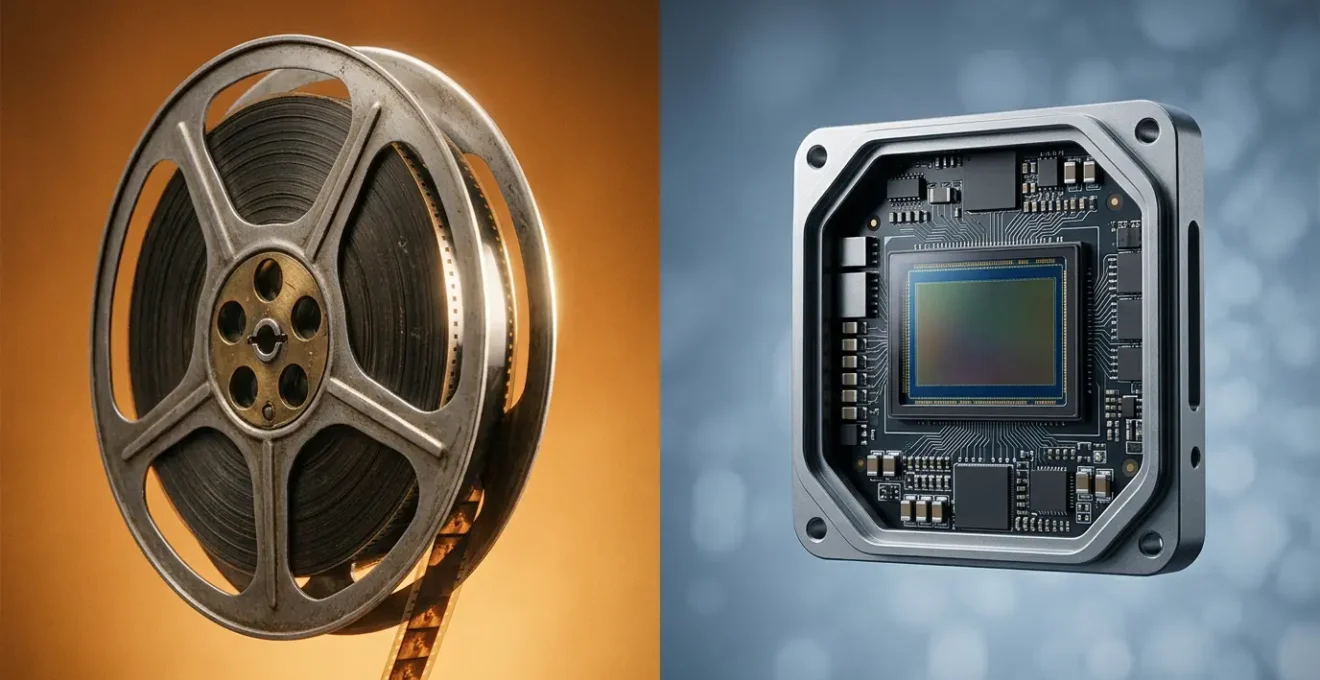
The common belief that better tech like 8K cameras creates a « cinematic » look is a trap; true cinema is born from intentional artistic abstraction, not hyper-realistic clarity.
- The « soul » of cinema lies in textural integrity—like film grain—which creates psychological closeness, something sterile digital perfection struggles to replicate.
- A signature look comes from a consistent colour philosophy and understanding light, not by simply applying a generic LUT or Instagram-style filter.
Recommendation: Stop chasing technical perfection and start mastering the art of subtraction—using texture, deliberate colour choices, and « imperfections » to transform a literal recording into an emotional experience.
You’ve done everything by the book. You invested in a 4K, maybe even an 8K, camera. You shoot in LOG, nail your exposure, and your footage is technically flawless. Yet, when you sit down in the edit suite, the result feels… sterile. It looks less like a frame from a film you’d pay to see in a theatre and more like a high-end corporate video. This is a common and deeply frustrating experience for many filmmakers today. You have the resolution, the dynamic range, the technical quality, but the soul—the elusive « cinematic » quality—is missing.
The internet will offer a checklist of familiar solutions: shoot at 24fps, use a shallow depth of field, apply a LUT. While these are components, they are not the answer. They are the « what, » not the « why. » The problem is that we’ve been taught to equate cinematic quality with technical specifications, when in reality, the opposite is often true. The path to a cinematic image isn’t about adding more pixels or achieving perfect clarity. It’s about understanding the art of subtraction.
But what if the key wasn’t in replicating reality perfectly, but in creating a deliberate, artistic abstraction from it? This guide moves beyond the technical platitudes. We will explore the philosophy behind the cinematic image, dissecting why the organic « flaws » of analogue formats feel more resonant than digital perfection, how to build a colour identity from scratch, and when your gear actually matters—and when it doesn’t. This is about retraining your eye to see beyond the specs and start crafting images that tell a story, evoke an emotion, and feel truly cinematic.
To guide you through this transformation, this article is structured to deconstruct the core elements of the cinematic image, moving from foundational theory to practical application and strategic thinking.
Summary: From Corporate Video to True Cinema: A Cinematographer’s Guide
- Why Does 16mm Film Still Look More Cinematic Than Your 8K Digital Footage?
- How to Create a Signature Colour Look in DaVinci Resolve Without Formal Training?
- Sony FX3 vs ARRI Alexa Mini: Which Justifies the 10x Price Difference for UK Indies?
- The Instagram-Filter Look That Immediately Flags Student Films to Industry Viewers
- When to Invest in New Camera Tech: Early Adoption or Proven Maturity?
- Why Does Thick Paint Absorbs Light Instead of Reflecting It in Amateur Work?
- The 12-Inch Microphone Shift That Transforms a Thin Recording into a Rich One
- Why Do Festival-Winning Documentaries Fail to Find Broadcast or Streaming Homes?
Why Does 16mm Film Still Look More Cinematic Than Your 8K Digital Footage?
The paradox at the heart of modern cinematography is that while digital sensors achieve near-perfect reality capture, they often lack the « feel » of cinema. The answer lies not in resolution, but in textural integrity. 16mm film, with its organic grain structure, is inherently an interpretive medium. Each frame is a unique chemical reaction, creating a layer of abstraction between the viewer and reality. This isn’t a flaw; it’s a feature. This texture provides a tactile quality that digital sensors, with their rigid pixel grids, have to emulate. In fact, a technical analysis from High Water Media notes that even if a 4K digital image is perceived as having higher resolution, it lacks this essential character.
This « flaw » of film grain is precisely what creates a deeper connection. As the team at Filmmakers Academy notes about film’s aesthetic:
It creates a psychological closeness to the characters. It feels ‘lived-in.’ And it separates the audience from the hyper-reality of digital 4K, providing a layer of artistic abstraction without sacrificing detail.
– Filmmakers Academy, Super 8 Film vs. 16mm Film vs. 35mm Film
The corporate video look is often a result of this hyper-reality—it’s too clean, too perfect, and too literal. It shows you exactly what a thing looks like. Cinema, by contrast, shows you what a thing feels like. The grain, the subtle gate weave, the way highlights bloom—these are not just nostalgic artefacts. They are tools of emotional translation, transforming a recording into an experience. The quest for a cinematic image, therefore, begins with embracing this concept of artistic abstraction.

As you can see in the textural differences, the organic, chaotic nature of film grain is fundamentally different from the uniform grid of a digital sensor. Your 8K camera captures information; 16mm captures a feeling. The challenge for the modern filmmaker is not to achieve perfect clarity, but to learn how to intentionally introduce this textural soul back into the pristine digital image, making it feel crafted rather than merely recorded.
How to Create a Signature Colour Look in DaVinci Resolve Without Formal Training?
A signature colour look is a filmmaker’s calling card, yet many emerging artists fall into the trap of « LUT-slapping »—applying a preset and hoping for the best. This often results in a generic, trendy look that lacks intention and quickly dates the work. The solution is to develop a colour philosophy. It’s not about knowing every tool in DaVinci Resolve, but about building a repeatable, logical workflow that serves the story. As experts at Simon Says AI point out, Resolve is a powerhouse with a Hollywood pedigree, used for colouring feature films. Its depth is an asset, not a barrier.
The key is to move from a mindset of « correcting » an image to « building » one. Instead of just tweaking sliders, you should think in terms of structure. A node-based workflow is perfect for this. Each node becomes a distinct thought or step in your process: one for balancing, one for contrast, one for the creative look, and another for final tweaks. This structured approach allows you to experiment wildly while always being able to trace your steps and maintain control. It turns a chaotic process into a deliberate, architectural one.
Developing this skill doesn’t require a four-year degree in colour science. It requires discipline and a commitment to using your eyes in conjunction with your scopes. The scopes (Waveform, Vectorscope, Parade) are your objective truth, grounding your subjective creative choices in technical stability. They prevent you from crushing your blacks or blowing out skin tones simply because your monitor isn’t perfectly calibrated. By combining a structured workflow with objective tools, you can begin to build looks that are not only beautiful but also repeatable and, most importantly, uniquely yours.
Your Action Plan: A Beginner’s Node-Based Colour Workflow
- Create a Node Tree Structure: Use Alt+S to add serial nodes. Label them by function: first node for ‘Noise Reduction’, second for ‘Primary Balance’ (exposure, contrast, saturation), subsequent nodes for ‘Secondary’ (skin tones, specific hues), and a final node for ‘Look/Grain’.
- Apply Primary Correction First: Using your scopes, work in the ‘Primary Balance’ node. Use the Lift/Gamma/Gain wheels to establish the core mood and balance the shot. This is the foundation of your entire grade.
- Add LUTs as Inspiration, Not an Answer: In a dedicated ‘Look’ node, apply a stylistic LUT if you wish, but immediately dial its opacity/key output down to 30-50%. Use it as a starting point, then use subsequent nodes to manually refine and personalize the look.
- Trust Your Scopes, Not Just Your Eyes: Constantly reference your scopes. The Waveform monitor is crucial for judging brightness and contrast consistency across shots. The Vectorscope is your guide for colour balance and ensuring skin tones are on the skin tone line. The RGB Parade shows the distribution of red, green, and blue channels, helping you spot and correct colour casts.
- Build a Subtle Colour Journey: For a cohesive film, create shared nodes for scenes with a similar look. Use the colour wheels to subtly shift the palette across the narrative to reflect the emotional beats of the story, creating a subconscious journey for the audience.
Sony FX3 vs ARRI Alexa Mini: Which Justifies the 10x Price Difference for UK Indies?
The « gear acquisition syndrome » is a powerful force, driven by the belief that a more expensive camera will magically solve creative problems. The ARRI Alexa has long been the gold standard for cinematic imaging, with a price tag to match. For a UK indie filmmaker, the cost can be prohibitive. The question then becomes: is the image quality of an Alexa Mini truly ten times better than a capable prosumer camera like the Sony FX3? The answer, increasingly, is no. While there are differences, they are often in the realm of subtle refinement rather than revolutionary leaps.
The debate is less about raw image quality and more about workflow, reliability, and the ecosystem. An ARRI is built like a tank for the rigours of a professional set, with a user interface and menu system refined over years of feedback from professional crews. Its colour science is legendary for producing beautiful, robust files that are a dream to work with in post. These are not insignificant advantages. However, as 4K Shooters noted in a comparison, the visual difference can be surprisingly minimal: « The ARRI ALEXA has some subtle differences and appears to have a slightly more neutral color, but that’s a huge jump in price for a minor gain. »
The most compelling argument against price-tag elitism is how cameras are being used in the real world. A skilled cinematographer can make almost any modern camera sing, and the line between « pro » and « prosumer » is blurring.
Case Study: The Creator’s Prosumer Revolution
The 2023 sci-fi epic The Creator, an $80 million production shot for IMAX, serves as a powerful testament to this shift. As documented by YMCinema, cinematographers Greig Fraser and Oren Soffer shot the entire film on the Sony FX3, a camera that costs a fraction of a typical cinema package. Fraser praised its compact size and exceptional high ISO performance, which allowed for a nimble, natural-light-oriented shooting style. This choice demonstrates that with world-class cinematography, lighting, and post-production, a so-called « prosumer » camera is capable of producing images for the most demanding screen in the world. It proves that the artist’s vision and skill, not the camera’s price tag, are the primary drivers of cinematic quality.
The Instagram-Filter Look That Immediately Flags Student Films to Industry Viewers
In a world where video content is ubiquitous, distinguishing your work is harder than ever. With 91% of businesses using video for marketing, audiences are inundated with content that is clean, sharp, and competent—but ultimately forgettable. The « corporate video look » has become the default visual language. Amateur filmmakers, in an attempt to break away from this, often swing too far in the other direction, adopting a heavy-handed, filter-driven aesthetic that screams « amateur » to any industry professional. This « Instagram-filter look »—often characterized by overly crushed blacks, a single dominant colour cast (usually teal or orange), and exaggerated vignetting—is a tell-tale sign of inexperience.
This look fails because it lacks subtlety and, more importantly, it lacks story motivation. It’s a stylistic choice imposed on the image rather than one that grows out of the narrative. True cinematic colour is not about making everything look « cool »; it’s about creating a psychological and emotional context for the story. The overuse of generic filters or LUTs flattens this potential, applying the same emotional note to every scene, regardless of its content. It prioritizes a superficial « vibe » over genuine storytelling.
The antidote to this is to return to the fundamentals of texture and personality. A truly cinematic image feels personal and specific. As producer Gale Anne Hurd commented on the power of film grain, « You really are in there with the characters. The grain itself, it somehow makes it feel much more personal. » The Instagram-filter look is the opposite of personal; it’s a generic mask. A professional viewer can spot it instantly because it signifies a filmmaker who is following a trend rather than making a conscious, story-driven choice about their visual language. The goal should be to create a world that feels unique to your film, not one that looks like a thousand other videos on social media.
When to Invest in New Camera Tech: Early Adoption or Proven Maturity?
The relentless cycle of camera releases can create a constant sense of anxiety for filmmakers. Should you be an early adopter, gaining a potential edge with the latest technology? Or is it wiser to stick with proven, mature systems that are reliable and well-understood? The answer depends on understanding that a camera is not an isolated purchase. It is the heart of a complex and expensive ecosystem. Lenses, batteries, media, rigging, and monitoring all represent significant investments that often dwarf the cost of the camera body itself.
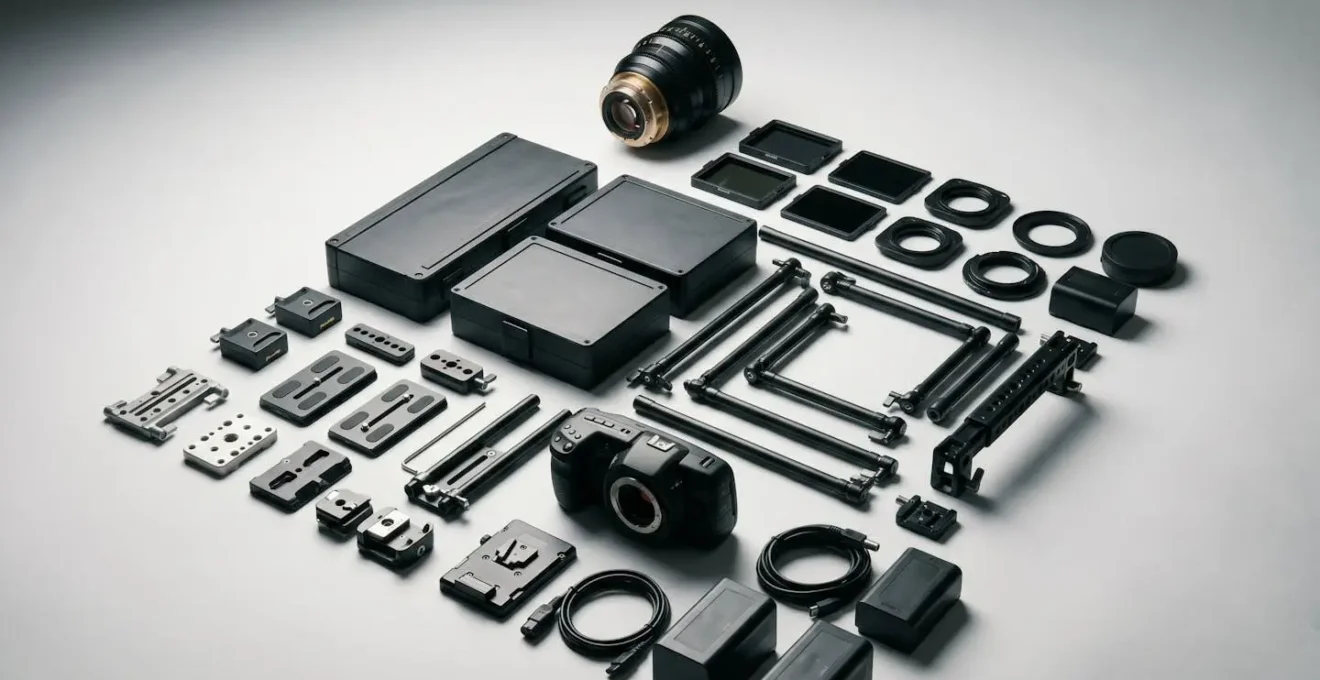
As this layout shows, the camera body is just one piece of a much larger puzzle. Early adoption of a new camera system often means investing in a new ecosystem: new lens mounts, new media formats, and new power solutions. These ancillary costs can be crippling. Furthermore, new technology often comes with unforeseen bugs, workflow quirks, and a lack of third-party support. This is a risk that a freelance filmmaker or small production company can ill afford. A bug on set can cost you a day of shooting, which is far more expensive than any perceived advantage of a new sensor.
Conversely, investing in a mature technology offers stability and predictability. Whether it’s a digital cinema camera that has been a rental-house staple for years or even analogue film, you are buying into a known quantity. The workflows are established, the accessories are widely available, and the reliability is proven. This doesn’t mean clinging to outdated tech. As Filmmakers Academy highlights, classic formats are seeing a huge resurgence. Productions like Euphoria, Carol, and The Fabelmans made a deliberate choice to shoot on film, a « proven » technology, for its specific aesthetic qualities. This is a choice born of artistic maturity, not technological backwardness. The smart investment is often in tools that are not just new, but are reliable, well-supported, and, most importantly, serve your specific storytelling needs.
Why Does Thick Paint Absorbs Light Instead of Reflecting It in Amateur Work?
This title, borrowed from the world of painting, is a perfect metaphor for a common mistake in digital cinematography: heavy-handedness. In painting, an amateur might apply thick, undifferentiated paint, which turns to mud and « absorbs » light, creating a flat, dead surface. In filmmaking, the digital equivalent is crushing the blacks, over-saturating colours, or applying a stylistic grade so heavily that the image loses all its nuance and life. The footage becomes a blocky, digital « mud, » where all the subtle information in the shadows and highlights is destroyed. It absorbs light and detail instead of reflecting it with grace and subtlety.
The cinematic image, by contrast, is about the delicate and complex management of light. It’s about letting highlights breathe and bloom, and allowing shadows to have depth and colour, not just be a void of pure black. One of the most beautiful examples of this in analogue film is halation. This is the subtle red-orange halo that appears around bright, over-exposed areas of the frame. It’s a « flaw » of the film stock, where light bounces within the emulsion layers. But this flaw is what makes highlights feel warm, vibrant, and alive. It’s an « intentional imperfection » that adds a layer of organic beauty that perfectly clean digital highlights lack.
Mastering this subtlety is the key to moving beyond the amateur, « thick paint » approach. It requires a delicate touch and an appreciation for the imperfections that create character.
Case Study: The Holdovers’ Art of Degradation
Alexander Payne’s film The Holdovers is a masterclass in this philosophy. Though shot on a modern Arri Alexa Mini, the goal was to make it look as if it were a lost film from the 1970s. As described in an analysis of its film emulation techniques, cinematographer Eigil Bryld went beyond a simple film grain overlay. The team painstakingly recreated the entire aesthetic of 1970s film, including its specific colour response, lens distortions, and, crucially, its degradation artifacts. They digitally « damaged » the pristine image to give it the feeling of having been discovered in a dusty can. This wasn’t about applying a thick filter; it was a layered, surgical process of adding subtle imperfections to create an authentic, lived-in texture.
The 12-Inch Microphone Shift That Transforms a Thin Recording into a Rich One
While we obsess over the visual, we often forget that half of the cinematic experience is auditory. The title’s « 12-inch microphone shift » is a metaphor for the profound impact of small, craft-focused details. In sound recording, moving a microphone a few inches can be the difference between a thin, distant recording and a rich, intimate one, thanks to the proximity effect. This principle of sensory proximity applies to every aspect of filmmaking. It’s the art of making precise, subtle choices that bring the audience closer to the story’s emotional core.

Just as microphone placement affects our auditory perception of intimacy, lens choice affects our visual perception. A wide lens, close to a subject, creates a different feeling of presence than a long lens from a distance, even if the framing is identical. The same is true for lighting. A soft, wrap-around light source can feel intimate and confessional, while a hard, top-down light can feel isolating and harsh. These are not just technical choices; they are psychological ones. As Vastvik Films aptly puts it, « sound design helps create the right moods and makes the story more engaging. » The same is true for every other « invisible » choice we make.
The corporate video look is often a result of neglecting this principle. The audio is functional but not evocative. The lighting is even but not emotional. The camera work is steady but not motivated. It’s a collection of technically proficient but emotionally distant choices. The cinematic filmmaker, by contrast, is obsessed with these « 12-inch shifts. » They understand that moving a light, changing a lens, or adjusting a microphone isn’t just a technical tweak. It’s a deliberate act of controlling the psychological and emotional distance between the audience and the story. It’s in these small, intentional details that a recording is transformed into a rich, resonant experience.
Key Takeaways
- Cinematic quality is not in technical perfection, but in artistic abstraction—the deliberate departure from sterile reality.
- Develop a colour philosophy based on a structured workflow and objective scopes, rather than relying on generic, trend-driven LUTs.
- The artist’s skill and vision are more valuable than the camera’s price tag; invest in the entire ecosystem (lenses, lighting, sound) before chasing the latest camera body.
Why Do Festival-Winning Documentaries Fail to Find Broadcast or Streaming Homes?
This question reveals a crucial, often painful, truth about the industry: there is a difference between a film as a piece of art and a film as a commercial product. A documentary can win major awards at Sundance or TIFF for its unique voice, challenging structure, and artistic bravery, yet be passed over by major broadcasters and streamers. Why? Because those platforms are often not in the business of acquiring « art »; they are in the business of acquiring « content » that fits a predictable, data-driven model.
The festival-winning film might be a singular, challenging, and deeply personal vision. The streamer, however, is often looking for a product that fits into a neat category, appeals to a broad demographic, and doesn’t rock the boat too much. It needs to be easily marketable and binge-able. As MotionCue notes in the context of corporate work, the goal is often to « transform ordinary videos into visually stunning and emotionally compelling brand narratives. » Streamers apply a similar logic: they want narratives that are compelling but also function as a « brand » in themselves—predictable, reliable, and easily consumed. The very uniqueness that wins a festival award can be seen as a commercial risk.
This brings us back to the central theme of this article. The struggle of the documentarian is a macrocosm of the struggle of every filmmaker: the tension between creating a unique, personal piece of cinema and a polished, predictable product. The « corporate video look » that you are trying to escape is simply the aesthetic of the latter. It is safe, clean, and universally understood. It is a good product. But cinema, in its truest form, is not always a good product. It can be messy, challenging, and specific. It is art.
Your journey from capturing technically perfect footage to crafting emotionally resonant cinema begins now. It requires a shift in mindset, away from the pursuit of perfection and towards the embrace of intentional, artful imperfection. Start by analysing your own work, not for its technical flaws, but for its lack of a distinct voice, and begin applying these principles to transform it.