
The customer’s hesitation has little to do with your 15 hours of labour and everything to do with a failure to communicate perceived value.
- Simply showing your process can sometimes devalue your work by framing it as a commodity (labour) instead of an art object (story).
- The context where an object is sold (a craft fair vs. a curated website) and the story it tells are more powerful price drivers than the hours invested.
Recommendation: Stop justifying your price with a timesheet. Instead, start crafting a compelling narrative around the object’s origin, uniqueness, and the feeling it evokes.
You’ve poured your skill, soul, and 15 painstaking hours into a beautiful ceramic bowl. You’ve calculated your material costs, factored in your workshop overheads, and set a price of £300 that barely reflects your expertise. Yet, when a potential customer picks it up, their first reaction is a sharp intake of breath, a hesitant « That’s a bit steep, » and they walk away. This scenario is painfully familiar to makers and artisans. The conventional wisdom is to be more transparent: show your process, detail the hours, educate the customer on the labour involved.
But what if that advice is fundamentally flawed? What if meticulously detailing your labour inadvertently anchors your art in the world of hourly wages, a framework where it can never truly win? The frustration you feel isn’t a failure on your part to be transparent; it’s a misunderstanding of a core principle of consumer psychology. Customers don’t buy your time. They buy a story, a symbol, a piece of a larger world you’ve created. They are purchasing an object’s perceived value, a metric that has almost nothing to do with a stopwatch.
This guide deconstructs that psychological barrier. We will move beyond the simplistic cost-plus pricing model to explore the powerful, often invisible forces that truly shape a customer’s willingness to pay a premium. We will investigate why showing your process can backfire, how a 50-word story can be more valuable than 15 hours of work, and why a designer will happily pay ten times the price for the exact same object. The key isn’t to work harder or charge less; it’s to understand and master the art of communicating value.
By exploring the psychological drivers behind high-value purchases, this article provides a strategic roadmap for makers to reframe their work, build a narrative that resonates, and finally achieve the pricing their craftsmanship deserves. The following sections break down these concepts with practical examples and actionable insights.
Contents: The Artisan’s Guide to Value Perception
- Why Does Showing Your Workshop Process Sometimes Lower Rather Than Raise Prices?
- How to Write a 50-Word Object Story That Increases Purchase Intent by 60%?
- Craft Fair vs Own Website: Which Context Supports £500+ Object Pricing Better?
- The Low-Priced Taster Item That Killed Demand for a Maker’s Premium Range
- When to Raise Prices: After Award Recognition or When Materials Cost 15% More?
- Why Does Numbering a Vase 1 of 5 Triple Its Perceived Value Overnight?
- Why Did a JPEG Outsell a Francis Bacon Sketch at Phillips Last Autumn?
- Why Do Interior Designers Pay £2,000 for a Vase They Could Source for £200?
Why Does Showing Your Workshop Process Sometimes Lower Rather Than Raise Prices?
The instinct to show the ‘making of’ comes from a logical place: if they see the effort, they’ll understand the price. However, this can backfire due to a psychological phenomenon known as the ‘effort heuristic’. When you focus a buyer’s attention on labour, you frame the object as a product of time, not a work of art. The customer’s brain switches from an emotional, appreciative mode to a transactional, analytical one. They start doing subconscious math: « 15 hours at what rate? Is that a fair hourly wage? » In this equation, your art becomes a commodity, compared to other forms of labour, and the magic is lost.
This is compounded by the fact that most people have no accurate internal gauge for what things should cost. As pricing expert William Poundstone notes in his research on pricing psychology, « People tend to be clueless about prices… We make do with guesstimates and a vague recollection of what things are supposed to cost. » When you provide ‘hours’ as the primary metric, you give their analytical brain a concrete but often unhelpful anchor. They aren’t valuing the years of skill it took to perform those 15 hours flawlessly; they’re just valuing the 15 hours.
People tend to be clueless about prices. We don’t decide between A and B by consulting invisible price tags and purchasing the one that yields the higher utility. We make do with guesstimates and a vague recollection of what things are supposed to cost.
– William Poundstone, Phoenix Strategy Group – Pricing Psychology Research
Instead of leading with effort, lead with the outcome: the object’s beauty, its unique story, its function, or the feeling it evokes. The labour is an ingredient, but it’s not the meal. Focusing too much on the process creates a psychological distance between the maker’s world of effort and the customer’s world of desire. The goal is to bridge that gap with a story, not a timesheet.
How to Write a 50-Word Object Story That Increases Purchase Intent by 60%?
If labour isn’t the story, what is? The answer lies in a short, evocative narrative that connects the object to something bigger than itself: a place, an idea, a feeling, a unique material. This isn’t about fabricating a history; it’s about articulating the genuine romance of the object. A powerful object story shifts the customer’s focus from « What does this cost? » to « How does this make me feel? » This shift is not trivial; research on consumer psychology confirms that with clear, narrative-based explanations, a staggering 72% of shoppers reported higher trust and were significantly more likely to purchase.
A compelling 50-word story doesn’t list facts; it paints a picture. Instead of saying, « This bowl was fired at 1200°C, » you might say, « Glazed with minerals collected from the Cornish coast and fired to the colour of a winter sea. Each bowl captures a piece of the storm-tossed shoreline, frozen in time. » The first is a technical detail; the second is a sensory experience. The second creates a narrative premium, an intangible value that elevates the object beyond its physical components.

This narrative should appeal to the senses. As seen in the texture of a handmade glaze, the story is in the details—the micro-bubbles, the subtle shifts in colour, the feel of the surface. Your story should translate these physical attributes into an emotional connection. It should answer implicit questions like: Why this shape? Why this colour? What inspired it? The story gives the object a soul, transforming it from a mere ‘thing’ into a treasured possession.
Your 5-Step Audit for a Powerful Object Story
- Inspiration Point: Identify the core inspiration. Was it a landscape, a memory, a specific material? (e.g., « The curve of a fallen leaf. »)
- Sensory Language: List 3-5 sensory words associated with the object. (e.g., « Cool, smooth, earthy, resonant. »)
- Unique Process: Pinpoint one unique, non-technical detail of its creation. (e.g., « Made only during the morning light, » « Glaze mixed with rainwater. »)
- The ‘Why’: Articulate the feeling or purpose it’s meant to evoke. (e.g., « Designed to bring a moment of calm to your daily ritual. »)
- Draft & Refine: Combine these elements into a 50-word narrative. Read it aloud. Does it create an image? Does it feel authentic?
Craft Fair vs Own Website: Which Context Supports £500+ Object Pricing Better?
The price a customer is willing to pay is profoundly influenced by the environment in which they encounter the product. This is the principle of contextual anchoring. A craft fair, while excellent for visibility, is often a psychologically poor environment for premium pricing. The customer is surrounded by dozens of other makers, prices are openly compared, and the atmosphere is often bustling and casual. This context implicitly anchors your £300 bowl against a £30 mug next door, creating a jarring comparison and immediate price resistance.
Conversely, your own website offers a controlled environment where you can establish a premium context. It is your digital gallery. Through high-quality photography, elegant design, and thoughtful storytelling, you can create an atmosphere of exclusivity and sophistication. The customer is not distracted by competitors; their entire focus is on your curated world. This digital space allows you to set the anchor price high. When the only other items on the page are also in the £200-£700 range, the £300 bowl suddenly seems reasonable, even desirable. The context signals that this is a place for serious art, not casual souvenirs.
The power of this framing is well-documented. Pricing psychology studies show that a store’s image drives 50% of consumers to choose one shop over another, often irrespective of the products themselves. A craft fair presents you as one of many stallholders. A curated website presents you as a singular artist. For objects priced over £500, the sale is almost always made in a context that reinforces the item’s status as a luxury good or a piece of fine art. The digital or physical ‘gallery’ is not just a sales channel; it’s a critical part of the product’s perceived value.
The Low-Priced Taster Item That Killed Demand for a Maker’s Premium Range
Introducing a low-priced ‘taster’ or entry-level item seems like a savvy business move. The logic is to attract new customers who can then ‘trade up’ to more expensive pieces. However, this strategy can be perilous if not managed with a deep understanding of price anchoring. When you introduce a £15 candle into a range of £150 ceramics, you may not be creating a gateway; you may be devaluing your entire brand. The £15 item becomes the new anchor, the reference point against which everything else is judged. Your premium range now looks disproportionately expensive, not aspirational.
Case Study: The Double-Edged Sword of Charm Pricing
A case study on an artisan candle shop highlights this risk. While using charm pricing (e.g., £14.99) initially boosted sales, it created a strong low-price identity for the brand. When the artisan later introduced a premium, hand-poured sculptural candle for £75, customers balked. The psychological gap between £14.99 and £75 was too vast. The brand had successfully anchored itself as ‘affordable,’ inadvertently killing demand for its more artistic, high-end creations. The taster item had become the brand’s defining feature, not its entry point.
This conflict creates brand dissonance and erodes trust. Consumers value consistency. A recent Gartner survey found that 80% of consumers agreed that brands with consistent pricing are more trustworthy. When a brand offers both very cheap and very expensive items without a clear distinction (like a separate ‘diffusion’ line), it can confuse the customer and make the premium prices feel arbitrary or exploitative. The premium item’s credibility is undermined by its low-priced sibling.
If you choose to offer a lower-priced item, it must be strategically firewalled from your premium range. This could be through separate branding, a ‘studio basics’ collection, or by ensuring the aesthetic and narrative are distinct. Without this separation, your most accessible item risks becoming the anchor that sinks your entire premium fleet.
When to Raise Prices: After Award Recognition or When Materials Cost 15% More?
Deciding when and how to raise prices is a source of great anxiety for makers. The two most common triggers are external validation (like winning an award) and internal cost pressures (like a 15% rise in material costs). Both are valid moments to reassess pricing, but they should be communicated very differently, as they appeal to different psychological drivers.
A 15% increase in material costs provides a logical, defensible justification for a price hike. Customers understand inflation and supply chain issues. Framing a price rise this way is transparent and fair. You can say, « Due to the rising cost of our sustainably sourced clay, we’ve adjusted our prices. » This approach can even be a positive narrative point, as PwC’s 2024 Voice of the Consumer Survey reveals that 80% of consumers are willing to pay more for sustainably produced goods. The cost increase becomes proof of your commitment to quality materials.
Winning an award, on the other hand, is about social proof and increased status. This is not the time for a timid, apologetic price adjustment. It is the moment to confidently re-anchor your work at a higher tier. This leverages the Veblen effect, where higher prices can increase demand for luxury and status-driven goods. As behavioural economics research notes, for exclusive products, « When the price increases, people buy more. » An award is external validation that your work belongs in a higher category. The price should be raised boldly to reflect this new status. Trying to justify it with material costs at this point would be a missed opportunity to reframe your brand’s position in the market entirely.
The strategy is clear: use logical justifications for incremental increases driven by costs. Use narrative and status-based justifications for significant price leaps driven by external validation. One is about maintaining fairness; the other is about claiming your new position.
Why Does Numbering a Vase 1 of 5 Triple Its Perceived Value Overnight?
Numbering an object, such as « Vase, 1 of 5, » is one of the most powerful psychological pricing tools available to an artisan. It doesn’t change the object’s physical reality, but it fundamentally transforms its perceived scarcity. A one-of-a-kind piece is unique, but a limited edition of five or ten introduces two powerful forces: social proof (others will own one) and competitive desire (there are only a few available). This manufactured rarity instantly elevates the object from a beautiful product to a collectible asset.
The value is no longer just in the craftsmanship; it’s in the exclusivity of ownership. As behavioural economics research into luxury goods points out, « Limited availability enhances perceived value… ownership signals exclusivity and membership in an elite group. » A customer buying « 1 of 5 » is not just buying a vase; they are buying a verifiable status symbol. They own a piece of a deliberately finite set, and that knowledge itself is a significant part of the value proposition. It provides them with a story to tell: « This isn’t just any vase; it’s number one from a limited run of only five ever made. »
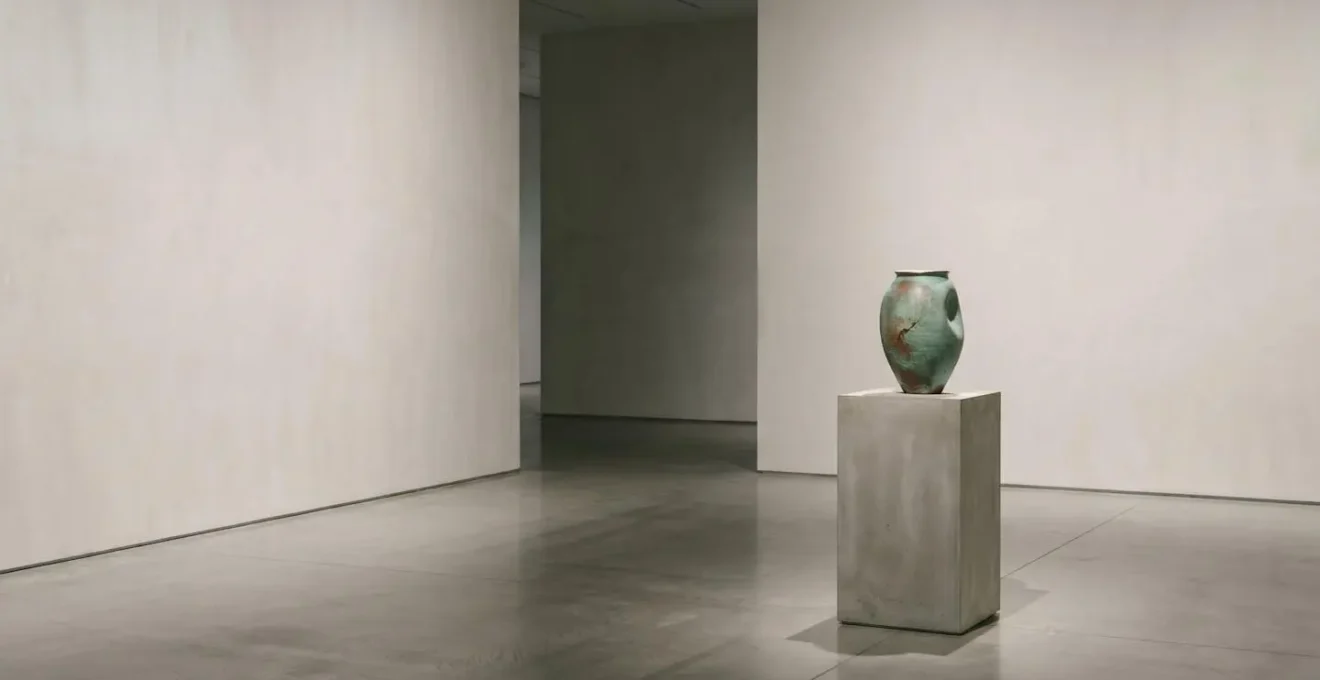
This strategy works because it moves the conversation away from materials and labour entirely. The price is justified not by the cost to produce, but by the rarity of the opportunity to own. A £300 bowl might seem expensive, but a £900 vase that is « 1 of 5 » can seem like an investment. You are no longer selling an object; you are selling a numbered piece of your artistic legacy. This is why a simple inscription on the bottom of a piece can have a more profound impact on its price than any other single factor. It’s the most direct way to communicate investment-grade value.
Why Did a JPEG Outsell a Francis Bacon Sketch at Phillips Last Autumn?
The art market is the ultimate arena for demonstrating that value is a collective belief system, not an inherent quality of an object. The moment a JPEG—a non-fungible token (NFT)—outsells a physical drawing by a 20th-century master, it forces us to confront the reality that we’ve been discussing: value is a story. The object with the better, more timely, more culturally resonant story wins.
Case Study: Mad Dog Jones’ REPLICATOR at Phillips
In April 2021, the auction house Phillips sold REPLICATOR by Mad Dog Jones for over $4.1 million. This was the first NFT ever sold by the historic auction house. Its immense value had nothing to do with a physical presence. As Phillips noted, its value was derived from its « innovative smart contract mechanics, cultural narrative, and perceived futurity. » The artwork was a story about the future of ownership, technology, and art itself. It was a groundbreaking cultural moment, and bidders were paying to own a piece of that moment. The Francis Bacon sketch, while by a master, told a familiar story. The NFT told a new one.
This event, while from the volatile world of NFTs, holds a profound lesson for every maker of physical objects. Your bowl is not just clay and glaze. It is a vessel for a narrative. Is its story about traditional craftsmanship passed down through generations? Is it about radical experimentation with new, sustainable materials? Is it about a form that captures a fleeting political or social idea? The JPEG won because its story about the digital frontier was more compelling to the bidders in the room than the story of the Bacon sketch at that specific time.
This doesn’t diminish the value of physical craftsmanship. On the contrary, it empowers it. It proves that the narrative premium is real and immensely powerful. The most successful makers are not just skilled with their hands; they are skilled storytellers who can imbue their physical creations with intangible, culturally relevant meaning. They understand that they are selling an idea, and the object is the beautiful, tangible souvenir of that idea.
Key Takeaways
- Value is Perceived, Not Calculated: Customer willingness to pay is driven by psychological factors like story and context, not by your cost of materials and labour.
- Narrative Is Your Strongest Pricing Tool: A compelling 50-word story that evokes emotion or a sense of place can add more value than 15 hours of documented work.
- Context and Scarcity Frame the Price: Selling in a ‘gallery’ context (even online) and using limited editions shifts the perception from a simple product to a collectible investment.
Why Do Interior Designers Pay £2,000 for a Vase They Could Source for £200?
When an interior designer specifies a £2,000 vase for a project, they are not simply buying an object. They are purchasing a bundle of intangible values for their client: curation, reliability, exclusivity, and a cohesive story. The designer’s job is to deliver a complete, stress-free vision. A unique, artisan-made piece is a critical component of that vision, serving as a focal point or ‘finishing touch’ that elevates the entire space. The extra cost is a fee for a problem solved.
The £1,800 premium is payment for several key services. First is curation: the designer has spent countless hours sourcing, vetting, and selecting the perfect piece that aligns with the project’s aesthetic. Second is exclusivity and narrative: a handcrafted piece from a known artist has a story that adds depth and character to the home, something a mass-produced item can never offer. The designer is selling this story to their client. Third is reliability: by purchasing through established channels from a professional maker, the designer guarantees quality, availability, and a smooth transaction, avoiding the risks of sourcing from unknown vendors.
Purchasing through an interior designer offers a high-end, stress-free experience… The designer is buying peace of mind, curation, and the guarantee of exclusivity—not just the object itself.
– Nested Interiors, Why Purchase Through an Interior Designer
For the maker, this B2B relationship is the ultimate validation of a value-based pricing strategy. The designer is your ideal customer: they intrinsically understand that the object’s price tag includes its story, its uniqueness, and the artist’s reputation. They are not looking for a bargain; they are looking for the perfect piece to complete their puzzle. Catering to this market requires professionalism, consistent quality, and a clear brand story that designers can easily integrate into their client presentations. They are, in essence, paying you for the confidence that your work will make them look good.
To truly command the prices your work deserves, the crucial first step is to re-evaluate how you frame its value. Begin today not by recalculating your hours, but by auditing the story of your most cherished piece. Shift your focus from the cost of making to the value of owning. This is the path to transforming price resistance into passionate acquisition.