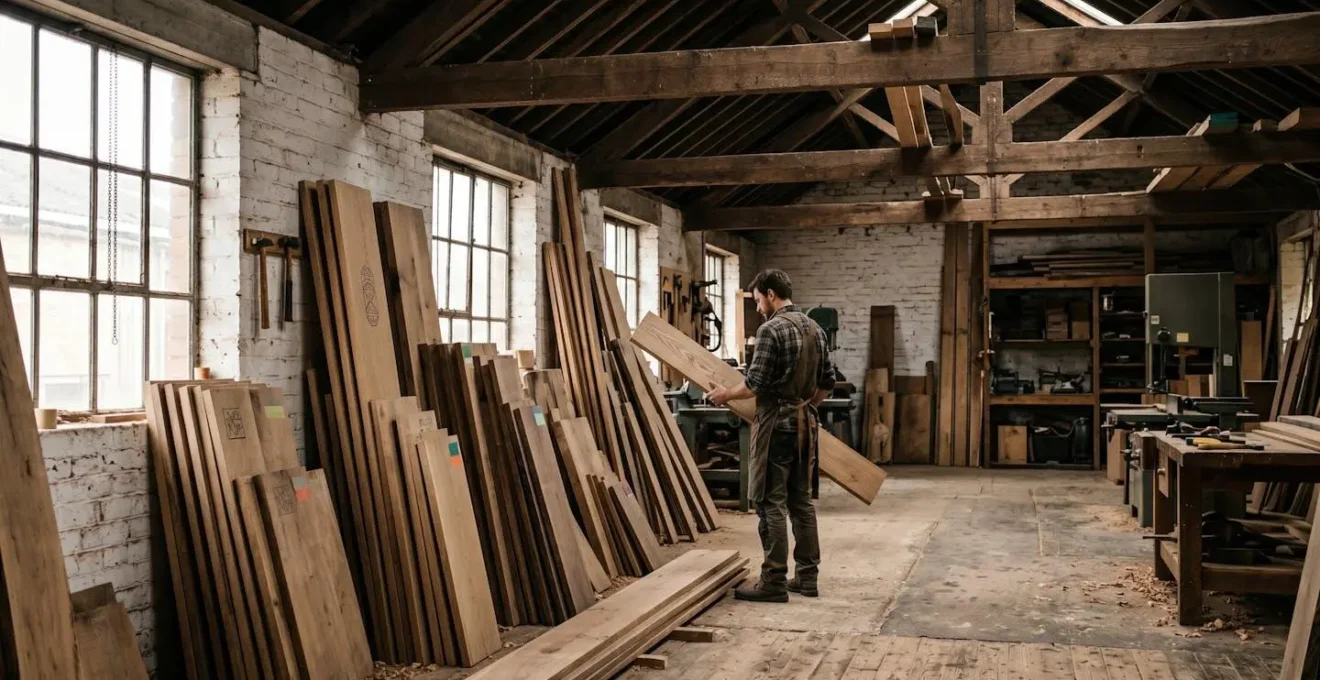
The high cost of sustainable timber in the UK isn’t just about certification; it’s a symptom of deeper supply chain frictions you can strategically navigate.
- Post-Brexit « friction » and inefficient certification models inflate UK prices significantly more than in the EU.
- Direct sourcing from woodland owners and strategic, seasonal stockpiling can cut material costs by over 25% while securing higher quality timber.
Recommendation: Shift from being a passive buyer to an active supply chain strategist to build a truly sustainable and profitable craft practice.
As a UK-based maker committed to sustainability, the frustration is palpable. You specify certified or reclaimed timber, expecting to do the right thing, only to see your material costs soar, eating into already tight margins. The common advice— »buy certified, » « use reclaimed »—feels hollow when it seemingly penalises your business. You see European counterparts accessing similar materials for less, and the question becomes unavoidable: is a sustainable practice in Britain economically unviable?
The answer is no, but it requires a fundamental shift in perspective. The problem isn’t just the price of wood; it’s the opaque, inefficient, and friction-filled supply chain through which it travels. Standard thinking focuses only on the material itself, overlooking the layers of cost added by administrative overhead, logistical bottlenecks, and a reactive purchasing strategy. True sustainability for a modern UK maker is no longer just about the wood’s origin; it’s about mastering the economics of its journey to your workshop.
This guide moves beyond the platitudes. We will deconstruct the hidden cost drivers in the UK timber market and provide a strategic framework for navigating them. By understanding the ‘why’ behind the price premium—from certification structures to the overlooked hazards of reclaimed materials—you can adopt proactive sourcing methods that not only lower your costs but also strengthen the authenticity and resilience of your craft business. It’s time to transform from a price-taker into a supply chain strategist.
This article provides a detailed breakdown of the key challenges and strategic solutions for sourcing sustainable timber in the UK. Explore the sections below to gain a competitive edge.
Contents: A UK Maker’s Strategic Guide to Sourcing Sustainable Timber
- Why Does FSC Certification Cost Suppliers More in Britain Than in Scandinavia?
- How to Source English Oak and Ash Directly from Woodland Owners for 25% Less?
- Reclaimed Pitch Pine vs New Douglas Fir: Which Performs Better for Load-Bearing Furniture?
- The Lead Paint Layer Hiding in 30% of Reclaimed Timber Sold in UK Salvage Yards
- When to Stockpile Oak: After Storm Damage Sales or During Winter Felling Gluts?
- Why Did a Sustainable Maker Face Backlash for Shipping in Plastic Despite Using Reclaimed Wood?
- Why Does Alpine Spruce from Specific Valleys Produce Brighter Tones Than Generic Tonewood?
- Why Does Your Carbon Footprint Claim Ring Hollow to Eco-Conscious Buyers?
Why Does FSC Certification Cost Suppliers More in Britain Than in Scandinavia?
The first layer of cost is often attributed to certification, but the sticker price of the logo is only part of the story. In the UK, the structure of the timber industry—dominated by smaller, fragmented suppliers compared to the large, integrated forestry operations in Scandinavia—makes the per-unit cost of certification disproportionately high. While a large Swedish mill spreads administrative fees across vast volumes, a small British sawmill faces similar fixed costs for a much lower output. FSC’s annual administration fees can range from £90 to £750 per year in the UK, a significant overhead for a small-scale operation.
However, the most significant driver of cost difference post-Brexit is not the direct fee, but what economists call ‘supply chain friction’. This encompasses the cumulative impact of non-tariff barriers: increased paperwork, port delays, and complex customs checks for imported timber. While Scandinavian suppliers within the EU benefit from frictionless trade, UK importers face a gauntlet of administrative hurdles that add time, risk, and, ultimately, cost that is passed on to you, the maker.
As one analysis on post-Brexit trade from KPMG UK highlights, this is a critical, often underestimated, factor:
the hidden cost in delays and border congestion – the ‘friction’ – of non-tariff barriers can be equally, if not more costly than the anticipated tariff impacts
– KPMG UK, Post-Brexit Trade Analysis
This friction means that even if the raw material cost is identical, the journey to a UK workshop is inherently more expensive. Understanding this distinction is the first step: you are not just paying for « sustainable wood »; you are paying for its difficult and costly passage through a high-friction supply chain.
How to Source English Oak and Ash Directly from Woodland Owners for 25% Less?
The high cost of imported timber, amplified by supply chain friction, presents a clear strategic opportunity: disintermediation. By cutting out the multiple layers of importers, distributors, and merchants, you can directly access locally grown timber for a fraction of the price. This is particularly relevant in the UK, where urban timber specialists report that the country is dependent on imports for over 90% of its hardwood, despite having high-quality native resources.
The key is to build relationships with the sources. This involves a proactive approach:
- Contacting Local Woodland Owners: Organisations like the Royal Forestry Society or Small Woods Association have networks of members who manage small-scale woodlands. They often undertake sustainable felling or thinning operations and are willing to sell smaller volumes directly to makers, bypassing the commercial supply chain entirely.
- Partnering with Arborists and Tree Surgeons: Urban and suburban tree felling generates a vast, high-quality resource that is often chipped or sent to landfill. Arborists frequently have to pay for disposal. By establishing a relationship, you can negotiate to purchase exceptional logs of oak, plane, and ash for the cost of haulage, or even for free.
- Engaging with Community Forests: These organisations manage local woodlands for public benefit and are often aligned with sustainability goals. They can be a source of unique, characterful timber from non-commercial felling operations.
This direct-sourcing model requires more effort than a simple phone call to a timber merchant. It involves networking, being prepared to handle green timber (and the associated seasoning process), and investing time in building a local supply network. However, the rewards are substantial: not only a cost reduction of 25% or more, but also access to unique timber with a verifiable, local provenance that becomes a powerful part of your brand’s story.
Reclaimed Pitch Pine vs New Douglas Fir: Which Performs Better for Load-Bearing Furniture?
Choosing a sustainable material isn’t just an ethical decision; it’s a technical one. The terms ‘reclaimed’ or ‘new’ are too simplistic. The performance of a timber is dictated by its species, its history, and its physical structure. A prime example is the comparison between old-growth reclaimed Pitch Pine and modern, new Douglas Fir for a structural application like a table base or a bench leg. While both are softwoods, their properties are worlds apart.
The crucial difference lies in their growth rate. Old-growth Pitch Pine, often salvaged from Victorian industrial buildings, grew slowly over hundreds of years. This resulted in extremely tight, dense growth rings. Modern Douglas Fir is often commercially grown for speed, leading to wider rings and lower density. This visual difference, shown in the close-up below, has profound implications for mechanical strength.
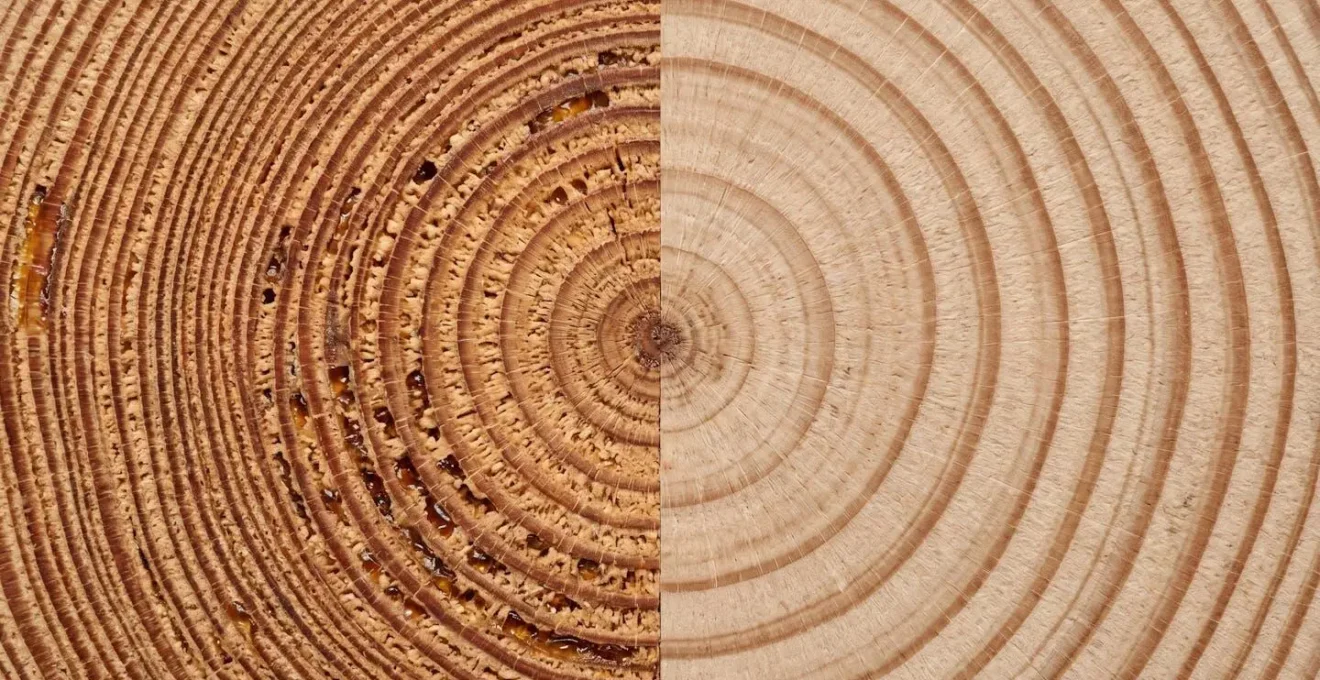
As the macro image demonstrates, the tightly packed rings of old-growth timber create a denser, harder, and stiffer material. While modern Douglas Fir is an excellent and versatile timber, reclaimed Pitch Pine often outperforms it significantly in key metrics for load-bearing applications. The resin content in the old pine also crystallises over time, adding to its compressive strength, though it can make the wood more brittle.
This technical comparison reveals that reclaimed Pitch Pine is superior for components under high compression, while the relative flexibility of new Douglas Fir makes it more suitable for parts that may need to flex under load. The following table, based on data from wood science analysis, breaks down the key performance differences.
| Property | Reclaimed Pitch Pine (Old-Growth Longleaf) | Modern Douglas Fir |
|---|---|---|
| Modulus of Rupture (MOR) | ~16,300 psi | 12,500 psi |
| Janka Hardness | 870 lbf | 660 lbf |
| Density | ~41 lbs/ft³ | 33 lbs/ft³ |
| Modulus of Elasticity (Stiffness) | Higher (slow-grown, tight rings) | Moderate (1.8 million psi typical) |
| Failure Mode Under Stress | Brittle fracture due to age/resin crystallization | Flexes before failure |
| Best Use Case | High-load compression (table legs, structural beams) | Bending applications (chair backs, shelving) |
The Lead Paint Layer Hiding in 30% of Reclaimed Timber Sold in UK Salvage Yards
The romantic appeal of reclaimed timber—its patina, its history, its eco-credentials—can mask significant and dangerous liabilities. A focus solely on certification paperwork creates a ‘due diligence blindspot’ to physical hazards. The most common and dangerous of these is lead-based paint, used extensively in the UK on interior and exterior woodwork until its sale was restricted in the 1980s. It’s estimated that a significant portion, perhaps as much as 30%, of architectural salvage timber carries a legacy of lead paint.
Sanding or cutting this timber without proper precautions aerosolises lead particles, which are highly toxic when inhaled or ingested and pose a severe health risk, especially to children. This isn’t just a health issue; it’s a liability issue. Selling a piece of furniture unknowingly contaminated with lead could have serious legal and reputational consequences. As the Timber Trade Federation’s Sustainability Manager, Xiao Ma, noted, true due diligence goes far beyond paper trails:
There is a misconception that due diligence equates to paperwork such as permits. While it is true, compared with non-tangible information, such as industry insight and supplier engagement activities, paperwork is the most presentable type
– Xiao Ma, TTF Sustainability Manager, Timber Construction Magazine
This highlights the need for a hands-on audit protocol. Before processing any painted reclaimed timber, a systematic check for lead and other contaminants like creosote or arsenic-based preservatives is not just best practice; it is essential risk management. The following checklist outlines a professional approach to identifying and handling these hidden dangers.
Your Action Plan: Reclaimed Timber Hazard Audit
- Initial Assessment: Visually inspect all surfaces for tell-tale signs. Look for ‘alligatoring’ cracks (small rectangular patterns) in old paint, a classic indicator of lead. Check for an oily black appearance and coal-tar smell (creosote in railway sleepers) or a greenish tint (CCA preservative in old decking).
- Chemical Verification: Procure a professional test kit, such as 3M LeadCheck swabs. On a small, inconspicuous area, scratch through all layers of paint down to the bare wood and rub the activated swab. A pink or red result provides definitive confirmation of lead’s presence.
- Adopt a Safety-First Protocol: If lead is confirmed, your actions must align with health and safety standards. This means prioritising chemical stripping over mechanical sanding. Always use appropriate Personal Protective Equipment (PPE), including a P3-rated respirator, nitrile gloves, and disposable coveralls.
- Select the Right Removal Method: The choice of removal method has a direct impact on safety. Opt for gel-based chemical strippers, which contain the hazard, rather than sanding, heat guns, or blasting, which dangerously aerosolize lead particles. Always work in a well-ventilated space, preferably outdoors.
- Document and Integrate: Create a clear record of your safety process. Photograph the test results and document the removal method used for each batch of timber. This documentation becomes part of the material’s provenance and protects you from future liability, integrating safety into your business operations.
When to Stockpile Oak: After Storm Damage Sales or During Winter Felling Gluts?
Moving from a reactive to a proactive sourcing strategy involves mastering the seasonal cycles of the UK timber market. Instead of buying wood only when you need it (just-in-time), strategic stockpiling allows you to purchase specific species when supply is at its peak and prices are at their lowest. This requires an understanding of forestry operations, weather patterns, and the biological cycles of the trees themselves.
For example, the best time to buy oak and ash is often in the wake of major autumn or winter storms. Emergency felling to clear storm-damaged trees creates a sudden supply glut, depressing prices for those able to act quickly and with the capacity to store and season the logs. This opportunistic buying can yield significant savings over standard merchant prices. This strategic approach is becoming more critical due to market imbalances.
Case Study: The UK’s Over-Reliance on Oak
The Grown in Britain WoodStock project revealed a critical vulnerability in the UK hardwood market. Their analysis showed that oak constitutes approximately 90% of all domestically-produced sawn hardwood. This extreme over-reliance on a single species creates intense price volatility, especially as France, a primary source of imported oak, faces overwhelming demand from markets like China. For UK makers, this means that focusing solely on oak exposes them to unpredictable supply and escalating costs. The report stressed the urgency for makers to diversify into high-quality but lesser-used UK species like sweet chestnut and larch to build a more resilient and sustainable material portfolio.
Each species has its own optimal buying window. By aligning your purchasing with these natural and operational cycles, you can build a cost-effective and diverse stock of high-quality timber.
- Oak & Ash: Target post-storm gluts (November-February). The ongoing ash dieback clearing also provides a consistent, albeit tragic, supply.
- Beech: Purchase during scheduled forestry thinnings in late winter (January-March) for the best bulk prices.
- Sycamore: Buy in late winter (February-March) before the sap rises to ensure more stable and stain-free seasoning.
- Sweet Chestnut: Source from coppicing cycles in Kent and Sussex during winter (December-February) for sustainably harvested timber.
Why Did a Sustainable Maker Face Backlash for Shipping in Plastic Despite Using Reclaimed Wood?
In the eyes of an eco-conscious buyer, sustainability is not a single attribute; it’s a holistic experience. A maker can invest heavily in sourcing the most impeccably provenanced, reclaimed timber, only to see their credibility shattered by the final touchpoint: the packaging. The jarring experience of unboxing a beautiful, natural object from a cloud of bubble wrap and polystyrene peanuts creates a powerful cognitive dissonance. It suggests that the maker’s commitment to sustainability is only material-deep.
This is the paradox of protection. The primary function of packaging is to ensure the item arrives undamaged, because, as one sustainability-focused furniture maker put it:
A damaged item has the highest carbon footprint of all
– Sustainability-focused furniture maker, Maker community discussion
An item that must be returned, repaired, or remade doubles its environmental impact from transport, materials, and energy. The challenge, therefore, is to achieve robust protection using materials that align with the core product’s ethos. This requires moving beyond cheap, single-use plastics and exploring a new palette of protective materials.

The solution lies in a ‘packaging story’ that is as compelling as the material story. This means investing in and communicating the use of alternatives such as:
- Honeycomb cardboard wrappers: A recyclable and surprisingly strong alternative to bubble wrap.
- Mycelium (mushroom) packaging: Custom-molded, fully compostable forms that can replace polystyrene.
- Wool-based insulation: Natural, reusable, and provides excellent cushioning.
- Corn-starch packing peanuts: Dissolve in water and are fully biodegradable.
Adopting these materials may increase packaging costs, but this should be framed as an investment in brand integrity. It completes the narrative, demonstrating to the customer that your commitment to sustainability is not a marketing veneer but a principle that informs every decision, right down to the box on their doorstep.
Why Does Alpine Spruce from Specific Valleys Produce Brighter Tones Than Generic Tonewood?
For makers of musical instruments, the concept of ‘provenance’ transcends a simple origin story; it becomes a predictable indicator of acoustic performance. The idea of « timber terroir » suggests that a wood’s tonal properties are intimately linked to the specific environmental conditions in which it grew. This explains why luthiers will pay a premium for Alpine spruce from a particular north-facing valley or bog oak from a specific Scottish peat bog.
The science behind this lies in the tree’s response to its environment. A spruce tree growing slowly at high altitude in harsh, cold conditions develops incredibly tight, straight, and consistent growth rings. This slow growth creates a wood with a very high stiffness-to-weight ratio. Acoustically, this is the holy grail. A high Young’s Modulus (a measure of stiffness)—often around 1.8 million psi for top-tier tonewoods—allows the wood to transmit high-frequency vibrations with minimal energy loss. This translates directly into the ‘brightness’, ‘clarity’, and ‘sustain’ that instrument makers prize.
A generic « spruce » top from a fast-growing commercial plantation will have wider, less consistent grain and a lower stiffness, resulting in a duller, less responsive tone. The principle is not limited to spruce. As detailed in analyses of tonewood properties, the unique mineralisation that occurs in ancient bog oak during its centuries-long submersion, or the ‘rippled’ grain patterns in sycamore from wind-battered glens, all contribute to a unique acoustic fingerprint. Master luthiers have long understood this, using a technique called ‘tap-tuning’—tapping a raw board and listening to its resonant pitch—to audibly ‘read’ the wood’s life story and predict its future voice.
This deep understanding of material terroir represents the pinnacle of sourcing intelligence. It moves beyond species and certification to a granular appreciation of how geography, climate, and time shape the very soul of the material. For a maker, being able to articulate not just that you used English Sycamore, but *why* the specific rippled figure from a particular woodland was chosen for its acoustic complexity, is a level of storytelling that commands respect and value.
Key takeaways
- Post-Brexit supply chain ‘friction’ and UK-specific certification costs are major price drivers, not just the wood itself.
- True sustainability is holistic; it includes assessing hidden risks in reclaimed wood (like lead paint) and considering the carbon footprint of packaging.
- Shifting from reactive buying to strategic sourcing—leveraging seasonal gluts and direct relationships—is the key to cost control and material quality.
Why Does Your Carbon Footprint Claim Ring Hollow to Eco-Conscious Buyers?
Many makers rightly claim that by using reclaimed timber or local wood, they are reducing their carbon footprint. This is factually correct; initiatives like urban timber recycling document preventing as much as 122 tonnes of CO2 from entering the atmosphere annually by diverting wood from landfill. However, simply stating « this piece is made from low-carbon materials » can often fall flat with a sophisticated, eco-conscious audience. It rings hollow because it’s a generic claim that lacks depth, specificity, and authenticity.
Today’s buyers have been conditioned by years of corporate « greenwashing. » They are skeptical of surface-level claims. To be credible, your sustainability story cannot be a simple label; it must be an integrated narrative woven from all the strategic decisions we’ve discussed. It must demonstrate a deep, almost obsessive, commitment to a holistic ethos. The authenticity doesn’t come from the final product alone, but from the visible evidence of thoughtful craftsmanship and material intelligence.
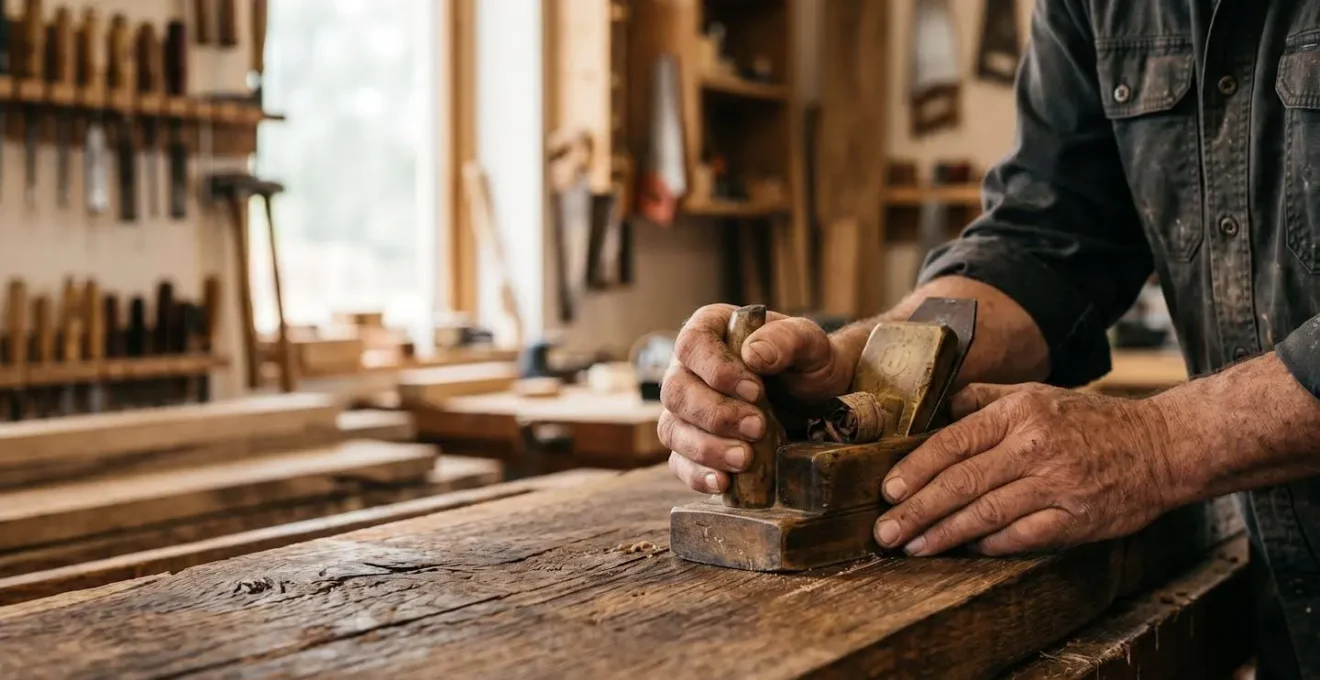
A compelling carbon story is built on specifics. It replaces a generic claim with a rich narrative:
- Instead of « made from reclaimed wood, » you say: « This pitch pine was salvaged from the old Manchester mill, and I have tested and certified it free of lead paint before hand-planing it to preserve its original patina. »
- Instead of « sourced locally, » you say: « This oak was from a storm-felled tree in the Dales, sourced directly from the landowner to minimise transport miles and support local woodland management. »
- Instead of « eco-friendly, » you say: « We ship in custom-molded mycelium packaging which is 100% home compostable, ensuring no part of your purchase ends up in landfill. »
This level of detail demonstrates ‘proof of work’. It shows that your sustainability claim isn’t a marketing afterthought but the guiding principle of your entire practice. It builds trust because it is transparent, educated, and impossible to fake. This is how you create a carbon footprint claim that doesn’t just state a fact, but tells a story that resonates deeply and justifies a premium price.
To build a truly resilient practice, the next logical step is to audit your own supply chain using these principles. Begin by evaluating one material source and identify a single inefficiency you can address this quarter.