
The chronic undervaluation of skilled woodworkers is not a personal failure but a systemic problem of market positioning, which can be solved by strategically re-engineering your business model.
- Shifting from a « carpenter » to a « designer-maker » identity unlocks significant pricing power and changes client perception.
- Profitability is driven less by hours worked and more by efficient production systems, diversified income streams, and active supply chain management.
Recommendation: Stop competing on labour and start competing on value by implementing a diversified business model that treats your workshop as a brand, not just a place of production.
There is a quiet frustration brewing in workshops across the United Kingdom. You, the skilled furniture maker, have invested years—often longer than a plumber or electrician—honing your craft. You understand the language of wood, the poetry of a well-cut joint, and the deep satisfaction of creating a lasting, beautiful object. Yet, when you look at your bank balance, it doesn’t reflect that expertise. You see plumbers and other tradespeople, with arguably shorter training paths, commanding higher and more consistent incomes. This disparity isn’t just a feeling; it’s an economic reality that leaves many artisans questioning the viability of their passion.
The standard advice offered is often frustratingly generic: « charge what you’re worth, » « build a brand on social media, » or « sell directly to customers. » While not incorrect, this advice fails to address the structural reasons for this income gap. It ignores the subtle but powerful economic forces at play, from client perception shaped by a single job title to inefficiencies hidden deep within your production process and supply chain. The problem isn’t that you lack skill or a good product; the problem is that you may be operating within a business model that is fundamentally capped.
But what if the solution wasn’t about simply raising your prices, but about fundamentally changing the game you’re playing? This analysis moves beyond the platitudes to offer an economist’s perspective on the UK craft sector. We will deconstruct the systemic issues that suppress your earnings and provide a strategic, actionable blueprint for transformation. The key lies in a conscious shift: from thinking like a carpenter who sells time, to operating as a designer-maker who engineers a profitable and sustainable business.
This article will guide you through the essential strategic shifts required to achieve this transformation. We will dissect everything from market positioning and production efficiency to sales channels and overhead management, providing a clear roadmap to not only survive, but thrive financially as a modern British furniture maker.
Contents: The Furniture Maker’s Economic Blueprint
- Why Does Calling Yourself a Carpenter Cost You £500 Per Commission?
- How to Batch-Produce 10 Dining Tables Without Losing the Handmade Aesthetic?
- Selling Direct vs Supplying Retailers: Which Route Yields 30% Higher Margins?
- The Timber Merchant Loyalty That Costs UK Makers 15% More Than Necessary
- When to Buy a CNC Router: After 3 Repeat Large Orders or As Speculative Capacity?
- Why Do UK Galleries Still Demand 50% Commission When Artists Handle Their Own Marketing?
- Why Does Firing a Kiln Cost £45 Per Load and How Does That Affect Pricing?
- How to Earn £40,000 Annually from Painting Without Relying on Gallery Representation?
Why Does Calling Yourself a Carpenter Cost You £500 Per Commission?
The most significant barrier to higher earnings is often the very first word you use to describe yourself. The term « carpenter » anchors you in the construction and trades sector, a market where value is primarily measured by time and materials. Clients subconsciously benchmark your rates against those of a joiner fitting a door or a roofer fixing a leak. This is a battle you are destined to lose. Data confirms this perception gap; according to UK Office for National Statistics 2025 data, a carpenter’s median salary sits around £32,000-£35,000, trailing behind plumbers at £35,000-£38,000.
The solution is an act of deliberate positioning arbitrage. By rebranding from a « carpenter » to a « designer-maker » or « furniture artist, » you move your work out of the trades category and into the world of design, art, and luxury goods. In this new context, value is determined not by labour hours, but by design integrity, brand story, provenance, and the aesthetic and emotional value the piece brings to a client’s home. This is not mere semantic trickery; it is a fundamental economic shift that changes the entire pricing conversation. You are no longer providing a service; you are selling a unique, authored object.
This transformation reframes a £3,000 dining table. As a « carpenter, » it might be perceived as expensive. As a « designer-maker, » it is positioned as an investment in functional art, a future heirloom. This is how you escape the tradesman’s price ceiling and begin to capture the true value of your extensive skills and creative vision.
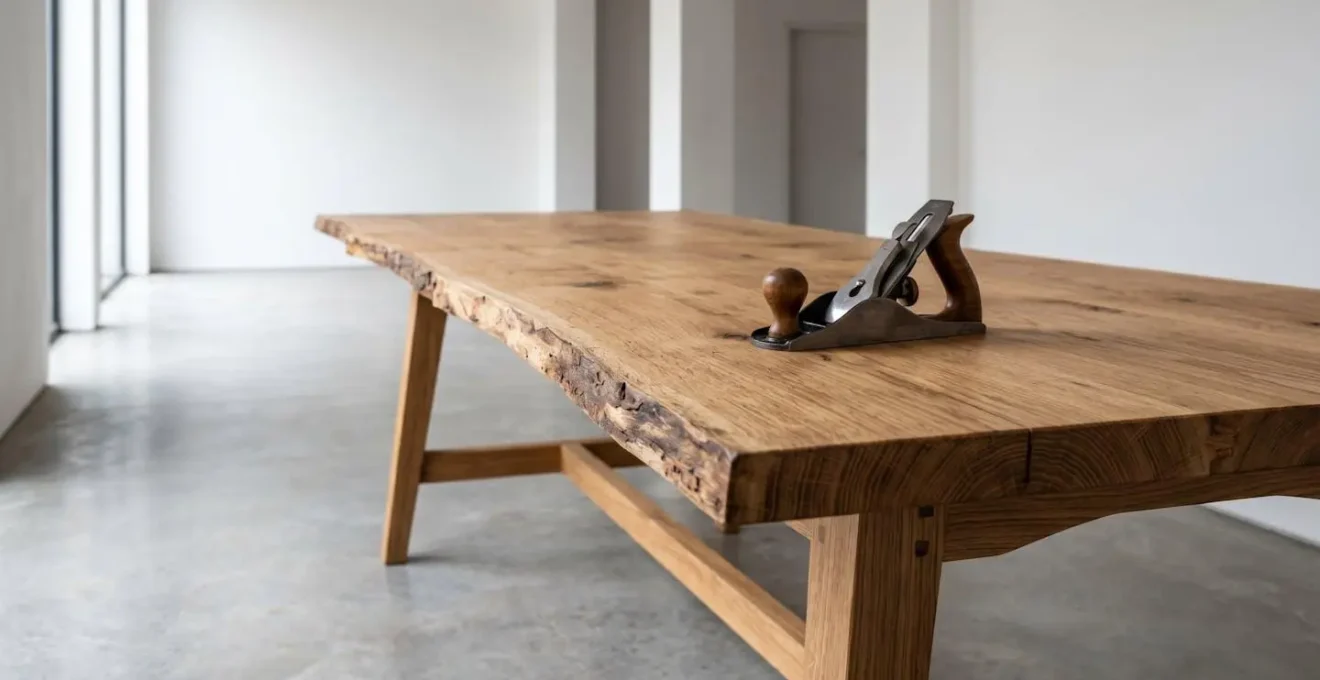
As this image suggests, the goal is to present your work not as a simple commodity but as a piece of collectible design. The focus shifts from the labour involved to the object’s inherent beauty, craftsmanship, and status. This simple change in perception can easily justify a price differential of 15-20% or more on a single commission, directly adding hundreds, if not thousands, of pounds to your bottom line over a year.
How to Batch-Produce 10 Dining Tables Without Losing the Handmade Aesthetic?
The romantic ideal of the solitary artisan crafting a single piece from start to finish is a powerful narrative, but it’s an economically challenging business model. The key to profitability lies not in abandoning craftsmanship, but in intelligently systemising it. A Hybrid Production Model allows you to gain significant efficiencies without sacrificing the very qualities that make your work desirable. This involves strategically separating the structural, repetitive elements of a piece from the unique, aesthetic « signature » touches.
The process begins at the design stage. By creating jigs and templates for core components like legs, aprons, or internal frames, you can batch-produce these elements with high precision and speed. This standardisation of the unseen or structural parts can slash construction time by as much as 60-70%. Similarly, sourcing timber for a small batch of 5-10 pieces at once allows for better board selection, reduced waste, and often better pricing from your supplier. The efficiency gained here is then « reinvested » into the parts of the furniture that the client sees and touches.
This is where the « artisan » element comes back to the forefront. While the underlying structures may be batched, each tabletop can be made from a uniquely figured board, surfaces can be hand-planed to create an inimitable texture, and finishing techniques can be applied individually. You can further enhance this by marketing these pieces as a numbered, limited-edition collection. This masterfully transforms a story of efficiency into one of exclusivity and desirability. You are not hiding the batch production; you are framing it as a curated series, each with its own subtle character.
This hybrid approach allows you to build a more predictable and profitable production schedule, freeing up valuable time for design development, client relations, and marketing—all of which are essential for growing a sustainable business.
Selling Direct vs Supplying Retailers: Which Route Yields 30% Higher Margins?
Choosing your route to market is one of the most critical decisions affecting your profitability. The debate between selling Direct-to-Consumer (D2C) and supplying wholesale to retailers or galleries is not just about preference; it’s a complex equation of margin, control, and customer access. There is no single « best » answer, only the best fit for your brand, capacity, and strategic goals. Understanding the trade-offs is essential for effective profitability engineering.
The primary allure of the D2C model is margin. By selling directly through your own website or studio, you retain the full retail price, bypassing the hefty 50-60% commission or wholesale markup demanded by retailers. This can theoretically double your profit on a single piece. However, this margin comes at a cost. You become responsible for every aspect of the sales process: building and maintaining an e-commerce platform, funding and executing digital marketing campaigns to attract customers, handling all customer service, and managing complex delivery logistics. The Customer Acquisition Cost (CAC) in the competitive online furniture market is not trivial.
Partnering with a retailer, on the other hand, outsources these functions. A high-end gallery like The Conran Shop or Heal’s provides immediate access to a vetted, affluent clientele and valuable foot traffic. They handle marketing, display, sales staff, and payment processing, allowing you to focus purely on production. The cost is a significant portion of your margin, but the right partner can provide a volume of sales and a level of brand association that would take years to build independently.
The following table breaks down the core differences between the primary sales channels available to a UK furniture maker, providing a clear framework for strategic decision-making.
| Sales Channel | Gross Margin | Key Costs | Control Level | Customer Access |
|---|---|---|---|---|
| Direct-to-Consumer (D2C) | Higher (retain full retail margin) | Shopify/web platform fees, digital marketing spend (CAC rising), delivery logistics, customer service | Full control over pricing, branding, customer experience | Direct customer data and relationships |
| UK Retail Galleries (Heal’s, Conran Shop) | Lower (50-60% commission to retailer) | Production only; retailer handles marketing, display, sales staff, insurance | Limited control; retailer sets final display and often influences pricing | Access to vetted high-end clientele and foot traffic |
| Online Craft Marketplaces (The New Craftsmen, Crafts Council) | Medium (typically 30-40% commission) | Application/listing fees, photography requirements, some marketing support provided | Moderate control; curated brand association | Access to design-conscious audience actively seeking craft |
| Note: UK retail furniture markup averages 150% (2.5x wholesale cost). D2C eliminates this layer but requires investment in direct marketing and logistics infrastructure. | ||||
The Timber Merchant Loyalty That Costs UK Makers 15% More Than Necessary
For many furniture makers, the relationship with a local timber merchant is one of convenience and habit. However, this passive approach to sourcing, while comfortable, can quietly erode your profit margins by as much as 15-20%. Achieving supply chain sovereignty—actively managing where, how, and at what price you acquire your primary raw material—is a powerful lever for improving profitability and building a compelling brand story. Simply put, where your wood comes from is as much a part of your product as your joinery.
The standard model of buying from a large merchant means you are often several steps removed from the source and are paying for multiple layers of processing, transport, and markup. A more strategic approach involves diversifying your sourcing and, where possible, getting closer to the origin. This could mean mapping out specialist regional suppliers who focus on locally grown species, forming purchasing cooperatives with other local makers to negotiate bulk discounts, or establishing relationships with estate managers and forestry commissions to access high-quality timber directly from storm-fallen trees.
A prime example of this strategy in action is the renowned UK maker Sebastian Cox. As his team on Kit Kemp’s blog states, his ethos is built around a deep connection to materials:
The workshop produces heirloom furniture, lighting and home accessories and collaborates with other material experts, brands, interior designers, manufacturers and retailers who share his vision for a regenerative material future.
– Kit Kemp Design Studio, Meet The Maker: Sebastian Cox
Case Study: The Sebastian Cox Sourcing Model
Sebastian Cox’s workshop has built its entire brand around using British-grown timber, sourced hyper-locally from family-run yards within a 100-mile radius. This strategy is a masterclass in value creation. It significantly reduces transportation costs, but more importantly, it generates powerful provenance stories that resonate deeply with clients. A table isn’t just a table; it’s a piece of a specific woodland, a story of sustainability. By actively managing their own woodland and bypassing traditional merchants, they have turned their supply chain from a cost centre into a primary marketing asset, achieving a level of material control and narrative depth that is impossible to replicate when buying from a general supplier.
This level of vertical integration may not be feasible for everyone, but the principle is scalable. Even sourcing wood from a specific reclaimed project or a local arborist provides a unique story that adds perceived value far beyond the material cost. By thinking like a curator of materials, not just a consumer, you can reduce costs while simultaneously enriching your brand.
When to Buy a CNC Router: After 3 Repeat Large Orders or As Speculative Capacity?
The CNC router represents a significant philosophical and financial crossroads for the modern furniture maker. Is it a betrayal of hand-craft, or a vital tool for precision, efficiency, and creative expansion? The answer, from an economic standpoint, is that it is a powerful tool for precision augmentation, but one whose acquisition must be driven by proven demand, not speculative hope. A £10,000+ CNC machine sitting idle is a liability, not an asset. The decision to invest should be the result of a calculated business case, not a desire for a new workshop toy.
Before considering a purchase, the first step is to test its integration into your workflow with minimal risk. The UK’s network of makerspaces and FabLabs (like London’s Blackhorse Workshop or Fab Lab Manchester) offers an invaluable opportunity. For a daily fee, you can access professional-grade CNC equipment, allowing you to prototype ideas, complete specific project components, and accurately quantify the time saved. This trial period is crucial for building a true Return on Investment (ROI) calculation. You can directly compare the cost of outsourcing CNC work or using a makerspace against the hours of manual labour saved.
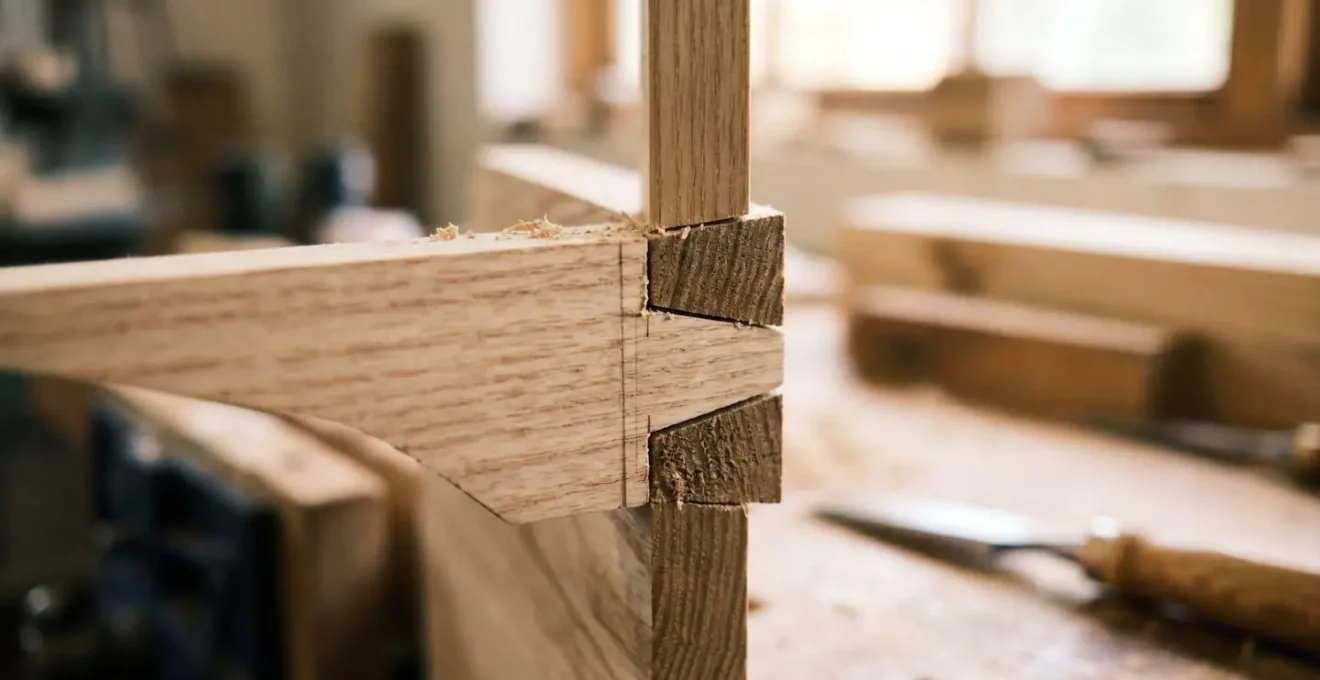
The image above perfectly captures the ideal role of a CNC: not as a replacement for skill, but as an enhancement. It can execute complex or repetitive cuts with a level of precision that is time-consuming to achieve by hand, freeing up the maker to focus on design, assembly, and the all-important hand-finishing that gives a piece its soul. A practical rule for investment is the « Three-Project Rule »: only purchase a CNC after you have completed at least three separate, paid commissions where the machine would have demonstrably saved you a significant number of billable hours (e.g., 8+ hours per project). This validates that there is a consistent, profitable application for the technology in your specific business model.
When you do invest, it’s vital to market it correctly. Position the CNC as a tool that enables more intricate designs and perfect joinery, always emphasizing that the final piece is assembled and finished by hand. This frames the technology as part of a contemporary craft identity, not a shortcut.
Why Do UK Galleries Still Demand 50% Commission When Artists Handle Their Own Marketing?
The 50% commission taken by a high-end furniture gallery or retailer can feel punitive, especially for a maker who already has a strong social media following and brand presence. It’s easy to see it as an outdated model where the gallery takes half the revenue for simply providing floor space. However, to make a sound economic decision, it’s crucial to move past the emotional reaction and perform a cold, hard commission calculus. What, precisely, are you getting in return for that 50%, and is it worth more than the alternative of selling direct?
A gallery’s commission is rooted in the economics of high-street retail. Analysis shows that UK retail furniture industry markup averages 150% (a 2.5x multiplier on the wholesale price), which must cover rent in premium locations, business rates, staff salaries, insurance, marketing budgets, and profit. Your 50% commission is the gallery’s gross margin, from which all these costs are paid. The real question is not whether the commission is high, but whether the services it funds provide a greater return than you could achieve on your own. A top-tier gallery offers more than just space; it provides access to a curated audience of high-net-worth individuals, the credibility of being exhibited alongside other leading makers, professional sales staff who can close high-value sales, and handling of all logistics and payment processing.
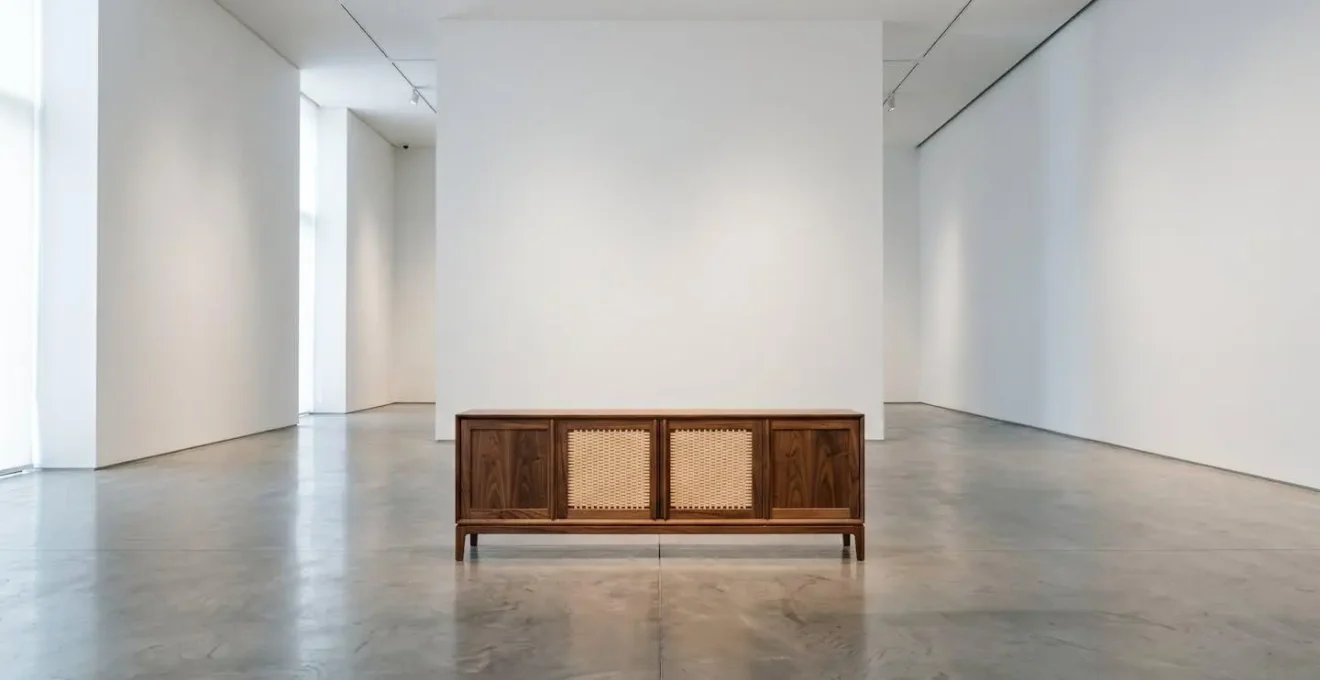
Before entering any partnership, you must audit the value proposition. This means asking for hard data: What is their monthly footfall? What is the demographic profile of their typical customer? What were their sales figures for comparable work over the last year? A gallery that can prove it can move your specific type of product to a new, affluent audience may well be worth the commission. If you have a significant brand presence yourself, use it as leverage to negotiate a tiered commission structure or a lower rate in exchange for a period of exclusivity.
Your Action Plan: Auditing a Gallery Partnership
- Contact Points Audit: List all the gallery’s channels—website, Instagram, physical location, press mentions. Assess the quality and consistency of their branding and messaging. Does it align with your own?
- Value Proposition Collection: Request specific data. This includes monthly visitor numbers, client demographics, and, most importantly, the sales track record for work comparable to yours in style and price over the last 12-24 months.
- Coherence Check: Compare their brand identity and target audience against your own. Do their represented artists complement your work, or do they create direct competition that could cannibalise your sales?
- Unique Value Assessment: Identify their non-obvious value. Do they have strong ties to interior designers? A powerful PR machine that gets makers featured in magazines? Access to a client list you could never build alone? This is the core of their 50% fee.
- Negotiation Plan Integration: Based on the audit, outline your terms. If you bring a strong following, propose a tiered commission (e.g., 45% dropping to 40% after a sales threshold). If they want exclusivity, what will they offer in return? Define what a successful partnership looks like in measurable terms.
Why Does Firing a Kiln Cost £45 Per Load and How Does That Affect Pricing?
While the £45 cost of firing a kiln is a stark, quantifiable expense for a ceramicist, furniture makers face an equally perilous web of hidden overheads that are often harder to pin down and, as a result, frequently excluded from project pricing. The hum of the dust extractor, the cost of a roll of sandpaper, the insurance policy filed away—these are the « silent » costs that systematically devour your profit margins. Accurately calculating and allocating these workshop overheads is not just an accounting exercise; it is fundamental to building a profitable and sustainable business.
The cost of your materials, particularly timber, is the most visible expense. In the UK bespoke furniture market, timber typically represents 25-30% of the total price of a piece. Many makers fall into the trap of using a simple multiplier on this material cost (e.g., 3x timber cost) to arrive at a final price. This model is dangerously flawed because it completely ignores the vast array of other expenses. Your workshop rent or mortgage, business rates, the depreciation of your £10,000 planer-thicknesser, public liability insurance, and the disposal of wood waste are all very real costs of doing business that must be factored into every commission.
To achieve true profitability, you must calculate an hourly workshop rate that includes not only your desired personal income but also a proportion of all these fixed and variable overheads. This requires a comprehensive audit of your annual workshop expenses. Below is a checklist of common overheads that must be accounted for:
- Energy Costs: Electricity for machinery (especially high-draw items like dust extractors), heating, and lighting. Using Ofgem data and considering off-peak tariffs is essential.
- Premises Costs: Workshop rental or mortgage payments, plus mandatory business rates for commercial properties.
- Machinery Depreciation: The cost of major equipment amortised over its expected lifespan (e.g., a £15,000 table saw over 15 years costs £1,000 per year).
- Insurance Portfolio: A crucial suite including Public Liability, tool and equipment cover, and workshop contents insurance.
- Waste Disposal: The regulated, and often costly, disposal of commercial wood waste, sawdust, and finishing products.
- Consumables: An often-underestimated category including glue, sandpaper, screws, finishing oils, waxes, and solvents.
- Professional Fees: Memberships to bodies like the Society of Designer Craftsmen, which provide credibility and networking.
Key Takeaways
- Stop being a carpenter, become a designer-maker: Re-positioning your brand out of the trades sector is the single most powerful lever for increasing your pricing power.
- Engineer your production for profit: Implement a hybrid model that batches structural components to gain efficiency, while focusing hand-skills on the visible, high-value surfaces.
- Diversify or die: Sole reliance on one-off commissions is a high-risk strategy. Build a resilient business by creating multiple income streams including batch products, digital goods, and workshops.
How to Earn £40,000 Annually from Painting Without Relying on Gallery Representation?
Just as a painter shouldn’t rely solely on gallery sales, a modern furniture maker cannot build a resilient career on one-off bespoke commissions alone. This approach makes your income unpredictable and ties it directly to your limited hours at the bench. The strategic path to a sustainable £40,000+ annual income lies in diversification. By creating a tiered product ecosystem, you can cater to different customer segments, decouple a portion of your revenue from your time, and build a much more stable and scalable business model.
This diversified model can be broken down into several key revenue streams. The top tier remains the high-end, high-margin bespoke commissions, which serve as your flagship offering and brand builder. These are projects where current UK market pricing for professionally-built bespoke furniture ranges from £2,000 to over £5,000 for items like media walls or custom dining tables. This tier provides significant profit per project but is often inconsistent.
To buffer this, a second tier of batch-produced, limited-edition pieces (like the side tables discussed earlier) can be offered at a more accessible price point. These can be sold directly through your own online shop. A third tier of high-volume, low-complexity accessories—such as premium chopping boards, benches, or small shelves—can generate consistent cash flow and act as an entry point for new customers to experience your brand. Crucially, a fourth and fifth tier can be added that completely separates income from production time: selling digital products like detailed furniture plans to the hobbyist market, and running high-value, intensive weekend workshops in your own space. This portfolio approach spreads risk and creates multiple, independent pathways to your income goal.
Here is a tangible revenue model demonstrating how a £40,000 annual income can be achieved through this diversified strategy:
- Bespoke Commission Tier (£15,000 total): Secure 5 high-end commissions per year at an average of £3,000 each.
- Batch-Production Tier (£6,500 total): Sell one limited run of 10 side tables or consoles at £650 each.
- High-Volume Accessories (£4,500 total): Sell 30 smaller, popular items like benches or shelves at an average of £150 each via an online shop.
- Digital Products Revenue (£3,000 total): Sell 60 sets of digital furniture plans at an average price of £50 each.
- Workshop Education Income (£11,000 total): Host 11 weekend workshops for one person, or a smaller number for groups, at a total income of £900-£1,000 per weekend.
By moving beyond the role of a simple producer and embracing the mindset of a strategic business owner, you can build a financially rewarding and creatively fulfilling career. The first step is to take an honest look at your current model and start implementing these economic principles today.