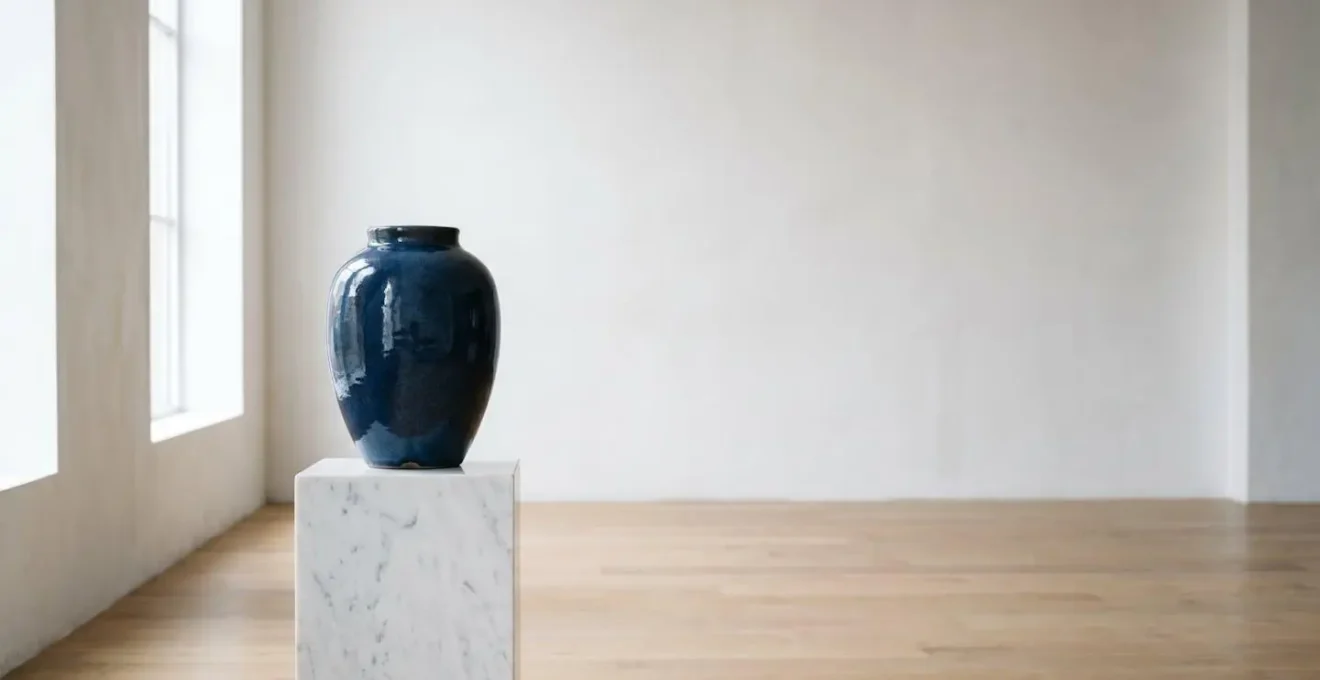
The £1,800 price difference between a craft object and a specified design piece is not found in the clay or labour hours; it is strategically constructed through psychological positioning and narrative.
- Perceived value is amplified by manufactured scarcity, compelling object stories, and strategic pricing that signals exclusivity.
- Interior designers specify—and pay a premium for—artists who present themselves as professional partners, not just makers.
Recommendation: To secure high-value commissions, you must shift from a maker’s mindset of calculating costs to a luxury strategist’s mindset of constructing value.
As a ceramicist, you’ve likely felt the sting of a potential client balking at a price that barely covers your time and materials. You’re told to build a portfolio, network, and price your work based on a formula of labour plus costs. Yet, you see top-tier interior designers specifying ceramic pieces for thousands of pounds—objects that, from a purely material standpoint, seem no different from your own. This isn’t a failure of your craft; it’s a failure of market positioning.
The common advice ignores a fundamental truth of the luxury market: high-value commissions are not won on the basis of a cost-plus calculation. They are won through a deep understanding of client psychology and the art of value construction. The leap from a £200 object to a £2,000 commissioned piece has little to do with the physical object itself and everything to do with the intangible framework built around it.
But what if the key to unlocking these higher fees wasn’t about working harder, but about communicating value more intelligently? What if the price itself was a tool for branding, and the story behind the piece was worth more than the glaze it’s coated in? The real question isn’t about justifying your price; it’s about making it an inevitable conclusion in the mind of the buyer.
This guide will deconstruct the specific strategies that elevate a ceramic piece into the realm of high-value specified art. We will explore the psychological triggers that create desire, the communication standards that top design firms expect, and the subtle shifts in mindset that empower you to command the prices your unique vision deserves.
This article provides a structured path to repositioning your work in the luxury market. The following sections break down the key psychological and strategic pillars that allow you to construct, rather than merely calculate, the value of your art.
Contents: How to Position Your Ceramic Art for High-Value Commissions
- Why Does Numbering a Vase 1 of 5 Triple Its Perceived Value Overnight?
- How to Write a Project Brief That Gets Specified by Top London Interior Firms?
- Signature Glaze vs Seasonal Limited Editions: Which Strategy Builds Collector Loyalty?
- The Quote Format Error That Makes Designers Assume You Are Too Cheap for Their Project
- When to Decline a Commission: Full Kiln Schedule or Misaligned Creative Vision?
- How to Write a 50-Word Object Story That Increases Purchase Intent by 60%?
- Figurative Painting vs Digital Installation: Which Holds Value Over 10 Years?
- Why Do Customers Hesitate to Pay £300 for a Bowl That Took 15 Hours to Make?
Why Does Numbering a Vase 1 of 5 Triple Its Perceived Value Overnight?
The difference in perceived value between a singular vase and one numbered « 1 of 5 » lies in a powerful psychological principle: perceptual scarcity. The human brain is wired to assign greater value to things that are rare or difficult to obtain. It’s not about the object itself, but the exclusivity of ownership. When an item is part of a limited run, it immediately signals that it is desirable and that the opportunity to acquire it is fleeting. This taps into the « fear of missing out » (FOMO), a potent motivator in luxury purchasing decisions.
A seminal 1975 study by Worchel et al. perfectly illustrates this. Participants were asked to rate cookies from two jars. One jar was full, the other contained only two cookies. Overwhelmingly, the cookies from the near-empty jar were rated as more valuable and desirable, driven by the assumption that if they were scarce, they must be in high demand and therefore superior. This same logic applies directly to numbered ceramics. The number doesn’t change the object; it changes the buyer’s perception of its social validation and desirability.
This isn’t just theory; it has a measurable impact on consumer behaviour. For instance, over 62% of consumers report being more likely to purchase a product when it is labelled as a « limited edition. » By numbering a piece, you are not simply adding an identifier; you are deploying a strategic tool that frames the object as a collectable asset. You shift the conversation from « how much does this cost? » to « how can I acquire this before it’s gone? » This manufactured exclusivity is a cornerstone of value construction, turning a beautiful object into a coveted one.
How to Write a Project Brief That Gets Specified by Top London Interior Firms?
Top interior designers do not « buy » objects; they « specify » solutions. They operate in a world of project plans, client budgets, and tight deadlines. To be considered for a high-value commission, your work must be presented in a way that seamlessly integrates into their workflow. A vague email with a few photos is an immediate red flag. You must present yourself as a professional partner, and that begins with a specification-ready proposal.
A spec-ready brief anticipates the designer’s questions and removes friction from their decision-making process. It demonstrates that you understand the professional context in which they work, instilling confidence that you can deliver on time, on budget, and to the exact requirements of a demanding project. This professionalism is, in itself, a significant part of the value you offer.
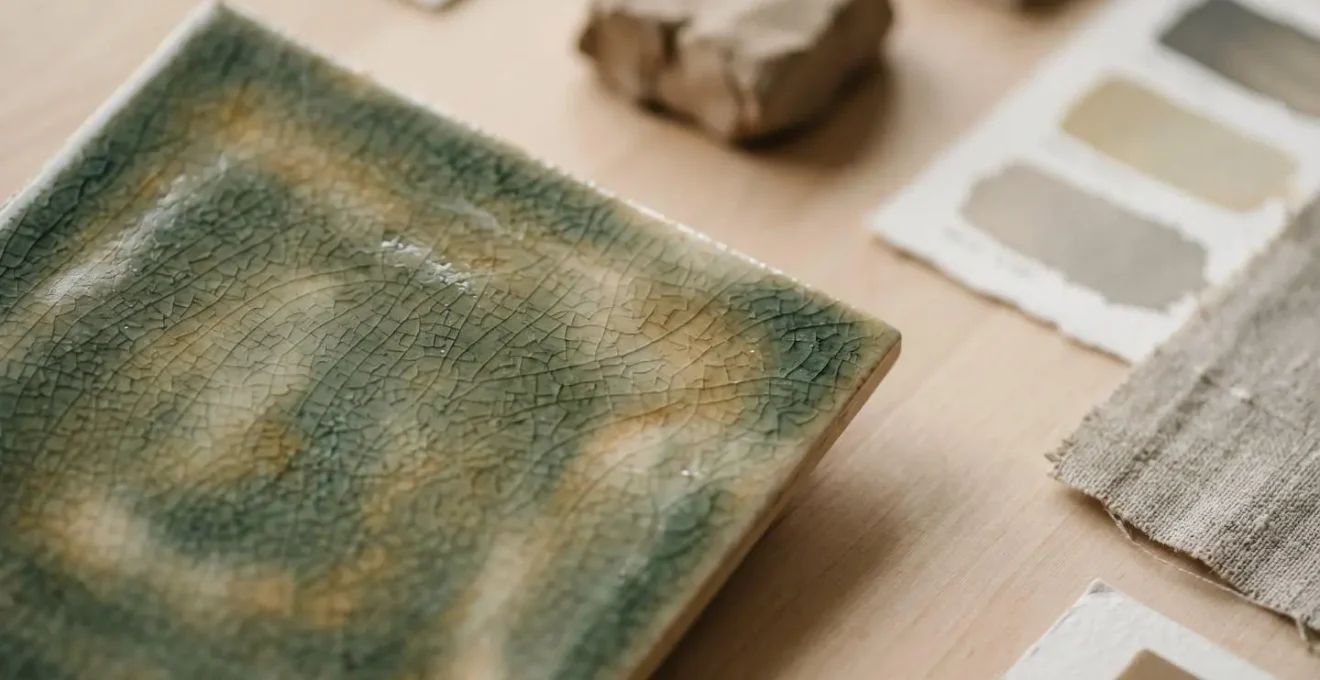
As the image above suggests, a professional presentation involves more than just the finished piece. It encompasses clear documentation, material context, and precise technical details. The goal is to make saying « yes » as easy as possible for the designer by eliminating uncertainty and risk. Your proposal should be so thorough that the designer can confidently present it to their end client without needing to chase you for basic information.
Your Action Plan: Creating a Specification-Ready Proposal
- Visuals and Technicals: Include high-resolution visuals paired with exact dimensions and technical drawings using industry-standard measurement formats.
- Logistics Pre-emption: Clearly document lead times, international shipping options (including insurance), and any specific installation requirements.
- Risk Reduction: Use industry-standard codes like Pantone or RAL for colours to eliminate ambiguity and the risk of misinterpretation.
- Material Transparency: Provide detailed material specifications, including clay body type, firing temperature, and glaze composition, to demonstrate mastery of your craft.
- Professional Terms: Include a clear Terms & Conditions section covering payment schedules, ownership of design, cancellation policies, and revision procedures.
Signature Glaze vs Seasonal Limited Editions: Which Strategy Builds Collector Loyalty?
Building a loyal following of collectors and designers requires a deliberate strategic choice between consistency and novelty. Both a signature glaze and seasonal limited editions can be powerful tools, but they build different kinds of loyalty and appeal to different psychological drivers. The optimal approach depends on the brand identity you wish to cultivate.
A signature glaze or form builds loyalty through recognition and trust. It becomes your hallmark, a consistent mark of quality and aesthetic vision that collectors can rely on. Over time, this consistency establishes your work as an identifiable brand. A collector who owns one of your signature celadon bowls knows exactly what to expect when they commission a matching platter. This strategy appeals to those who value brand identity and long-term coherence in their collections. It creates a deep, steady loyalty based on proven quality.
Conversely, seasonal limited editions build loyalty through excitement and urgency. This strategy leverages the power of perceptual scarcity and FOMO. As an authoritative report on the market notes, this approach creates a powerful bond with a certain type of buyer. As the Collect Fair Market Analysis observes in its Contemporary Ceramics Market Report 2024:
Limited editions build a different kind of loyalty based on FOMO (Fear Of Missing Out) and the thrill of acquiring something ephemeral, while signature products build deep loyalty with collectors who value consistency and brand identity.
– Collect Fair Market Analysis, Contemporary Ceramics Market Report 2024
This strategy transforms each purchase into an event, an opportunity to acquire a piece of your evolving artistic journey that will not be repeated. Research on scarcity marketing reveals that over 52% of consumers are willing to pay extra for such items. A hybrid model, where a core signature range is complemented by 1-2 highly anticipated limited releases per year, can often provide the best of both worlds: building a stable brand identity while creating moments of high-demand excitement.
The Quote Format Error That Makes Designers Assume You Are Too Cheap for Their Project
In the luxury market, the quote you provide is more than a calculation of costs; it is a powerful act of price signalling. The way you structure your price sends an immediate message about your position in the market. One of the most common mistakes artisans make is to provide a detailed, itemised breakdown of costs—£X for clay, £Y for glaze, £Z for firing, £15 for packaging. While this feels transparent, to a luxury buyer or an interior designer, it signals that you are operating with a small-scale, cost-plus mindset, not a value-based one.
Luxury brands understand this psychology instinctively. Consider the pricing strategy of brands like Louis Vuitton or Chanel. They don’t sell a handbag for £4,975.50. They sell it for £5,000. This isn’t an accident. As a case study on their strategy highlights, these brands intentionally use round, even numbers to project a sense of holistic quality and exclusivity. A price like £1,999.99 is the language of discounts and mass-market retail, designed to make something feel cheaper. A price like £2,000 is the language of confident, absolute value.
When you present a quote of « £2,000, » you are communicating that this is the inherent value of the finished piece, inclusive of your artistry, vision, and professional service. The specific costs of materials and labour are your business, not the client’s concern. When you itemise « £15 for packaging, » you shift the client’s focus from the £2,000 artwork to the £15 box, inviting them to question and nickel-and-dime every component. It frames you as a supplier of parts rather than a creator of a singular, valuable whole. The confident, all-inclusive price signals that you belong in the same league as the other high-end suppliers the designer works with.
When to Decline a Commission: Full Kiln Schedule or Misaligned Creative Vision?
For an artist building a business, turning down paid work can feel deeply counter-intuitive. The temptation is to accept every commission, especially when the kiln schedule has openings. However, the most successful and respected artists understand that what you say « no » to is as important for your brand as what you say « yes » to. Declining a commission due to a misaligned creative vision is not a financial loss; it is a strategic investment in the integrity and long-term value of your brand.
When you accept a project that pulls you away from your core aesthetic or forces you to compromise on your artistic principles, you dilute your brand. You become a « jobbing » ceramicist, a pair of hands for hire, rather than an artist with a distinct and sought-after vision. This can confuse your collector base and devalue the work that is truly representative of your talent. An interior designer looking for a unique statement piece is not seeking a chameleon who can mimic any style; they are seeking the undiluted vision of a specific artist.
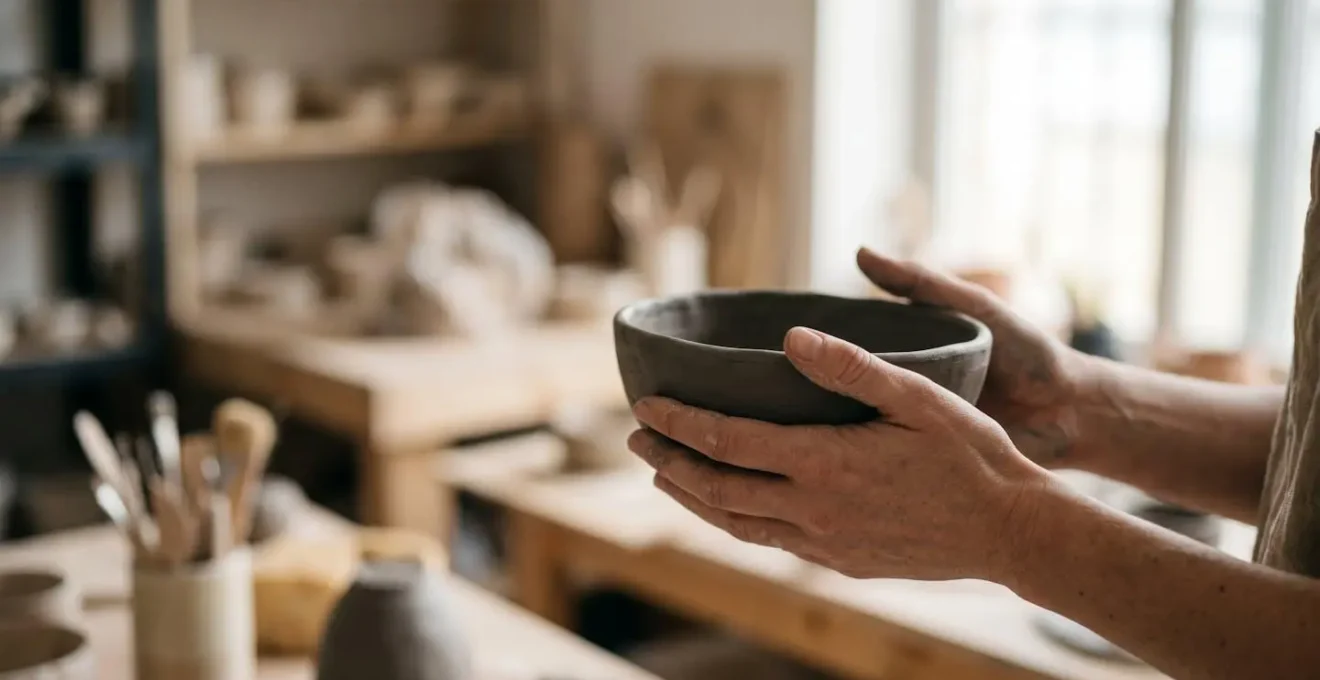
Politely but firmly declining a misaligned project reinforces the strength and clarity of your artistic identity. It sends a powerful message to the market: you have a vision, and you are committed to it. This act of curation builds respect and, paradoxically, makes you more desirable to the *right* clients—those who seek you out for your unique perspective and are willing to pay a premium for it. As the authoritative « Ceramics Field Guide » advises:
Politely declining a project due to creative misalignment is a powerful act of branding. It reinforces the strength and integrity of your artistic vision, making you more desirable to the right clients.
– Ceramics Field Guide for Artisans, Chapter 9: Selling & Pricing Work
The short-term gain of a single commission fee pales in comparison to the long-term value of a powerful, coherent, and respected artistic brand. A full kiln schedule is a logistical issue; a compromised artistic vision is an existential threat to your value.
How to Write a 50-Word Object Story That Increases Purchase Intent by 60%?
In a saturated market, the physical attributes of a ceramic piece—its form, its glaze, its function—are often not enough to command a premium price. The invisible layer that transforms an object into an experience is its story. A well-crafted narrative is not « fluff »; it is a direct driver of commercial value, providing a significant narrative ROI. A compelling story invites emotional participation, shifting the buyer’s evaluation from a rational assessment of materials to an emotional connection with the object’s meaning.
Research consistently demonstrates this powerful effect. A controlled study found that consumers exposed to a brand story not only described the brand more positively but were also willing to pay more for the exact same product compared to a control group. The story creates a bond that bypasses purely rational decision-making. More specifically, a 2025 scientific study on content marketing confirmed that storytelling elements showed a dominant influence in shaping consumer trust and, crucially, purchase intention.
A powerful object story doesn’t have to be a novel. A concise, 50-word narrative can be incredibly effective. The goal is to provide a hook that gives the piece context and soul. A simple, effective structure could be:
- Inspiration: Where did the idea come from? (e.g., « Inspired by the tidal patterns on the Cornish coast… »)
- Process: What unique technique was used? (« …this piece was thrown with local clay and pit-fired using a technique passed down through three generations… »)
- Intention: What feeling or idea does it embody? (« …to capture the quiet, rhythmic energy of the sea. »)
This narrative transforms a « grey decorative bowl » into a tangible piece of the Cornish coast, an object imbued with history and intent. It gives the interior designer a story to tell their client, adding another layer of value to their own work. It’s no longer just a bowl; it’s a conversation piece, an artifact of a specific time, place, and vision.
Figurative Painting vs Digital Installation: Which Holds Value Over 10 Years?
When considering art as an investment, collectors and designers weigh not just aesthetic appeal but also long-term durability and market stability. The debate between traditional mediums like painting and ephemeral ones like digital installations highlights a key advantage for ceramics: permanence. While the art market is complex, ceramics offer a unique combination of tangible, lasting presence and a robust, growing market, making them a compelling asset class.
Digital installations, while innovative, carry inherent risks of technological obsolescence. A file can corrupt, a display technology can become outdated, and the work’s very existence can be fragile. Figurative painting has a longer track record, but the market can be subject to volatile trends. Ceramics, however, possess a profound physical integrity. They are one of humanity’s most ancient and durable art forms. As leading consultants at Artelier Contemporary note, this physical permanence is a powerful selling point.
Ceramics are one of humanity’s most durable art forms. Unlike digital works that can corrupt or become obsolete, ceramic pieces offer physical permanence—the owner is buying something that can genuinely last for centuries.
– Artelier Contemporary Art Consultancy, Ceramic Installation Investment Value Analysis 2024
This tangible longevity provides a deep sense of security for a buyer. They are acquiring an object that can be held, displayed, and passed down through generations. This isn’t just a romantic notion; it is backed by a strong market. Market research shows the Art Ceramics Market was valued at USD 8.5 Billion in 2024 and is forecasted to grow steadily, reaching over USD 12.7 Billion by 2033. This demonstrates that ceramics are not a niche craft but a serious and appreciating category within the global art market. When positioned correctly, a ceramic piece isn’t just a decorative object; it’s a stable, tangible asset with a rich history and a strong future.
Key Takeaways
- Value is Psychological: The premium price of luxury ceramics is built on perceived scarcity, exclusivity, and narrative, not just the cost of materials and labour.
- Presentation Signals Position: The professionalism of your proposals, the structure of your quotes, and the stories you tell are all signals that define your place in the luxury market.
- Strategy Over Labour: Shifting your focus from simply making objects to strategically constructing their value is the most critical step toward securing high-value commissions.
Why Do Customers Hesitate to Pay £300 for a Bowl That Took 15 Hours to Make?
The customer’s hesitation has little to do with the 15 hours of labour and everything to do with a perceived mismatch between the price and the communicated value. In the world of artisan goods, and especially in luxury, a low price can be more of a deterrent than a high one. This is the luxury paradox: because art is a non-essential commodity, buyers are seeking value, not a bargain. A price that seems « too cheap » can subconsciously signal that the work is less desirable, less significant, or of lower quality.
A ceramics instructor famously observed this phenomenon in practice. Students were consistently shocked to find that raising their prices often led to *more* sales, not fewer. When their work was priced low, it was perceived as student-grade or hobbyist craft. When the price was raised to a level that projected confidence and significance, it attracted a different kind of buyer—one who was looking for valuable, serious artwork. The higher price acted as a filter and a signal, validating the work’s quality in the buyer’s mind.
The hesitation to pay £300 for your bowl is not because the price is objectively too high. It is because the surrounding framework of value has not been adequately constructed. Has the perceptual scarcity been established through a limited edition? Has a compelling 50-word object story been told? Has the quote been presented with the confidence of a luxury brand? Is your artistic vision clear and uncompromising? If these elements are missing, the £300 price tag exists in a vacuum, tethered only to the client’s subjective sense of « what a bowl should cost. » But when you build the framework, the price becomes the logical conclusion to a story of artistry, exclusivity, and professional integrity. The hesitation disappears because the value has been made undeniable.
By mastering these strategies, you move beyond being a maker of objects and become an architect of value. The next logical step is to apply this thinking to your own practice, starting with a professional evaluation of how your work is currently positioned and presented to the market.