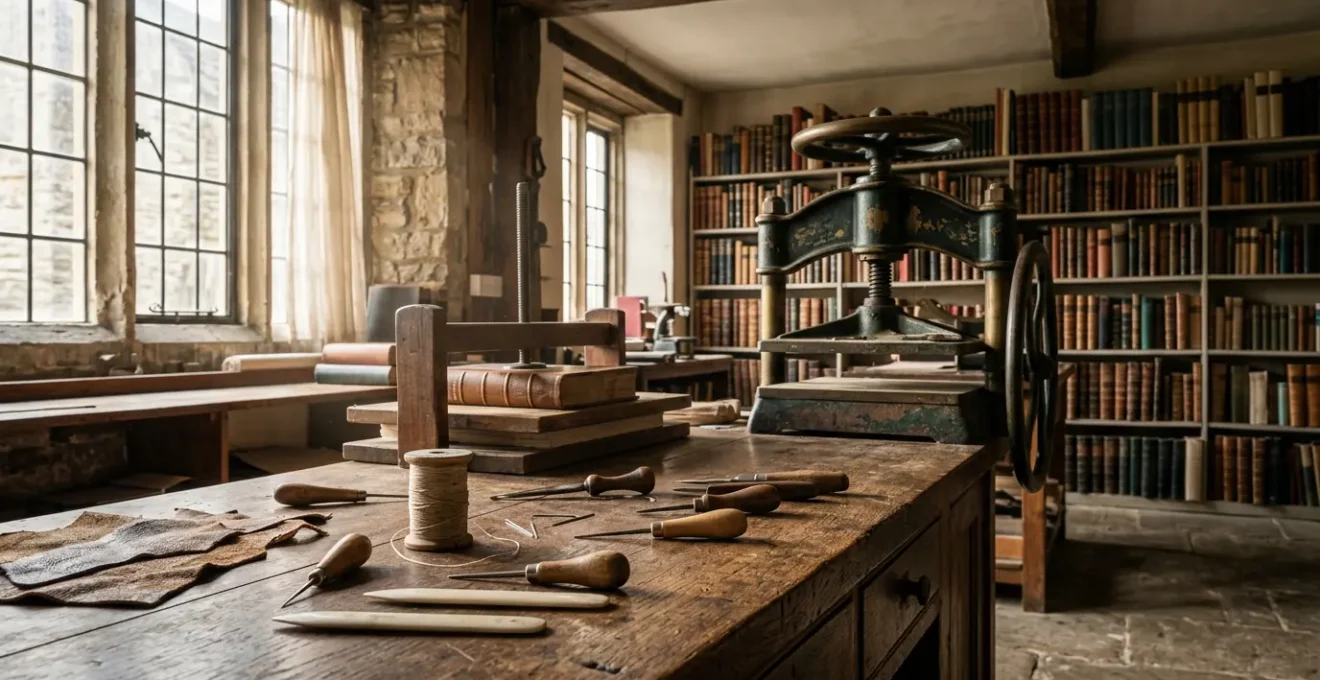
The crisis facing Britain’s heritage crafts is not a lack of interest, but a catastrophic failure in the mechanics of transferring skill from one generation to the next.
- Formal apprenticeship schemes are collapsing, particularly at the crucial intermediate level needed for hands-on learning.
- A passive reliance on old models is failing; we must actively engineer new hybrid systems that blend traditional mentorship with modern tools.
Recommendation: Shift focus from simply preserving objects to strategically documenting and transmitting the ’embodied knowledge’ of master craftspeople before it is lost forever.
In workshops and studios across Britain, a quiet crisis is unfolding. A generation of master bookbinders, furniture makers, and potters—custodians of skills honed over lifetimes—are approaching retirement. Yet, the benches beside them are often empty. For decades, the narrative has blamed a supposed lack of interest from younger generations or the inevitable march of technology. These explanations are too simple, and they miss the urgent, structural truth of the problem.
The issue is not a failure of will, but a breakdown in the machinery of knowledge transfer. The traditional apprenticeship, the very bedrock of craft education for centuries, is faltering under the weight of economic shifts, bureaucratic complexity, and a fundamental misunderstanding of what it takes to transmit embodied knowledge—the intuitive, non-verbal mastery held in a craftsperson’s hands. We have become excellent at preserving the artefacts of our past, but we are failing to preserve the human skills that created them.
This is not a eulogy for a bygone era. It is a constructive call to arms. If we accept that the old bridges are crumbling, our task is to engineer new ones. This article will dissect the systemic failures that have led us to this precipice. It will move beyond nostalgia to explore the practical, hybrid solutions that can fuse the wisdom of the past with the tools of the present. We will examine why formal systems are failing, how to capture tacit knowledge before it’s too late, and how ancient techniques are finding new life in the most unexpected places. This is a roadmap for rebuilding the bridge.
This article provides a detailed analysis of the challenges and potential solutions for preserving craft skills in the UK. Explore the sections below to understand the full scope of the issue.
Summary: The Last Generation: Why Are Britain’s Master Craftspeople Retiring Without Heirs?
- Why Did UK Furniture Making Lose 60% of Its Apprenticeships Since the 1990s?
- How to Video-Record a Master Potter’s Process Before Their Knowledge Is Lost?
- City & Guilds vs Private Workshop Apprenticeship: Which Produces Better Craftspeople?
- The Copyright Confusion When Apprentices Replicate a Master’s Signature Design
- When to Start Training a Successor: At 50 or When Orders Exceed Capacity?
- Georgian Guild Records vs Modern Textbooks: Which Teaches Joinery Fundamentals Better?
- How to Make Visitors Care About a 500-Year-Old Pot Without Manipulation?
- Why Are Georgian Furniture Techniques Appearing in Cutting-Edge London Design Studios?
Why Did UK Furniture Making Lose 60% of Its Apprenticeships Since the 1990s?
The decline in craft apprenticeships is not a recent phenomenon but a slow-motion collapse decades in the making. The narrative often points to a single cause, but the reality is a systemic failure. Since the 1980s, a combination of de-industrialisation, a governmental pivot towards a service-based economy, and an educational emphasis on academic pathways has systematically dismantled the infrastructure that supported vocational training. This isn’t isolated to furniture; broader trends show engineering apprenticeships fell dramatically through the late 20th century, setting a precedent.
However, the recent acceleration of this decline is alarming. The most critical pathway for hands-on craft, the intermediate-level apprenticeship, is in freefall. Data from the House of Commons Library is stark: intermediate apprenticeships plummeted from 43% of starts in 2017/18 to just 19% in 2024/25. This isn’t just a number; it represents the near-total evaporation of the entry-level rung for young people wanting to learn a trade without first acquiring a degree. Small workshops, the lifeblood of heritage crafts, simply cannot navigate the bureaucratic overhead or financial burden of modern apprenticeship schemes, which are often designed for large corporations, not a sole master craftsperson.
Yet, surrendering to this trend is not an option. As industry voices rightly assert, the situation is a challenge, not a foregone conclusion. As Winchester Furniture Ltd stated in their analysis, « The decline in apprenticeships is not inevitable. It is a challenge, and challenges can be met. » Meeting this challenge requires moving beyond blaming external forces and looking squarely at the broken knowledge transfer mechanics we have allowed to fester.
The hollowing out of these foundational training routes has created a skills vacuum, forcing us to consider entirely new methods of preservation.
How to Video-Record a Master Potter’s Process Before Their Knowledge Is Lost?
When formal pathways collapse, we must turn to new methods of preservation. The greatest risk is the loss of embodied knowledge—the intuitive, non-verbal skill that resides in a master’s hands and cannot be captured in a textbook. If an apprentice cannot learn directly, the next best thing is to create a ‘digital scriptorium’ to record this knowledge for future generations. Video is the most powerful tool in this arsenal, capable of capturing the nuance of a gesture, the pressure of a finger, and the rhythm of a process.

As the image above so powerfully illustrates, the real craft is in the touch, the feel, and the intimate interaction with the material. The urgency for this digital preservation is acute. When the Heritage Crafts Association announced the closure of the last full-time bookbinding apprenticeship scheme due to COVID-19, they noted it was the « last opportunity for young bookbinders to obtain a comprehensive full time education. » This highlights a critical tipping point: when the last formal teaching structure vanishes, informal and digital preservation becomes a primary duty. Recording a master’s process is not just about creating a tutorial; it’s about building an archive of an entire craft culture.
Your Action Plan: Archiving a Master’s Embodied Knowledge
- Points of Contact: Identify every gesture and technique. Use multiple cameras—one for a wide shot of the body, one for an overhead view, and a macro lens for close-ups of the hands.
- Collect and Inventory: Don’t just film the final product. Record the full process: preparing materials, maintaining tools, discussing mistakes, and explaining the ‘why’ behind each action.
- Ensure Coherence: The master should narrate their process. Prompt them with questions: « Why that tool? » « How do you know when it’s ready? » « What did you learn from your master about this step? » This connects action to intent.
- Capture Emotion and Memory: The goal is to capture the ‘feel’. Ask about the history of a particular tool, a story about a difficult commission, or the sensory cues (smell, sound, touch) they rely on. This is data that textbooks miss.
- Plan for Integration: Edit the footage into logical chapters. A full, unedited ‘master take’ should be archived, alongside shorter, thematic clips (e.g., « Mastering the Handle Pull »). Tag with clear metadata for future researchers.
This digital archive becomes the textbook of the future, a vital resource for the next generation of makers who may have to learn in a different way.
City & Guilds vs Private Workshop Apprenticeship: Which Produces Better Craftspeople?
The debate between formal qualification and traditional mentorship is central to the apprenticeship crisis. On one hand, institutions like City & Guilds provide a structured, standardised, and nationally recognised framework. They operate as an « examining and accreditation body for vocational, managerial and engineering qualifications, » offering a clear curriculum from entry-level skills to advanced achievement. This system provides a baseline of theoretical knowledge, health and safety standards, and a certificate that has currency in the wider job market. It offers scale and consistency that a network of individual workshops cannot.
However, what this formalised system often lacks is the very essence of mastery: the transmission of embodied knowledge. A private workshop apprenticeship, while inconsistent and unstandardised, is where this transfer excels. It is an immersive, one-to-one relationship where the apprentice learns by observation, osmosis, and imitation. They learn the ‘why’ behind the ‘what’, absorbing the unwritten rules, the feel of the material, and the intuitive problem-solving that comes from decades of experience. This is the deep, tacit knowledge that separates a competent technician from a true craftsperson.
Pitting them against each other as a binary choice is a false dichotomy. Neither system, in its pure form, is sufficient for the current crisis. The City & Guilds model risks producing technicians who know the theory but lack the fluid, intuitive skill of a master. The private workshop model, while ideal in theory, is not scalable and is collapsing under economic pressure. The future, therefore, must lie in hybrid models—systems that perhaps use a formal framework for foundational theory but integrate it with deep, immersive mentorship in a real-world workshop environment. We need to build a system that can certify the soul of a craft, not just its mechanics.
This hybrid approach acknowledges that while a certificate can open a door, only deep practice under a master’s eye can truly show you what’s inside the room.
The Copyright Confusion When Apprentices Replicate a Master’s Signature Design
A core tenet of the historical craft apprenticeship is learning through imitation. As historical records of guilds show, skills were transmitted through formal systems where an apprentice copied and replicated work to achieve proficiency, eventually leading to their own mastery. This process of « learning by doing » is fundamental. An apprentice joiner would replicate a master’s dovetail joint thousands of time, not to steal the design, but to internalize the skill required to make it perfectly. This creates a natural tension in the modern world of intellectual property: where does learning end and infringement begin?
In heritage crafts, this is less about copyright in the legal sense and more about legacy and integrity. The apprentice is expected to absorb the master’s style and techniques, but ultimately develop their own voice. The goal is not to create a factory of clones, but to continue a lineage. A successful apprenticeship concludes when the student can not only replicate the master’s work but also understand its principles so deeply that they can innovate from them.
Case Study: The Legacy of Colonial Williamsburg’s Master Bookbinder
Master bookbinder Bruce Plumley at Colonial Williamsburg exemplifies how this knowledge transfer works in practice. Plumley, who trained under a master in 1950s England, became one of only twenty-one Fellows of Designer Bookbinding worldwide. His workshop now trains the next generation, including journeymen who learn historical techniques by replicating period-specific bindings. This process is crucial; they learn to replicate master work not as an end in itself, but as a method to develop their own expertise. It demonstrates a healthy balance where tradition is a foundation for individual artistic evolution, not a creative straitjacket.
The « confusion » therefore, is resolved through ethics and intent. An apprentice who leaves a workshop and immediately produces exact copies of their master’s signature pieces for commercial sale is acting unethically. However, an apprentice who uses the techniques they learned to develop a new design that is clearly « of the same school » is demonstrating successful learning. The system relies on a shared understanding that the techniques are a gift to be built upon, not a product to be stolen. True succession planning is about passing on a philosophy, not just a set of blueprints.
It is a testament to the fact that the most valuable asset being transferred is not a design, but a way of thinking and seeing.
When to Start Training a Successor: At 50 or When Orders Exceed Capacity?
The question of when a master should begin training their successor is often framed by personal or business milestones. The instinct is to wait for the « right time »—perhaps when one feels their own powers waning, or when the business is so successful that another pair of hands becomes a necessity. This, however, is a dangerously flawed perspective that mistakes succession for simple delegation. The data reveals a much deeper, more systemic problem: the apprenticeship system itself is so broken that even when started, it frequently fails.
A startling 2025 Sutton Trust report found that around 40% of apprentices fail to complete their course in England. This catastrophic dropout rate has little to do with the master’s age or order book. It has everything to do with the quality of the training provided. The issue is not *when* to start, but *how* to create a system that apprentices will actually see through to the end. The decision to take on an apprentice must be a conscious commitment to mentorship, not a reactive solution to overwork.
The reasons for this failure rate are a damning indictment of the current system. As the Director of Skills Policy at the Sutton Trust points out, the problem is a chronic lack of meaningful training.
In 2023, 300,000 apprentices received less than their training entitlement, while nearly 75,000 received no off-the-job training at all.
– Simon Field, Director of Skills Policy, Sutton Trust, England’s apprenticeship system lagging behind international competitors
Therefore, the right time to start is when the master is prepared to dedicate significant time and energy to genuine teaching, treating the apprentice as a future custodian of the craft, not just as cheap labour. Effective succession planning begins with the intent to teach, not the need for help. Starting earlier, perhaps in one’s 40s, allows for a longer, more gradual transfer of knowledge, creating a true partner rather than a hurried replacement.
Ultimately, a successful apprenticeship is a legacy project, and legacies cannot be rushed.
Georgian Guild Records vs Modern Textbooks: Which Teaches Joinery Fundamentals Better?
In the quest to preserve craft skills, we are faced with two primary sources of knowledge: the historical record and the modern textbook. Modern textbooks offer clarity, structured diagrams, and scientifically tested information. They are accessible, safe, and systematic. However, they often teach the ‘what’ but fail to convey the ‘why’ or the ‘how it feels’. They can describe a perfect dovetail joint, but they cannot teach the intuitive understanding of wood grain that prevents it from splitting.
By contrast, historical records, such as the indentures and work logs from Georgian guilds, offer a different kind of truth. They describe a system of learning that was immersive, demanding, and profoundly holistic. As research into 18th-century bookbinding shows, an apprenticeship was a multi-year commitment demanding « hard work, dexterity, attention to detail, and a willingness and ability to handle painstaking tasks. » It was a system that forged a craftsperson through relentless practice. This approach reached its zenith in the post-war era. As historical records from the House of Commons Library show, by the 1960s, a third of all boys leaving school became apprentices, a peak of vocational training that built much of modern Britain.
While we cannot and should not return to the often-exploitative conditions of the 18th century, we must recognize what has been lost. Guild records teach us that fundamentals were learned not as abstract concepts, but as physical realities within a master-apprentice relationship. The knowledge was contextual, tied to specific materials, tools, and commissions. A modern textbook presents a dovetail joint as a universal solution; a master joiner would have taught an apprentice *which* type of dovetail to use for *this* drawer, in *this* wood, for *this* client. It is this deep, contextual, embodied knowledge that modern textbooks struggle to convey. They are an excellent supplement, but a poor substitute for true mentorship.
The best approach today is to use textbooks as the map, but to recognize that only a guide who has walked the path can teach you the terrain.
How to Make Visitors Care About a 500-Year-Old Pot Without Manipulation?
Museums and galleries face a constant challenge: how to bridge the gap between a static object and a modern visitor. For a 500-year-old pot, the default approach is to focus on historical facts—its date, its dynasty, its function. While important, this information rarely sparks a genuine emotional connection. It speaks to the intellect, not the heart. True connection comes not from abstract data, but from a tangible sense of the human hand behind the object.
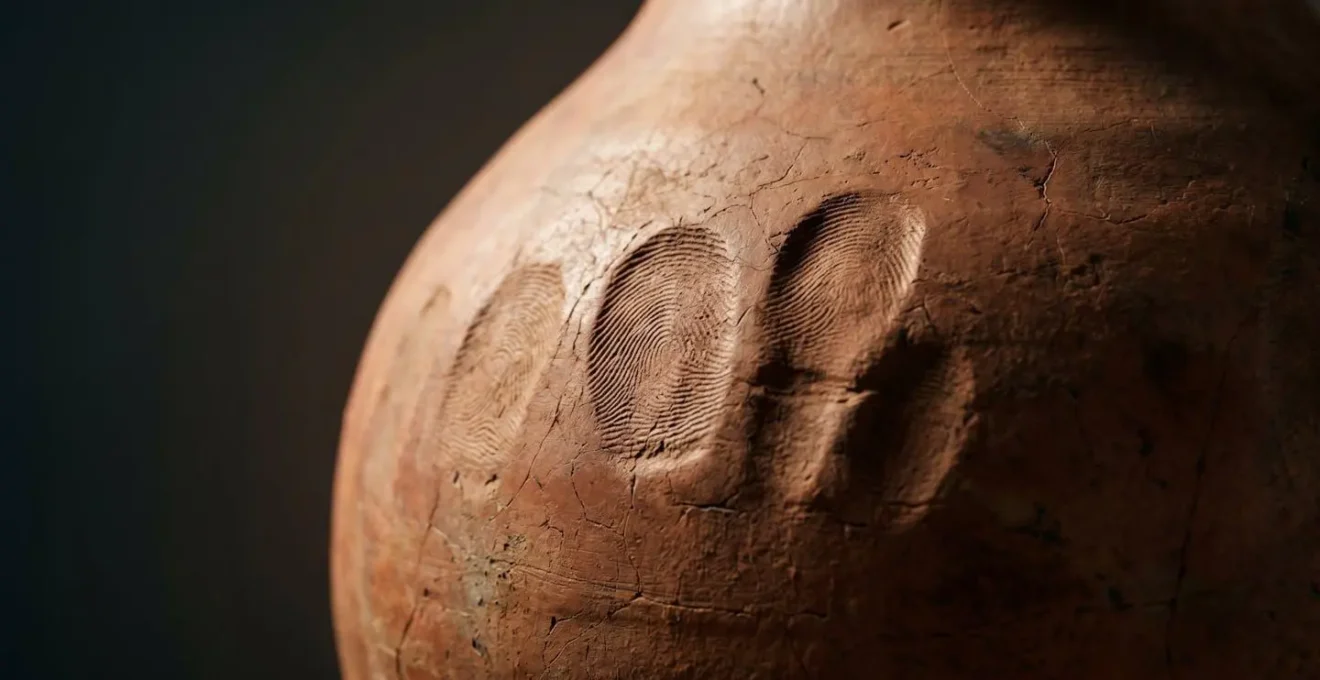
The key is to reveal the story of its creation and the embodied knowledge it represents. Instead of just a label with a date, what if we could show the maker’s fingerprints still visible in the clay? This is not manipulation; it is an invitation. It reframes the object not as a relic, but as a moment of human activity frozen in time. It encourages the visitor to imagine the person who made it, the workshop they sat in, and the skill in their hands. This creates a powerful, empathetic link across centuries.
This principle of valuing the maker’s labour and time is what transforms an ordinary object into something precious. Master Bookbinder Bruce Plumley articulated this perfectly when describing the craft:
Putting together a simple business ledger might take about thirty steps and twelve to twenty hours, depending on vertes’s size. But the time and work it took to make a book turned the linen rags from which paper was made and the hides used for covers into treasures.
– Master Bookbinder Bruce Plumley, Colonial Williamsburg Bookbinding Research
To make a visitor care, we must tell the story of this transformation. We must highlight the skill, the countless hours of practice, and the intimate, tactile decisions that turned raw clay, wood, or fibre into a lasting testament of human creativity. It is in the story of the making, not just the fact of its age, that an object’s true value is communicated.
We care about the pot when we are reminded of the potter.
Key Takeaways
- The apprenticeship crisis is not about a lack of interest, but the systemic collapse of effective knowledge transfer mechanisms in the UK.
- Preserving ’embodied knowledge’—the intuitive, hands-on skill of a master—must be the primary goal, as this cannot be captured by textbooks alone.
- The future lies in creating hybrid models that combine the best of formal education with the deep, immersive mentorship of traditional workshop practice.
Why Are Georgian Furniture Techniques Appearing in Cutting-Edge London Design Studios?
While the broader narrative around heritage crafts is one of decline, a powerful counter-trend is emerging from an unexpected quarter: the world of high-end, contemporary interior design. Far from being relegated to museums, the principles and techniques of Georgian craftsmanship are being actively sought out, celebrated, and reinterpreted by leading designers in London and beyond. This is not nostalgic pastiche; it is a recognition that the Georgian era represented a pinnacle of proportion, quality, and material integrity that holds profound lessons for modern living.
Discerning designers are discovering that these centuries-old techniques offer a level of quality and soul that mass-produced items cannot replicate. As the Chelsea Barracks Journal notes, « discerning designers are expertly adapting the principles of Georgian architecture interior design for contemporary homes, breathing new life into the genre. » This revival is driven by a client base that is weary of the disposable and yearns for authenticity, longevity, and a story. A hand-cut joint or a piece of straw marquetry speaks a language of human skill and dedication that resonates deeply in our digital age.
Case Study: Tim Gosling’s Fusion of Heritage and Modernity
Tim Gosling’s London studio is a prime example of this movement. Since 2005, his work has championed traditional techniques within cutting-edge contemporary design. Gosling’s bespoke furniture and interiors celebrate heritage by using methods like tattooing on vellum, straw marquetry, and intricate inlay, often combining them with modern materials like carbon fibre. His projects, which include restorations of historic châteaux and luxury hotels like The Goring, demonstrate a clear market. This proves that Georgian craftsmanship is not an antique curiosity, but a living, breathing tradition that provides immense value to a high-end contemporary clientele.
This trend provides the ultimate constructive answer to the apprenticeship crisis. It demonstrates that these are not obsolete skills. When nurtured and applied with creativity, they are incredibly valuable, commercially viable, and culturally relevant. The appearance of these techniques in cutting-edge studios is the most powerful argument for their preservation. It proves that a well-trained craftsperson is not a relic of the past, but a vital and sought-after asset for the future of luxury and sustainable design.
The work of preserving these skills begins now, in your own workshop, studio, or community. It is a challenge not for the next generation, but for us, and it is a challenge we can and must meet.