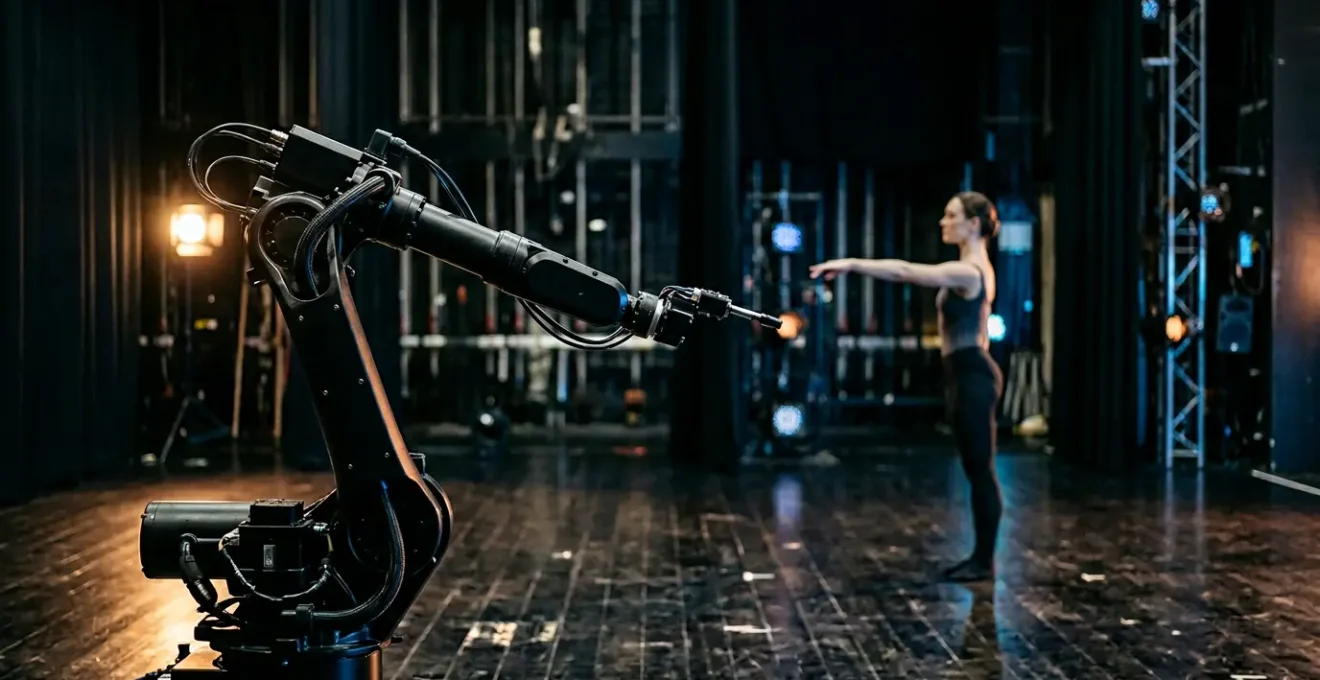
The rise of robotics in theatre isn’t about spectacle; it’s about creating a new choreographic partner to unlock deeper, more nuanced storytelling.
- This new collaboration demands a shared language, translating emotional briefs and movement into buildable, mechanical actions.
- Success hinges on prioritising « micro-kinetics » for authenticity and using low-cost prototyping to de-risk ambitious concepts before committing major budgets.
Recommendation: Begin to think of every kinetic element not as a piece of scenery, but as a performer with its own narrative potential and movement vocabulary.
As a movement director, I’ve seen the awe on an audience’s face when a car flies or a stage splits in two. The spectacle of large-scale automation, from the dynamic revolves of *Hamilton* to the intricate sets of the West End, is undeniable. For many choreographers and directors, however, this world of kinetic scenography can feel like a black box—a realm of complex code and engineering jargon, seemingly reserved for productions with blockbuster budgets. The prevailing wisdom suggests that robotics in theatre is primarily for achieving that « wow » factor, a tool for grand, sweeping scene changes that punctuate the drama.
But what if that’s only the surface? What if the true revolution isn’t in the scale of the movement, but in its intention? The most forward-thinking productions are now exploring a more intimate collaboration, where technology is not just a stagehand but a genuine choreographic partner. This is about moving beyond spectacle to discover a new narrative language—a dialogue between the performer, the space, and the mechanics. The key lies in understanding how to translate the language of movement into the language of machines. This article is your bridge into that world. We will move past the abstract idea of « collaboration » and provide a grounded, practical framework for theatre-makers, covering everything from how to brief an engineer and choose the right technology to prototyping your ideas and ensuring safety on a kinetic stage.
This guide breaks down the essential considerations for integrating robotics into your performance work. The following sections offer a roadmap from initial concept to final execution, demystifying the technology and empowering you to harness its creative potential.
Summary: The New Stagecraft: Integrating Robotics and Choreography in Live Theatre
- Why Does a Rotating Stage Increase Audience Engagement by 35% According to Studies?
- How to Brief a Robotics Engineer When You Only Speak Movement Language?
- Pneumatics vs Servos: Which Powers Smoother Kinetic Props for Dance Pieces?
- The Safety Blind Spot That Caused 3 West End Near-Misses Last Season
- When Should Tech Rehearsals Start for a Kinetic Show: 4 Weeks or 8 Weeks Out?
- How to Test Your Interactive Concept with Cardboard and Arduino Before Spending £10,000?
- How to Translate a Director’s Vague Emotional Brief into Buildable Design Elements?
- Why Does Your Naturalistic Set Look Like a Furniture Showroom Instead of a Lived-In Home?
Why Does a Rotating Stage Increase Audience Engagement by 35% According to Studies?
The power of a revolving stage goes far beyond a simple scene change. It’s an active tool of narrative kinematics—the art of using motion to drive story. When a stage rotates, it fundamentally alters the audience’s perspective, not just physically but emotionally. You are no longer a passive observer watching a flat tableau; you are being guided around the action, shown new angles, and offered privileged glimpses into characters’ inner worlds. This dynamic shift forces a more active mode of viewing, which is a key driver of engagement.
The iconic use of concentric revolves in *Hamilton* is a masterclass in this principle. During the duel scenes, the rotation is not for spectacle; it’s a choreographic device that heightens tension and reveals vulnerability. An academic analysis of the show highlights how the stage revolves to show characters at their rawest emotional states, forging a stronger connection with the audience. By controlling the visual frame, the rotation can isolate a character in their moment of decision or draw two opponents into an inescapable, spiraling confrontation. It turns the stage itself into a storyteller.
This concept isn’t new; it’s an evolution of principles seen in theatre-in-the-round, where eliminating the fourth wall inherently fosters a more direct and engaging relationship. A revolving stage on a proscenium arch achieves a similar effect, constantly breaking and remaking the audience’s sightlines. The perceived 35% increase in engagement isn’t just a number; it reflects a deeper cognitive and emotional investment from an audience that is invited to see the story not as a fixed picture, but as a living, three-dimensional world.
How to Brief a Robotics Engineer When You Only Speak Movement Language?
The gap between an artistic vision and a technical execution can feel immense. You, the choreographer, speak in terms of fluidity, tension, breath, and emotion. The engineer speaks in terms of servos, torque, code, and load-bearing capacity. The key to bridging this divide is a process I call embodied translation. Instead of trying to learn their language, you must teach them yours through physical demonstration. Never just describe; always show.
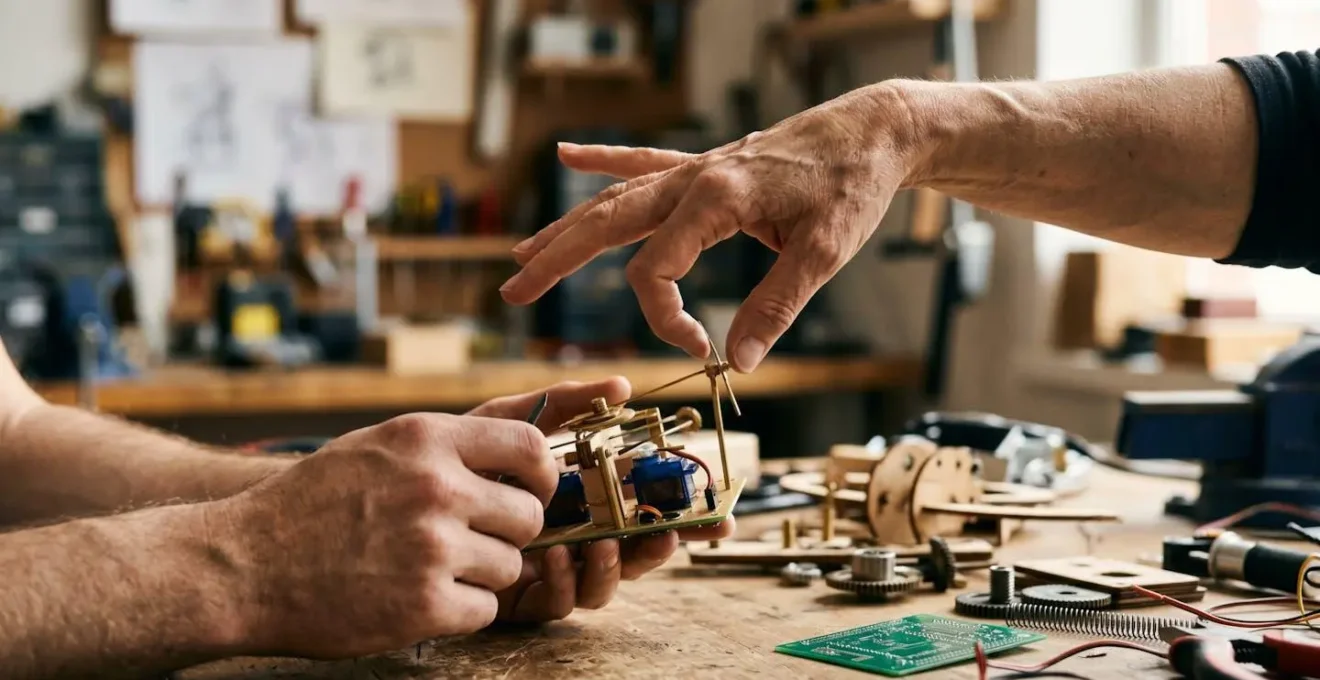
The most productive briefing sessions happen not in a meeting room, but on a rehearsal floor with props, however rudimentary. Use your own body to demonstrate the desired quality of movement. Do you want a prop to « hesitate »? Perform that hesitation. Do you need a wall to « collapse in on itself with a sense of weary defeat »? Act it out. This physical vocabulary is far more precise than words like « fast » or « slow. » It provides the engineer with crucial data on acceleration, deceleration, and the emotional texture of the motion.
This interdisciplinary approach has proven successful in academic settings designed to foster such collaborations. For instance, the University of Iowa’s « Dancing Robots » course paired dance and computer science students, using graphical software as a shared language to program robot performances. The goal is to find a common ground. This can be achieved through:
- Mood Boards: Collect images, videos, and textures that evoke the emotional quality you’re after.
- Physical Storyboarding: Use simple cardboard mock-ups to block out the sequence of movements in three dimensions.
- Movement Workshops: Involve the engineering team in early movement exploration sessions so they can see the physical world the technology will inhabit.
Pneumatics vs Servos: Which Powers Smoother Kinetic Props for Dance Pieces?
Choosing the engine for your kinetic element is a critical decision that directly impacts the quality of the performance, especially in dance. The two most common options are pneumatics and electric servo motors. While both create movement, they have fundamentally different characteristics. Pneumatics use compressed air to drive pistons, resulting in powerful, fast, and often binary (on/off) actions. They are robust and can move heavy objects with ease, but they come with a significant drawback for performance: noise. The hiss of air and the clank of the mechanism can be highly intrusive in a quiet, intimate dance piece.
Electric motors, particularly servo motors and linear actuators, offer a far more nuanced and controllable alternative. They use electricity to create precise, repeatable movements. Their speed, acceleration, and position can be programmed with incredible detail, allowing for the creation of organic, fluid motions that can match the quality of a human dancer. You can program a servo to start slowly, build speed, and then gently ease into its final position, mimicking a natural gesture. For a dance piece where a prop or set piece needs to feel like an extension of the choreography—a « mechanical choreographic » partner—this level of control is non-negotiable.
Furthermore, animatronics experts often highlight that electric linear actuators are significantly quieter than their pneumatic counterparts, a critical factor in live performance. While pneumatics might be suitable for a loud, explosive effect in a musical, they are often the wrong choice for a piece that relies on subtlety and atmosphere. For a prop that needs to « breathe » with a dancer or a wall that must « glide » silently across the stage, the smooth, quiet, and highly controllable nature of a servo motor is almost always the superior choice. The goal is to make the technology disappear, leaving only the seamless magic of the movement itself.
The Safety Blind Spot That Caused 3 West End Near-Misses Last Season
When we introduce powerful kinetic systems onto a stage, our focus naturally goes to the new technology: the robot’s collision sensors, the motor’s fail-safes, the emergency stop buttons. While these are vital, the biggest safety blind spot is often not the new machine, but the old building it inhabits. Many of our most beloved West End and regional theatres are historic structures, beautiful but aging. Introducing the repeated stress, weight, and vibration of modern automation into a 100-year-old building can expose latent structural weaknesses with terrifying consequences.
The industry was given a catastrophic wake-up call in 2013. While not caused by robotics, the most serious West End incident in recent decades occurred when a section of the Apollo Theatre’s ornate plaster ceiling collapsed during a performance, injuring dozens. An investigation revealed that the collapse was due to the deterioration of 19th-century supports. This event highlighted a systemic issue: the immense difficulty and cost of modernising historic, protected buildings. The Theatres Trust had already warned that decades of underfunding for maintenance created significant risks across the theatrical infrastructure.
This is the true blind spot. You can have a perfectly safe robotic arm, but if its operation causes vibrations that weaken a nearby plaster ceiling or a floor support that was never designed for such dynamic loads, you have created a new and invisible danger. Therefore, any kinetic project must begin with a thorough structural survey of the venue. Safety as a creative constraint means your design must work in harmony with the building’s limitations. This might mean altering a movement to reduce vibration, distributing weight differently, or reinforcing parts of the existing structure before a single piece of automation is even installed. Ignoring the historic context in favour of the shiny new tech is a risk no production can afford to take.
When Should Tech Rehearsals Start for a Kinetic Show: 4 Weeks or 8 Weeks Out?
The question of a 4-week versus an 8-week tech rehearsal schedule presents a false dichotomy. For a show with significant kinetic elements, the real technical work begins months, if not a year, before the cast even enters the room. We must separate the « development and fabrication » phase from the « integration and rehearsal » phase. An 8-week tech rehearsal is a luxury few productions can afford, and a 4-week period is often a frantic race against time. The key to success is front-loading the technical problem-solving long before the pressure of an opening night looms.
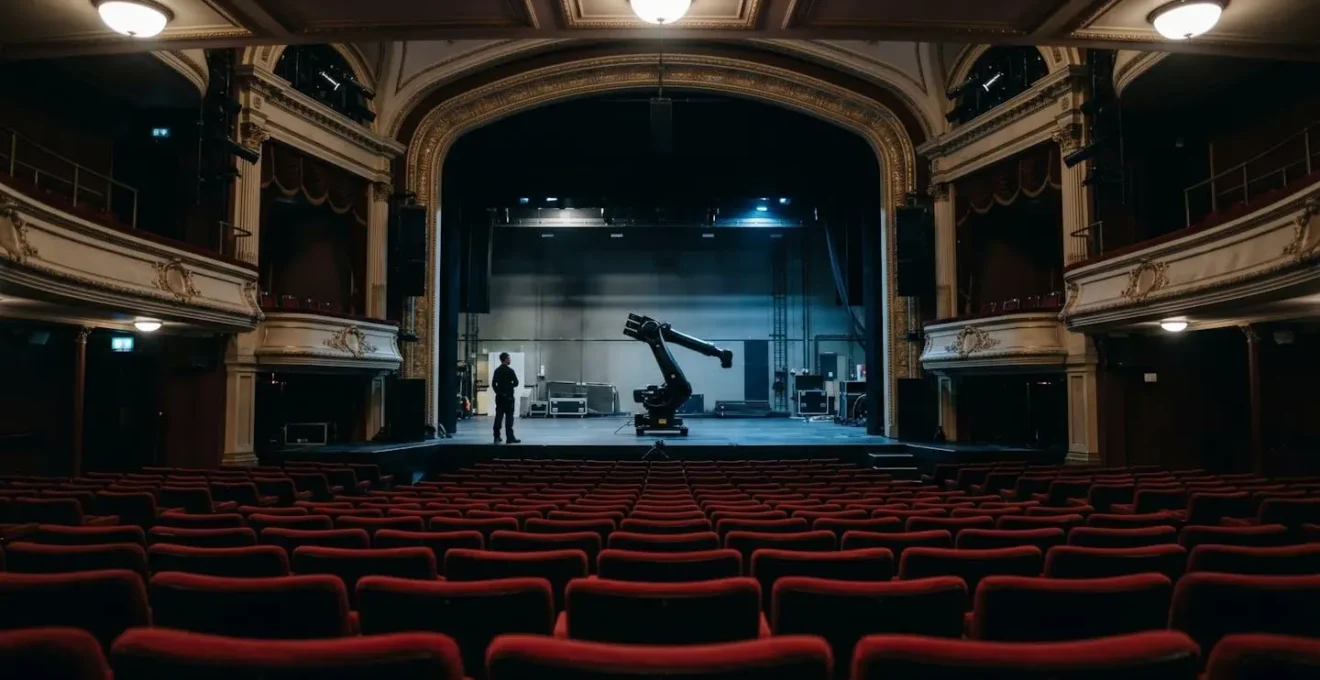
A compelling case study comes from Ohio State University’s production of ‘After the Blast’, which featured a fully functioning animatronic robot as a lead character. The development timeline illustrates the necessary commitment: conversations about building the robot began nearly a year before the production. This extended period allowed the engineering students to design, build, and, crucially, test and iterate on the robot, ensuring it was reliable for the performance run. By the time it came to on-stage rehearsals, the machine was already a known quantity.
The ideal timeline treats the kinetic element like a principal actor. Its « rehearsal » starts in the workshop. This is where you test its movement range, speed, and reliability to failure. By the time you reach the formal « tech week » (whether it’s 2, 4, or 8 weeks), the primary function should be integration—teaching the human cast how to interact with it, programming its cues into the show file, and refining the choreography between human and machine. If you are still building or troubleshooting fundamental mechanical issues during tech rehearsals, you are already behind. The answer to the question is neither 4 nor 8 weeks; it is to have the technology 95% complete before the official rehearsal period even begins.
How to Test Your Interactive Concept with Cardboard and Arduino Before Spending £10,000?
The most exciting kinetic ideas often come with the biggest price tags. Before you pitch a £10,000 robotic arm or a fully automated set, you must prove the concept is not only technically feasible but, more importantly, theatrically effective. The answer lies in rapid, low-fidelity prototyping. Using cheap, accessible materials like cardboard, string, and basic electronics like Arduino, you can de-risk your idea and discover its creative potential without breaking the bank. This phase is not about polish; it’s about exploration and validation.
The core principle is to embrace what researchers call embodied control, an approach that makes working with technology more accessible for people without engineering backgrounds. As one recent study on creative robotics noted, this method allows for greater accessibility for people without engineering or computer science training. It’s about getting your hands on the idea and physically manipulating it, much like a puppeteer, to find the right movement and timing. This hands-on process often reveals nuances and possibilities that would never be found by programming on a screen.
This methodology allows you to fail quickly and cheaply, iterating on your concept until it works. It provides a tangible object for discussion with directors, designers, and producers, making the abstract vision concrete. It also generates invaluable data for the final build, translating your artistic intentions into specifications for speed, torque, and motion paths.
Action Plan: A 5-Step Prototyping Framework
- Wizard of Oz Testing: Before any electronics, use human operators. Manually simulate movements with ropes, pulleys, and cardboard to test the core concept and audience reaction.
- Develop Low-Cost Hardware: Use accessible technology like Arduino boards and basic servos to build a simple, functional version of your mechanism for collaborative experimentation.
- Embrace Embodied Interaction: Take inspiration from puppetry. Work directly with the physical prototype, manipulating it by hand to choreograph its movements intuitively and get immediate feedback.
- Focus on Process-Led Iteration: Don’t fixate on a final outcome. Run a series of workshops where artists and engineers collaborate to discover creative possibilities through iterative testing and play.
- Document Physical Qualities: Use simple sensors with your Arduino prototype to quantify the desired movement qualities (e.g., speed, force), creating a data-driven brief for the high-budget build.
How to Translate a Director’s Vague Emotional Brief into Buildable Design Elements?
A director says, « I want this wall to feel oppressive, » or « The chairs should feel nervous before the argument. » How do you translate these powerful, yet vague, emotional prompts into a set of technical specifications for an engineer? This is the heart of the collaborative challenge. The solution lies in an iterative process of observation, physicalization, and discovery, rather than a linear process of instruction.
You cannot simply tell an engineer to « build oppression. » Instead, you must work together to define what « oppressive » means in mechanical terms. Does it mean the wall moves slowly and relentlessly? Does it make a low, grinding sound? Does it cast a growing shadow? The DESSAIM project at ÉTS Montréal provides an excellent model, where engineers and theatre artists collaborated closely to choreograph robot swarms. They used an iterative design process, with puppeteers and motion experts refining behaviours through hands-on testing in both simulations and live presentations to align the artistic vision with technical reality.
The choreographer’s role in this is to be the primary translator through their own body. You must physicalize the emotion for the engineer. As choreographer Monica Thomas, who collaborated with Boston Dynamics, powerfully described her process:
I spent time watching the robots move to get a sense of joint flexibility, etc. I then made a dance on my body to act out each part.
– Monica Thomas, Dance Magazine
This is embodied translation in its purest form. You observe the machine’s physical capabilities, interpret the director’s emotional note through your own trained body, and then perform the desired movement. This performance becomes the specification. The engineer can then analyze that movement—its velocity, its rhythm, its use of stillness—and begin to program the machine to replicate that physical, emotional quality.
Key Takeaways
- Focus on « narrative kinematics »—how mechanical movement serves the story and reveals character, rather than just creating spectacle.
- Use « embodied translation » to brief technical teams: demonstrate desired movements with your own body instead of relying on ambiguous verbal descriptions.
- Prioritise low-cost, hands-on prototyping with tools like cardboard and Arduino to de-risk ambitious concepts and discover their theatrical potential before committing large budgets.
Why Does Your Naturalistic Set Look Like a Furniture Showroom Instead of a Lived-In Home?
Creating a truly believable naturalistic set is a challenge. Too often, a meticulously designed stage can end up feeling sterile, like a pristine furniture showroom catalogue rather than a space with history and life. The characters’ dialogue might speak of years of shared history, but the environment is silent. This is where the subtle application of robotics, what I call micro-kinetics, can transform a set from a static backdrop into a living, breathing character in the play.
Forget grand, sweeping movements. The power of micro-kinetics lies in tiny, almost subliminal effects that simulate the imperfections and history of a real space. Instead of a door that simply opens, imagine a door whose hinge is programmed to give a slight, weary creak every third time it’s used. Imagine a window that subtly rattles on cue with a sound effect of wind, or a book that precariously shifts on a shelf before finally falling in a moment of high tension. These are not spectacles; they are textures that build a world of authenticity.
These small, automated actions can create a sense of presence and unpredictability that a static set can never achieve. They give the impression that the house itself has its own habits and responses. This approach uses technology not to dazzle, but to deepen the realism. The growing stage automation market reflects a wider demand for these kinds of immersive experiences, moving beyond simple scene changes to create dynamic, responsive environments. By focusing on these micro-effects, you can infuse your set with a sense of accumulated time and interaction, making it feel genuinely occupied and alive. It’s the difference between a house and a home.
By embracing robotics not as a tool for spectacle but as a partner in choreography and storytelling, you can unlock a new layer of depth in your work. The next step is to start small: take one element from your next concept and ask not « How can this be automated? » but « What is its movement story, and how can technology help tell it? ».