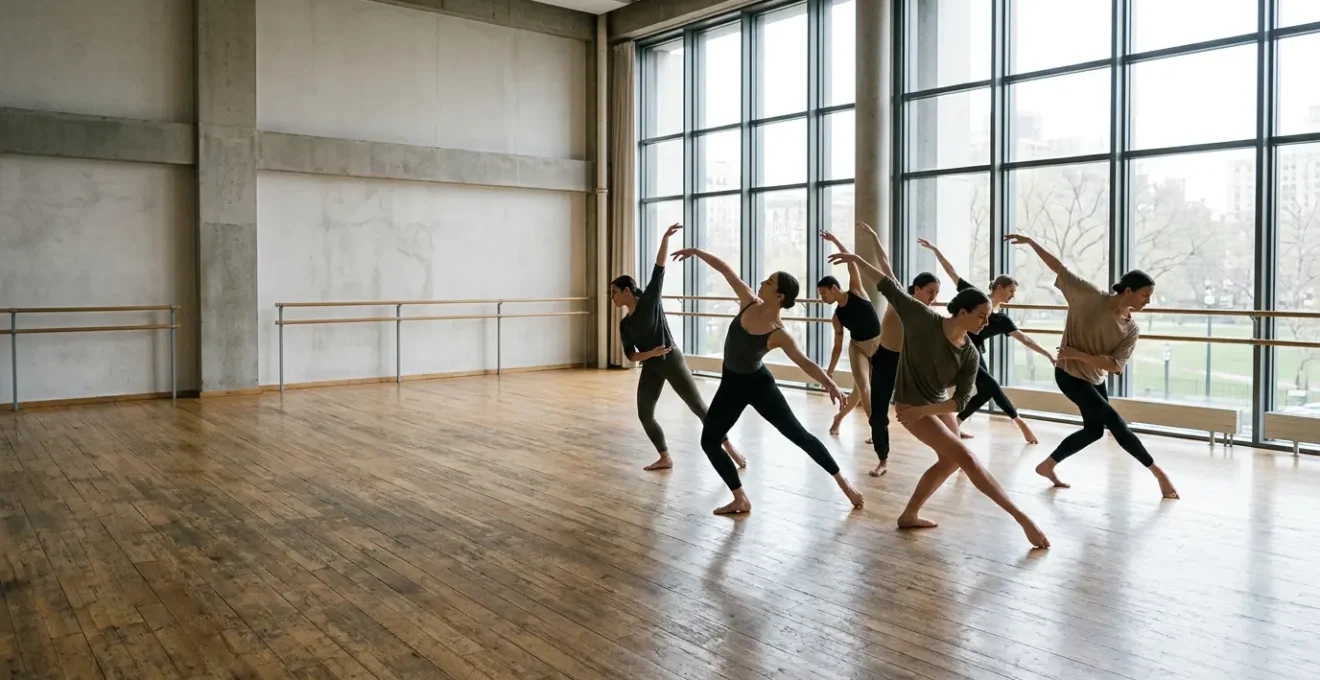
Your unique choreographic voice isn’t found by adding more influences, but by stripping away learned habits through a disciplined process of creative limitation.
- The aesthetic similarities in graduates’ work stem from ingrained « movement homogenisation » within elite training programmes.
- Authentic movement arises not from boundless freedom, but from « generative friction »—using physical constraints to force the body out of its default pathways.
Recommendation: Stop searching for external inspiration and start a practice of somatic excavation to uncover the choreographic DNA that already exists within you.
There is a moment of unsettling recognition familiar to many emerging choreographers. You are in the audience, watching a new work by a peer—someone who graduated from the same programme—and you see it: the same spinal articulations, the same floorwork transitions, the same gestural tics that populate your own creative sketchbook. It’s your training, reflected back at you. The prevailing advice is often frustratingly vague: « be inspired by other art forms, » « improvise more, » or « find your personal story. » These suggestions treat originality as an act of external gathering, a collage of influences. They encourage you to look outward for something that can only be found by looking inward.
But what if the path to a singular artistic identity isn’t about addition, but subtraction? What if your most authentic movement vocabulary is already present, buried beneath years of expertly taught, yet second-hand, technique? The challenge is not to learn more, but to unlearn strategically. This guide proposes a different path, one rooted in the concept of somatic excavation. It’s a process of digging into your own physical biases, using the friction of limitation not as a barrier, but as the very engine of creation. We will move beyond the platitudes and provide a framework for dismantling your ingrained habits, navigating the pressures of collaboration, and finally, allowing your true authorial voice to emerge on stage.
This exploration will provide a structured approach to a deeply personal journey. We will examine why this aesthetic echo occurs, how to break it, and when to strategically implement these discoveries within the demanding realities of a choreographic career.
Summary: Unearthing Your Choreographic Signature
- Why Do All Graduates from Your Programme Move the Same Way in Their First Commissions?
- How to Discover Your Unique Movement Signature Using Body Limitation Explorations?
- Task-Based Improvisation vs Set Choreography: Which Produces More Authentic Movement?
- The Collaborative Process That Produced Movement Nobody Owned or Believed In
- When to Experiment with New Movement: Between Projects or During Commission Development?
- Why Did a Dancer with Perfect Arabesque Get Rejected While a Less Technical Peer Got Hired?
- How to Write 5 Distinct Voices Using Only 500-Word Vocabulary for Each?
- Why Do Talented Students from Top UK Schools Fail to Secure Company Contracts?
Why Do All Graduates from Your Programme Move the Same Way in Their First Commissions?
The phenomenon you’re observing is not an illusion; it’s a byproduct of excellence. Top-tier dance institutions, for all their merits, are designed to impart a specific physical philosophy. This results in what can be called movement homogenisation—the development of a shared, often unconscious, aesthetic « accent. » While each conservatoire may be a distinct institution with its own staff, they are all in the business of building a certain kind of highly capable, technically proficient body. This process inevitably ingrains deep neuromuscular pathways. The way you initiate a turn, recover from the floor, or articulate your hands becomes second nature, a default setting that is incredibly efficient for performance but stifling for creation.
This institutional signature becomes particularly visible in first commissions, when an emerging artist is under immense pressure to deliver. In this high-stakes environment, the body defaults to what it knows best: its training. The result is work that is competent, polished, but ultimately derivative—a testament to the school rather than a statement from the artist. The stakes are particularly high in the UK’s vibrant but fiercely competitive dance scene. With Arts Council England’s National Portfolio allocating around £47 million annually across dozens of dance companies, the pressure to present work that is not just well-executed but also uniquely compelling is immense. A choreographer whose voice is indistinguishable from their peers is at a significant disadvantage.
Recognising this homogenisation is not a criticism of your education but the first crucial step toward artistic self-determination. It requires you to see your training not as the totality of your artistic identity, but as a foundational layer upon which your unique choreographic DNA must be built. The goal is to make your training a tool you wield, not a track you are forced to run on.
How to Discover Your Unique Movement Signature Using Body Limitation Explorations?
If training instills default pathways, the only way to carve new ones is to deliberately block the old routes. This is the principle of generative friction: using constraints to force your body to solve movement problems in novel ways. Instead of asking « What can my body do? », you must ask « What can my body do if I take away its favourite tools? ». This is not about injury or unsafe practice; it is a structured, investigative process of somatic excavation. By imposing limitations, you bypass the cerebral, habit-driven part of your brain and tap into a more primal, resourceful intelligence.
Imagine taping your dominant hand to your thigh, or attempting to travel across the floor without bending your knees, or creating a phrase entirely within a one-meter square. These are not just quirky exercises; they are diagnostic tools. They reveal your physical crutches—the patterns you rely on when you’re not paying attention. The awkward, inefficient, and sometimes frustrating solutions your body discovers in these moments are the raw material of your unique signature. They are movements that could not have been conceived intellectually; they had to be discovered somatically. This process is about finding honesty in the struggle.
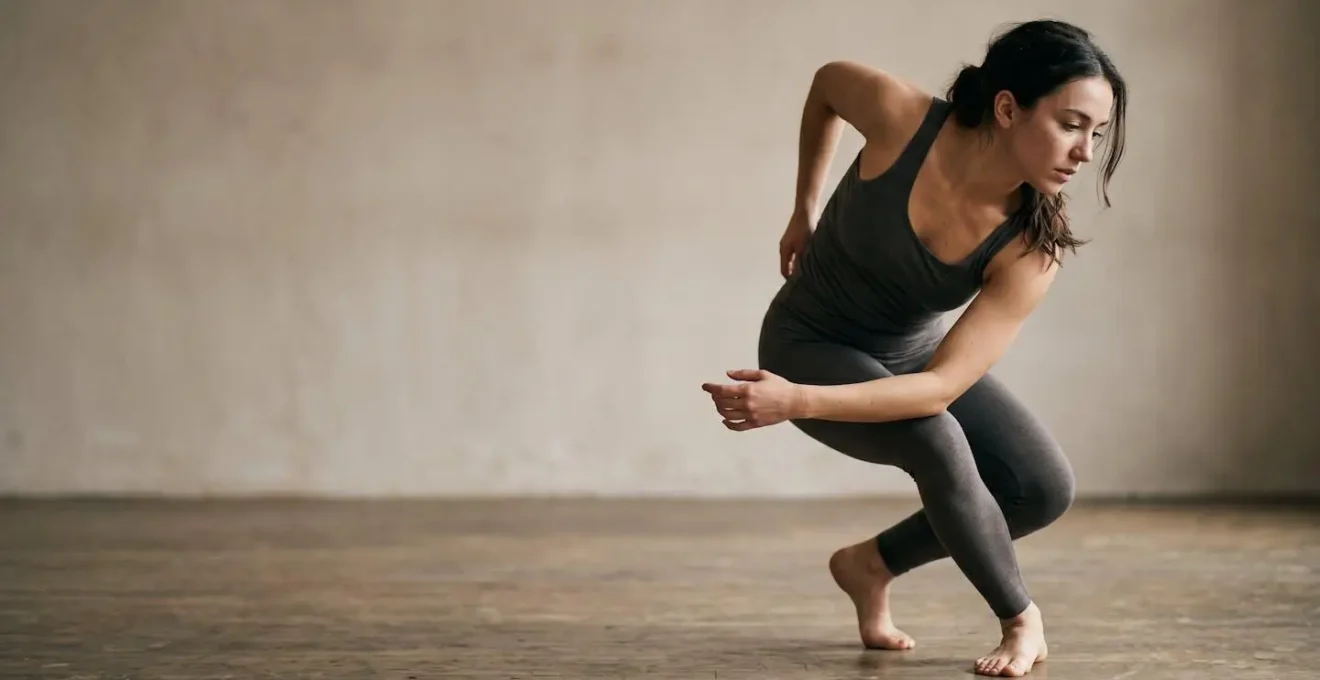
As you can see in this exploration, the goal isn’t to create a « pretty » shape but to investigate an authentic physical response to a specific problem. It is in this focused, internal investigation that movements free from the polish of institutional aesthetics are born. This requires dedicated time for solo practice, where the pressure to « produce » is replaced by the permission to « discover. » Your studio becomes a laboratory for one, a space to catalogue the idiosyncrasies that make your physicality yours alone.
Your Somatic Audit: A Plan for Uncovering Movement DNA
- Isolate a Habit: Identify one go-to movement pattern (e.g., a specific spinal roll, a way of using your arms). For one session, forbid yourself from using it.
- Impose a Physical Constraint: Choose a limitation. Examples: keep one elbow connected to your hip; move as if your spine cannot bend; create a phrase using only asymmetrical shapes.
- Introduce an External Task: Use a non-dance task as a prompt. Examples: try to describe a complex object in the room using only your feet; create a phrase that traces the architecture of the studio space.
- Catalogue the ‘Weird’ Bits: During these tasks, pay attention to the awkward, unintentional movements that emerge. Don’t judge them. Record them on video. These are your raw diamonds.
- Refine and Integrate: Review the catalogued movements. Find one or two « weird » moments that have a spark of interest. Now, apply your technical skill to refine, amplify, or develop that raw gesture into a choreographic phrase.
Task-Based Improvisation vs Set Choreography: Which Produces More Authentic Movement?
The debate between improvisation and set choreography often presents a false dichotomy. The real question is not *if* you should improvise, but *how*. Unstructured, « free » improvisation can be a trap. Without a clear intention or constraint, the body often reverts to its most comfortable, well-worn grooves—the very habits you are trying to escape. This is why task-based improvisation is a far more powerful tool for generating authentic material. It provides the scaffolding of a problem, forcing the body-mind into a state of active, present-tense problem-solving.
Set choreography is the art of refinement, of shaping and structuring discovered material. Task-based improvisation is the art of discovery itself. It is the research and development phase. By setting a specific task— »cross the room without letting your feet make a sound, » or « create a duet with a chair where you never lose contact »—you create a container for exploration. The movements that arise are not born from a desire to look a certain way, but from the genuine attempt to solve the puzzle. This process inherently yields movement that is functional, intentional, and stripped of affectation. It is authentic because it is the direct result of a lived experience, however small.
This approach aligns with the core of contemporary practice, where improvisation is not just a warm-up but a primary creative engine. As highlighted by the San Francisco Conservatory of Dance, a structured improvisational approach allows for surprise and discovery, serving as the essential raw material for polished choreographic works. The most engaging and dynamic contemporary pieces are often those where you can still feel the ghost of the initial improvisational task within the final, set material. The authenticity comes from the process, not just the final product.
The Collaborative Process That Produced Movement Nobody Owned or Believed In
The rise of collaborative creation is one of the most significant shifts in contemporary dance, yet it presents a profound challenge to the emerging choreographer: the potential dilution of the authorial voice. When a process becomes so democratic that every participant’s input holds equal weight, the result can be a choreographic collage—a series of interesting moments that fail to cohere into a singular, compelling vision. It’s a piece of work that everyone contributed to, but that nobody truly owns. The dancers don’t fully believe in it because it lacks a guiding intelligence, and the choreographer feels like a facilitator rather than an artist.
This is a common pitfall. The desire to be non-hierarchical and to honour the creative contributions of dancers is admirable, but it can be misinterpreted. The trend where, as noted by choreographer Barry Kerollis, dancers are often listed as co-choreographers highlights this very issue. A strong collaborative process is not one where the choreographer abdicates their vision. Instead, it’s one where the choreographer acts as the ultimate editor and architect. They must be the one holding the blueprint, even as the dancers are generating the bricks.
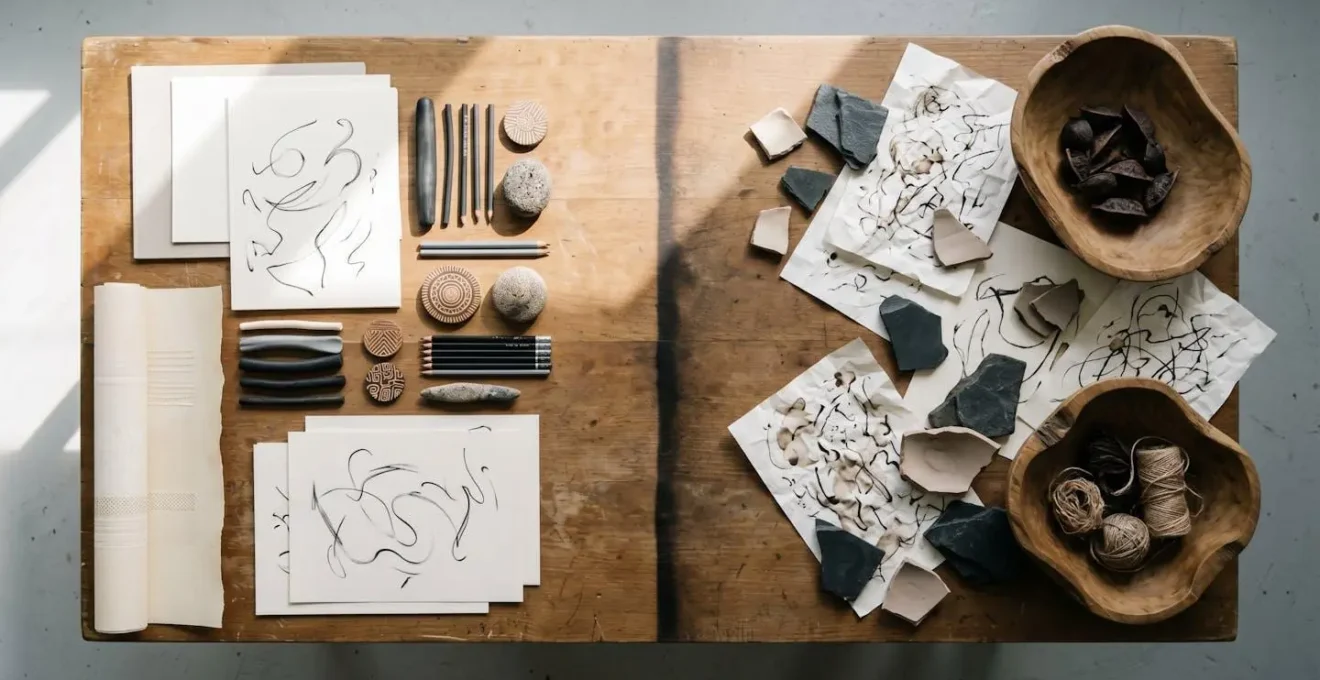
Your role is to create the tasks, to set the creative problems, and to curate the results. You provide the sandbox; the dancers play in it. But you are the one who decides which sandcastles become part of the final landscape. This requires confidence and clarity. You must be able to recognise a movement that serves your vision—even if it’s not one you would have created yourself—and distinguish it from one that, while interesting, pulls the work in another direction. Owning your authorial voice in a collaborative setting is not an act of ego; it is an act of service to the work itself, providing the coherence it needs to resonate.
When to Experiment with New Movement: Between Projects or During Commission Development?
The ideal answer is « both, » but the practical reality for an emerging choreographer is more complex. The time between paid projects is the most fertile ground for deep, non-outcome-oriented research. This is your R&D period, where you can engage in the somatic excavation and task-based improvisations we’ve discussed without the pressure of a deadline or a commissioner’s expectations. This is the time to build your personal library of unique movement motifs. Securing funding for this specific purpose is crucial to legitimise it as part of your professional practice. Resources exist precisely for this, such as the Develop Your Creative Practice (DYCP) fund from Arts Council England, which provides grants to support this kind of exploratory time.
However, you cannot afford to place experimentation in a silo, separate from your commissioned work. The high-pressure environment of a commission is also a powerful crucible for innovation. The key is to integrate experimentation strategically, not randomly. One effective method is the 80/20 rule. Dedicate 80% of your rehearsal time to developing and refining material using your more established vocabulary, ensuring you are meeting the commission’s requirements. Then, consciously cordon off 20% of the time as a dedicated experimental lab. In this protected time, you can introduce new tasks, play with a recently discovered movement idea, or push your dancers (and yourself) into unfamiliar territory.
This hybrid approach ensures you deliver a coherent, professional product while simultaneously feeding your creative evolution. The discoveries made in the 20% lab during one project become part of the 80% core vocabulary for the next. This creates a sustainable cycle of innovation, allowing your artistic signature to evolve and deepen with each new work you create, rather than remaining static between periods of intense research.
Why Did a Dancer with Perfect Arabesque Get Rejected While a Less Technical Peer Got Hired?
This scenario cuts to the very heart of the contemporary dance world’s value system. The answer is simple yet profound: choreographers are not hiring « good dancers »; they are casting a vision. The era where classical technical perfection was the primary currency for a dancer is fading, particularly in the UK and European dance theatre scenes. A perfect arabesque is a demonstration of skill, a beautiful execution of a known quantity. But a choreographer, especially one forging a unique voice, is looking for the unknown. They are looking for a collaborator, a generative artist, a body with a distinct quality and a mind capable of inhabiting a complex world.
The « less technical » peer who got the job likely possessed something far more valuable: a unique movement quality, a compelling presence, or an innate ability to generate interesting material from an improvisational prompt. They are not just a beautiful instrument; they are a creative partner. Their perceived technical flaws might even be part of their unique physical signature—a quality that cannot be taught. Contemporary dance today often functions at the intersection of dance, theatre, and visual art. As such, the priorities have shifted from formalism to a more multidisciplinary and expressive approach. Choreographers need dancers who can contribute to this exploration, who can offer unexpected solutions and bring a rich internal world to the stage.
Choreographers aren’t hiring ‘good dancers’; they are ‘casting a vision’.
– Dance education practitioners, Contemporary Dance Style and Popularity Analysis
This is a crucial lesson for you as a choreographer. When you are looking for dancers, you are not auditioning for a ballet company. You are assembling a cast of characters. You need individuals whose physical identities will enrich and complicate your choreographic world, not just a corps of uniform bodies that can flawlessly execute your steps. The dancer with the unique spark is an asset; the technically perfect dancer who cannot move beyond their training is a liability to an original vision.
How to Write 5 Distinct Voices Using Only 500-Word Vocabulary for Each?
Let’s translate this writer’s challenge into a choreographer’s language. The « 500-word vocabulary » is your constrained set of core movement motifs—the raw diamonds you unearthed through your somatic excavation. The « 5 distinct voices » are the vastly different choreographic worlds you can build from that same limited material. This is the ultimate test of choreographic artistry: not the size of your vocabulary, but the depth of your ability to manipulate it. Originality is born from this very principle of creating maximum expression from minimal means.
The key lies in manipulating the parameters of movement. Take a single, simple gesture—a reach of the arm. Now, explore it through different lenses:
- Dynamics: Is the reach sudden, sharp, and percussive? Or is it sustained, melting, and legato?
- Space: Is it a small, internal gesture, or does it carve a massive arc through the space? Does it travel on a direct or indirect pathway?
- Texture: Does the arm move as if through water, through sand, or as if it’s shattering glass? What is the sensory quality of the movement?
- Timing: Is the movement rhythmically complex? Does it accelerate, decelerate, or contain pauses?
- Body Part: Can the same « reaching » intention be initiated by the elbow? The shoulder blade? The gaze?
By systematically applying these parameters to your small set of core motifs, you can generate five, ten, or a hundred completely distinct phrases. A single theme can become a frantic solo, a tender duet, or a glacial ensemble piece, all while retaining a subconscious link to its origin. This is how you build a coherent body of work that is recognisably « yours, » yet never repeats itself. It’s the difference between having many things to say, and having one thing to say in many profound ways. It proves that creative expression is more valuable than following a rigid set of pre-approved steps.
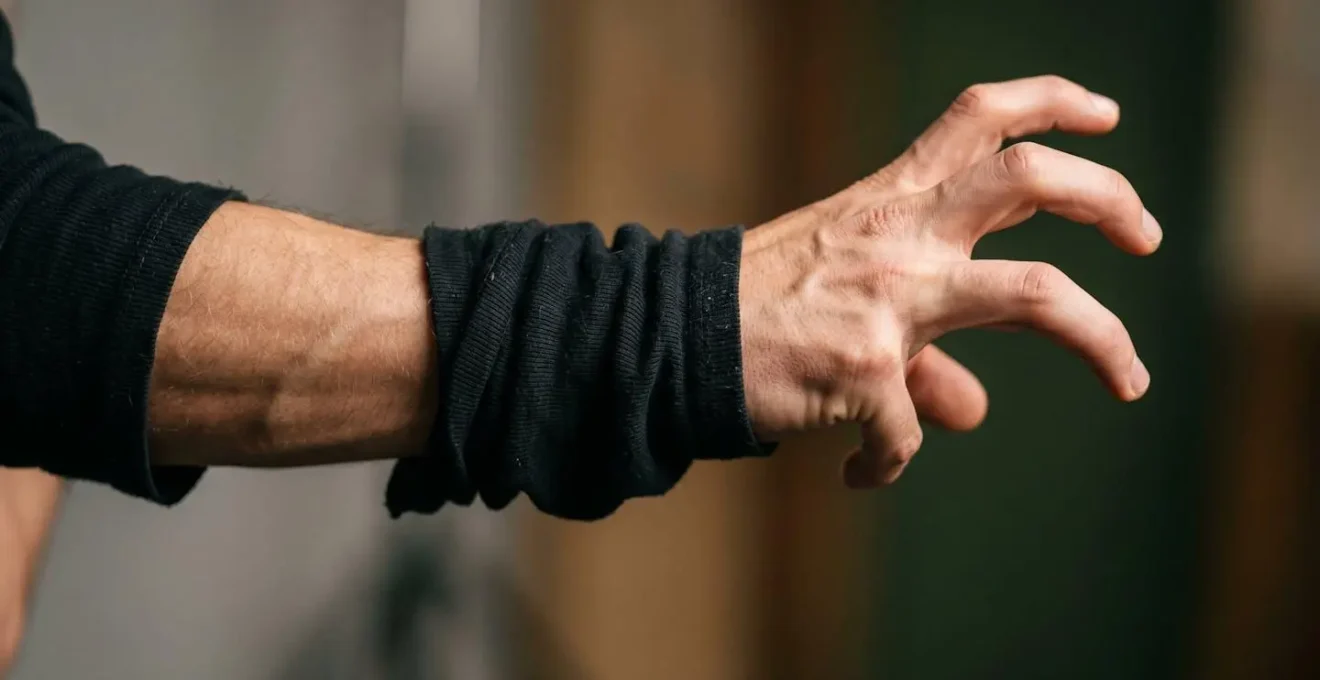
This textural approach to movement is where your authorial voice gains its specificity and sophistication. It moves beyond the mere sequence of steps and into the realm of pure physical sensation, creating work that is felt as much as it is seen.
Key takeaways
- Your training is a foundation, not a cage. True originality comes from strategically unlearning ingrained habits.
- Use physical limitations and task-based improvisation as your primary tools for generating authentic, non-derivative movement.
- In a collaborative process, your role as choreographer is to be the final author and editor, curating contributions to serve a singular vision.
Why Do Talented Students from Top UK Schools Fail to Secure Company Contracts?
The word « fail » is a misnomer; it implies a single, linear path to success that no longer exists. The reality is that the ecosystem of professional dance in the UK has fundamentally shifted. While securing a full-time contract with an established company is still a viable goal for some, it is no longer the sole, or even primary, marker of a successful career. The industry is increasingly populated by and reliant on a diverse workforce of portfolio artists: freelancers, project-based collaborators, and choreographer-entrepreneurs who create their own opportunities.
Top schools produce technically brilliant dancers, but the industry doesn’t just need performers; it needs creators, producers, teachers, and leaders. Data from institutions like the Northern School of Contemporary Dance often shows that while some alumni join major companies, a significant number go on to become freelance artists or found their own companies. This isn’t a failure to secure a contract; it’s a successful adaptation to the demands of the modern dance economy. The students who struggle are often those who hold a rigid, outdated definition of success.
For you, as an emerging choreographer, this is an empowering realisation. You are not just waiting to be picked by an institution. You are the institution. The work you are doing to develop your unique choreographic voice is not just an artistic exercise; it is the cornerstone of building your own sustainable career. Whether you are forming a pick-up company for a single project, applying for funding, or collaborating with other freelancers, your distinct artistic signature is your most valuable asset. It is what makes you hirable, fundable, and, most importantly, vital to the ongoing evolution of the art form.
The journey from a talented graduate to a choreographer with a singular voice is not a quest for something you lack, but an excavation of what you already possess. Take ownership of this process, embrace the friction of creation, and begin the essential work of building your own artistic legacy.