
Contrary to the belief that the high valuation of digital art is a speculative bubble, its rise represents a logical continuation of 20th-century conceptual art history. For the discerning collector, understanding that value now often resides in the underlying concept or ‘instruction set’—much like in works by Duchamp or Sol LeWitt—is the key to navigating the contemporary market. This shift from physical object to conceptual framework explains why a digital file can command prices that challenge the Modernist canon.
For the seasoned collector, the art market of the last decade has presented a series of bewildering events. The most jarring, perhaps, was witnessing a JPEG—an ephemeral string of code—outbid a tangible sketch by a titan of Late Modernism like Francis Bacon. This phenomenon naturally triggers skepticism. The immediate reactions often gravitate towards familiar dismissals: it’s a speculative bubble driven by cryptocurrency fortunes, a marketing frenzy, or a fundamental misunderstanding of what constitutes ‘real’ art. These are the common platitudes, framing the situation as a battle between enduring physical masterpieces and transient digital novelties.
This perspective, however, misses the crucial underlying shift. The ascendancy of Post-Internet art is not an inexplicable rupture from history but a technologically accelerated evolution of it. The questions it raises about authenticity, ownership, and value are not new; they are the very same questions posed by Marcel Duchamp’s readymades a century ago. The unease felt by many traditional collectors stems from judging a new paradigm by the metrics of the old—evaluating a conceptual asset as if it were a purely physical object.
But what if the true key to understanding this market is not to focus on the digital file itself, but on the conceptual lineage it embodies? This article will deconstruct this very notion. We will explore the historical bridge between Modernist conceptualism and generative code, analyze the real metrics of long-term value in a digital world, and provide a framework for collectors to move beyond the credibility gap. By the end, you will have the intellectual grounding to see this market shift not as a threat, but as a coherent and investable evolution of art history itself.
To navigate this complex but fascinating landscape, this guide is structured to answer the most pressing questions collectors face today. The following sections will provide a clear-eyed analysis of the forces reshaping the art market.
Summary: The New Calculus of Art Value in a Post-Internet World
- Why Did a JPEG Outsell a Francis Bacon Sketch at Phillips Last Autumn?
- How to See the Conceptual Link Between Readymades and Generative Code Art?
- Figurative Painting vs Digital Installation: Which Holds Value Over 10 Years?
- The Credibility Gap When Collectors Dismiss New Movements Until Tate Validates Them
- When to Buy Emerging Digital Art: Before or After the Turner Prize Shortlist?
- Why Does That Artist Everyone Collected Last Year Now Have No Secondary Market?
- Why Did UK Furniture Making Lose 60% of Its Apprenticeships Since the 1990s?
- Why Do Collectors Regret 60% of Contemporary Art Purchases Within 5 Years?
Why Did a JPEG Outsell a Francis Bacon Sketch at Phillips Last Autumn?
The moment a work like Mad Dog Jones’ REPLICATOR, an NFT designed to generate new artworks over time, sold for $4.1 million at Phillips, it signaled a fundamental market paradigm shift. To the uninitiated, the auction house sold a « JPEG. » In reality, it sold a self-replicating artistic system with verifiable, blockchain-enshrined provenance. The value is not in a single image but in the entire conceptual apparatus: a piece of code that functions as both the artist’s instruction and the artwork itself. This is where the comparison to a Francis Bacon sketch, whose value lies in its autographic mark and physical uniqueness, becomes a category error.
The Bacon sketch derives its value from traditional pillars: the artist’s hand, its rarity, and its place in the Modernist canon. The NFT’s value, conversely, is built on new pillars that are paradoxically rooted in old conceptual ideas. Digital scarcity, enforced by the blockchain, provides a novel solution to the problem of infinite reproducibility that has plagued digital media since its inception. The public ledger of the blockchain offers an unprecedented level of transparency in provenance, tracking every transaction from its creation. This verifiable history is often more robust than the paper trail of a traditional artwork.
Therefore, the auction result isn’t about a digital image being « better » than a master’s drawing. It is about the market’s validation of a new system of value creation and authentication. As noted at the time of the sale, the enthusiasm for this piece confirmed the artist’s role in pushing boundaries. According to Rebekah Bowling, a Senior Specialist at Phillips, this sale cemented the artist’s reputation for challenging « the expectations of digital art. » For collectors, the lesson is clear: the object being sold is no longer just the image, but the entire, unforgeable system behind it.
How to See the Conceptual Link Between Readymades and Generative Code Art?
The confusion and skepticism surrounding generative art often dissolve when one places it within its proper art-historical context. The conceptual through-line runs directly from Marcel Duchamp’s Fountain (1917) to the generative algorithms of today. Duchamp’s revolutionary act was to declare that the value of an artwork could lie solely in the artist’s choice and designation, not in the physical craft. The urinal was a mass-produced object; the art was the conceptual leap of recontextualizing it. This separated the idea from the object for the first time.
This idea was codified by the Conceptual artists of the 1960s. The most articulate expression of this principle comes from Sol LeWitt, who, in his seminal « Paragraphs on Conceptual Art, » stated a principle that could easily describe generative art today:
In conceptual art the idea or concept is the most important aspect of the work. When an artist uses a conceptual form of art, it means that all of the planning and decisions are made beforehand and the execution is a perfunctory affair.
– Sol LeWitt, Paragraphs on Conceptual Art
This is precisely the logic of generative code art. The artist writes a set of instructions—an algorithm. The « execution »—the final visual output generated by the computer—is secondary to the elegance and ingenuity of the underlying conceptual system. The code is the instruction-as-artwork. The art is not the single JPG output; it’s the potential for infinite, varied outputs governed by a single elegant idea, a direct echo of LeWitt’s wall drawings, which exist as instructions to be executed by others.
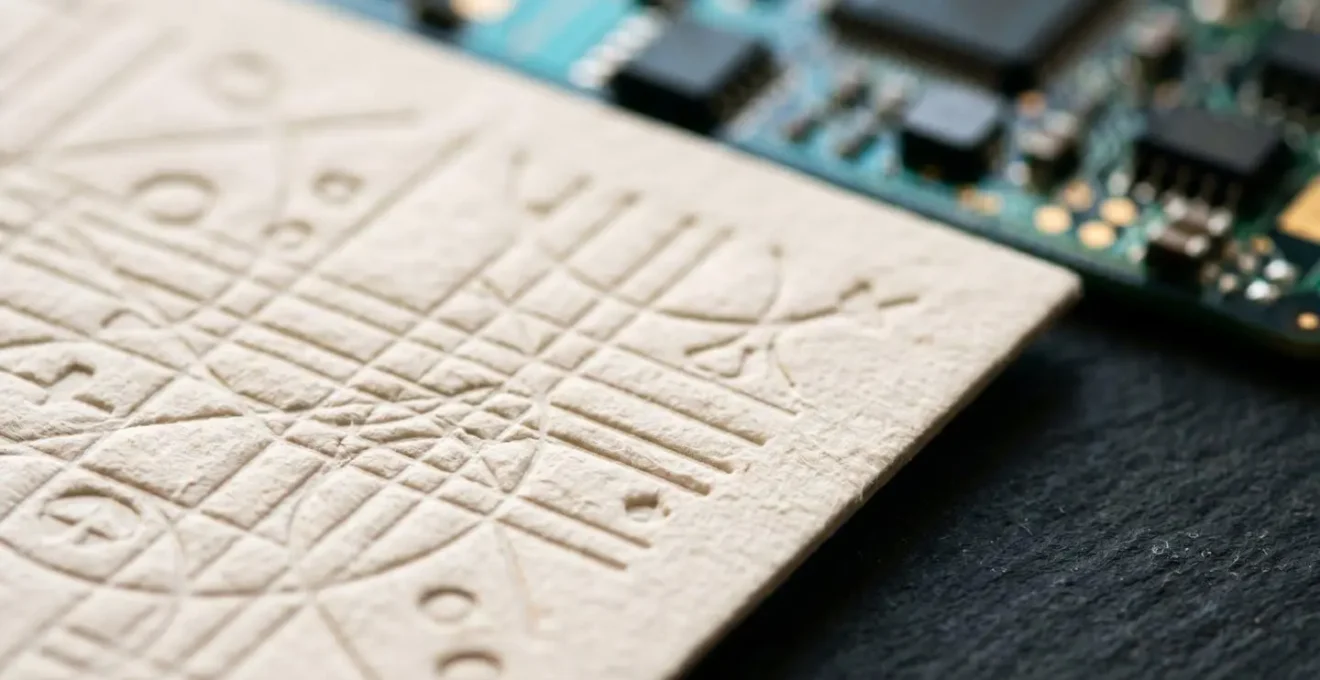
As the visualization above suggests, there is a direct bridge between the tactile, instruction-based nature of mid-century conceptual art and the algorithmic logic of digital creation. Seeing a generative artwork is not about looking at a single picture; it is about appreciating the conceptual system that the artist has designed. The readymade designated an object as art; the algorithm designates a process as art.
Figurative Painting vs Digital Installation: Which Holds Value Over 10 Years?
When considering a ten-year horizon, collectors traditionally favor the tangible. A figurative painting is a stable physical asset. Its conservation needs are well-understood, its materials have centuries of precedent, and its value is anchored in a long-established market. A digital installation, by contrast, presents a host of perceived risks, primarily centered on technological obsolescence. What happens when the custom software is no longer supported, the projector model is discontinued, or the file format becomes unreadable? These are not trivial concerns.
As a Museum-iD analysis on the topic of conservation notes, for institutions focused on long-term preservation, the rapid decay of technology poses « significant logistical as well as ethical challenges. » This inherent fragility seems to place digital works at a distinct disadvantage against the enduring nature of oil on canvas. However, this view overlooks the countervailing economic and cultural forces. The market, far from being deterred, is betting heavily on the future of digital forms. Projections indicate the digital artwork market is expected to grow from $5.8 billion in 2025 to $17.72 billion in 2032, a testament to growing collector confidence.
So, which holds value better? The answer is nuanced. The figurative painting’s value is more stable and predictable, a « blue-chip » asset class. The digital installation’s value is more volatile but possesses a significantly higher potential for exponential growth. Its value is tied less to its fragile physical components and more to its conceptual significance and historical « firsts. » A pioneering work of net art or a seminal generative piece may see its value skyrocket precisely because of its importance, motivating institutions and collectors to invest heavily in its migration and conservation. The risk is higher, but so is the potential reward for correctly identifying a work that defines its era.
The Credibility Gap When Collectors Dismiss New Movements Until Tate Validates Them
For many collectors, the ultimate validation of an artwork’s significance is its acquisition by a major institution like the Tate. This « stamp of approval » serves as a powerful de-risking mechanism, confirming that a work has transcended market hype and entered the annals of art history. Consequently, a common and seemingly prudent strategy is to wait on the sidelines, dismissing new movements until the curatorial consensus is in. This creates a « credibility gap »: the period between an art form’s emergence and its institutional canonization. However, relying on this strategy in the digital age is increasingly fraught with financial and cultural costs.
The core issue is that institutional validation is a lagging indicator, not a leading one. By the time the Tate or MoMA acquires a key piece from a new movement, the primary market opportunities have often evaporated, and prices on the secondary market have already soared. Collectors who wait for the official signal are, by definition, late to the party. They are buying at the top of an S-curve of appreciation, not at its promising inception.

Furthermore, the notion that institutions are ignoring this work is a misconception. Curators and acquisition committees are deeply engaged with digital art far earlier than public announcements suggest. Craig Hollingworth, a member of the Tate’s North American Acquisition Committee, revealed that for a significant period, « Every set of works the committee has considered… has included a digital element. » The internal dialogue and evaluation are happening in real-time. The public acquisition is merely the final, visible outcome of a long process. The collectors who succeed in this space are those who learn to think like curators *before* the acquisition, identifying the works that are likely to fill historical gaps in the museum’s collection.
When to Buy Emerging Digital Art: Before or After the Turner Prize Shortlist?
The Turner Prize shortlist, much like a major museum acquisition, functions as a powerful career accelerator and market catalyst. An artist’s inclusion often triggers a flurry of interest from collectors, galleries, and critics, leading to a sharp increase in prices. For a collector, the question of timing is therefore critical: is it better to acquire a work before this institutional recognition, accepting higher risk for a lower entry price, or after, paying a premium for a validated asset?
Buying *before* a major nomination requires a high degree of connoisseurship and research. It means following artists’ careers from their MFA shows, tracking their inclusion in smaller biennials, and reading critical theory to identify those whose work is in dialogue with the most pressing cultural questions of our time. This is high-risk, high-reward territory. The financial upside can be immense, but the risk of betting on an artist who never achieves wider recognition is real. This approach demands a commitment to the art itself, beyond its potential for financial appreciation.
Buying *after* the shortlist is announced is a lower-risk strategy. The artist has been vetted by a respected jury, their work has been contextualized within a national conversation, and a secondary market is more likely to develop. However, the price will reflect this reduced risk. You will be competing with a wave of other interested buyers. In the context of the rapidly expanding online art market, where online art sales totaled nearly $12 billion in 2023, this competition can be global and instantaneous. The « discovery » moment has passed, and you are now participating in a momentum-driven market.
Action Plan: Evaluating an Emerging Digital Artist
- Conceptual Rigor: Does the artwork’s underlying concept have depth? Can the artist articulate a clear connection between their idea and the technological medium used?
- Art-Historical Dialogue: Does the work engage with or challenge art history? Identify if it is in conversation with established movements (e.g., Conceptual Art, Minimalism, Net Art).
- Technical Innovation: Is the artist pushing the boundaries of the technology (e.g., novel use of code, interactive elements, unique blockchain mechanics) or simply using it as a container for a static image?
- Exhibition History: Look beyond major prizes. Has the artist been included in reputable digital art festivals (e.g., Ars Electronica), curated online exhibitions, or shows at tech-focused galleries?
- Community & Critical Reception: Is there a growing discourse around the artist’s work among critics, academics, and other artists in the field? This can be a more powerful indicator than mainstream press.
Why Does That Artist Everyone Collected Last Year Now Have No Secondary Market?
The phenomenon of a « hot » artist’s market vanishing overnight is a source of great anxiety for collectors. In the Post-Internet and NFT space, this has been particularly acute. An artist who dominated sales and conversation one year can see their secondary market activity dwindle to almost nothing the next. While it’s easy to attribute this to fickle trends or a lack of intrinsic artistic merit, the primary driver is often more specific and structural: market coupling to the volatile cryptocurrency ecosystem.
A significant portion of the early NFT market was funded by gains from cryptocurrencies like Ethereum (ETH). Sales were denominated in ETH, and buyers were often crypto-native investors diversifying their digital assets. This created a direct and powerful correlation between the art market’s liquidity and the health of the crypto market. When the price of Ethereum is high, there is more « money » available to spend on digital assets, driving up auction prices and trading volume. Conversely, when the crypto market crashes, that liquidity evaporates.
The data is unequivocal on this point. A market analysis from Mordor Intelligence highlighted this dependency, noting that when Ethereum’s price fell significantly in early 2024, « weekly volumes on OpenSea collapsed by 60%. » This was not a judgment on the quality of the art being traded; it was a direct consequence of the contraction of the currency used for transactions. The « secondary market » didn’t disappear because the art was deemed worthless; it froze because the pool of capital that fueled it shrank dramatically. The artists whose markets were most affected were often those whose collector base was most heavily concentrated among short-term crypto speculators rather than long-term art collectors.
Why Did UK Furniture Making Lose 60% of Its Apprenticeships Since the 1990s?
At first glance, the decline in apprenticeships for traditional crafts like UK furniture making seems disconnected from the high-concept world of contemporary art auctions. Yet, it serves as a powerful metaphor for the very value shift this article explores. The 60% drop since the 1990s reflects a broad economic and cultural transition away from valuing time-intensive, manual skill and physical artisanship as the primary measure of worth. It parallels the art world’s own pivot from the « artist’s hand » to the « artist’s mind. »
For centuries, the value of a piece of furniture was directly tied to the mastery of its maker: the precision of the joinery, the quality of the finishing, the difficulty of the carving. This is a celebration of physical labor and material knowledge. The decline in apprenticeships indicates that these skills, while still admirable, are no longer the central drivers of the broader economy. Value has migrated towards design, systems thinking, branding, and scalability—qualities that are conceptual rather than purely physical. A piece of flat-pack furniture, designed by a small team and mass-produced by machines, generates far more economic value than the most exquisite handmade cabinet.
This is the exact same transition in the art world. The market is increasingly rewarding the conceptual framework—the system, the idea, the code—over the singular, handcrafted object. The skills required to create a successful generative art project are in programming, systems thinking, and conceptual rigor, not in mixing pigments or welding steel. The decline in furniture apprentices is a symptom of the same cultural shift that allows a « JPEG » to outsell a Bacon sketch. Both events signal that we are living in an economy that increasingly prioritizes the value of the instruction over the value of the execution.
Key Takeaways
- Value in contemporary art is migrating from the physical object to the underlying conceptual framework, echoing the principles of 20th-century Modernism.
- Post-Internet art’s validation does not depend solely on traditional institutions; understanding its art-historical lineage is a more reliable tool for collectors.
- The volatility of the digital art market is often coupled with the cryptocurrency ecosystem, which is a separate risk from the artwork’s long-term artistic or cultural value.
Why Do Collectors Regret 60% of Contemporary Art Purchases Within 5 Years?
The statistic that a majority of collectors experience regret is a sobering one. In the context of the seismic shifts between traditional and Post-Internet art, this regret often stems from a fundamental misalignment of expectations. For a collector accustomed to the stability and material presence of Modernist painting, venturing into contemporary digital art can feel like stepping into a different universe. The regret is not necessarily financial; it is often a conceptual dissonance—a feeling of having bought into something not fully understood.
This dissonance is exacerbated by a clear generational divide in collecting habits. Recent industry data shows that over 40% of Gen Z and millennial collectors have purchased virtual or digital art. For this younger demographic, who have grown up in a digitally native world, the idea of owning a valuable asset that exists purely as code is intuitive. They are comfortable with value systems defined by networks, communities, and digital protocols. For them, the ‘object’ is the verified token on the blockchain, and its cultural significance is its primary value. Regret is less likely when the asset class aligns with one’s worldview.
For the established collector, the antidote to regret is not to retreat from the new, but to re-equip oneself intellectually. It requires moving past the evaluation of an artwork based on its physical properties (size, material, craft) and embracing an analysis of its systemic value. Does the work pioneer a new use of technology? Does it offer a poignant critique of our digital society? Does its conceptual framework have the elegance and rigor to be historically significant? Judging a work of Post-Internet art by the criteria of Late Modernist painting is like judging a film by the standards of theatre. Both are valid art forms, but their language, structure, and measures of success are entirely different.
Ultimately, navigating this new era of art collecting requires more than a good eye; it demands intellectual flexibility. By understanding the conceptual lineage that connects the most radical ideas of the 20th century to the digital innovations of the 21st, a collector can build a collection that is not only financially sound but also historically relevant and deeply rewarding.