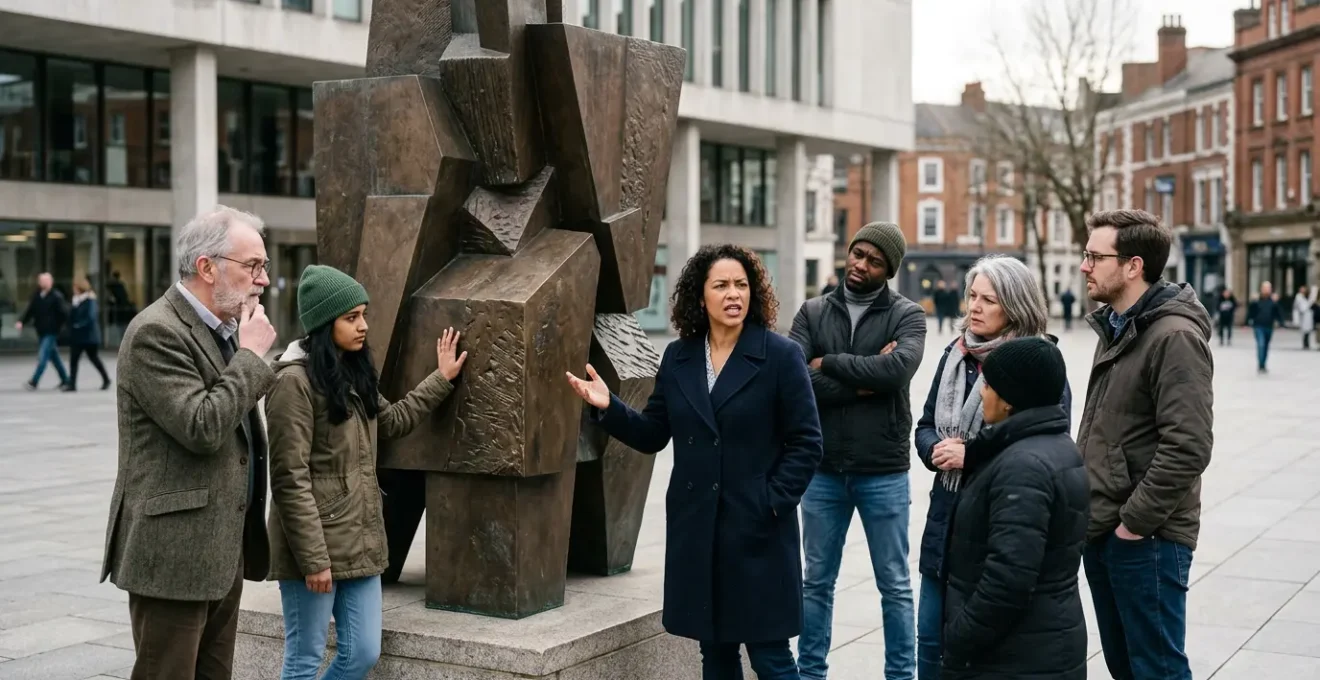
The fierce controversies surrounding public art are rarely about aesthetics; they are symptoms of a flawed, top-down process that treats community engagement as a final checkbox rather than a foundational goal.
- Figurative vs. abstract is a false dichotomy; the commissioning process and perceived tokenism create conflict regardless of the artwork’s style.
- Genuine co-creation, where power is truly shared from the project’s inception, is the only effective alternative to « performative consultation. »
Recommendation: Shift focus from presenting finished designs for approval to co-developing project briefs and purposes with communities from day one.
A new sculpture is unveiled. Commissioned with public funds and the best of intentions—to celebrate a shared history, to foster unity, to beautify a space—it is instead met with anger, confusion, or worse, indifference. For cultural policymakers, artists, and engaged citizens across the UK, this scenario is painfully familiar. The conventional wisdom suggests the backlash stems from subjective taste or a failure to « consult » properly. But these explanations are superficial and fail to address the core of the issue.
Often, the post-mortems focus on simple binaries: Did the community prefer a figurative or abstract design? Was the consultation meeting well-attended? This approach misses the deeper sociological dynamics at play. The friction generated by public art is not typically a failure of aesthetics, but a failure of process and power. It erupts when a community feels that a narrative is being imposed upon them, even one intended to be positive. The very act of being « represented » by an external body can feel like a form of symbolic dispossession.
But what if the root of the problem lies in the very model of commissioning itself? This analysis proposes a different perspective: the most successful—and least controversial—community art projects are not those with the best design, but those with the most equitable process. The key is shifting from a paradigm of consultation, which often serves as a risk-mitigation exercise for institutions, to one of genuine co-creation, where power and authorship are shared from the outset. This article will deconstruct the common failure points in public art commissioning and outline a more integrated, process-led approach to creating works that don’t just occupy a public space, but are truly owned by the public they serve.
This article examines the critical friction points in public art commissioning, from initial consultations to the stylistic debates that often mask deeper issues. By exploring real-world case studies from across the UK, we will build a framework for a more collaborative and meaningful approach.
Summary: Why Public Art Fails to Unite and How to Fix It
- Why Did That Sculpture Meant to Celebrate Diversity Anger the Community It Depicted?
- How to Run Community Art Consultations That Don’t Feel Like Box-Ticking Exercises?
- Abstract Memorial vs Figurative Monument: Which Better Serves Divisive Historical Events?
- The Design Approved by Everyone That Moved Nobody When Unveiled
- When to Reveal Design Proposals: Early Input or Finished Presentation?
- Why Does Touching an Artwork Make Visitors 40% More Likely to Donate?
- Why Does Your Anti-Racist Artwork Make Some White Viewers More Resistant?
- Why Does Your Political Art Preach to the Converted Instead of Changing Minds?
Why Did That Sculpture Meant to Celebrate Diversity Anger the Community It Depicted?
The paradox of a commemorative work sparking anger in the very community it aims to honour is a common flashpoint in public art. A prime example is the reaction to Veronica Ryan’s 2021 Windrush sculpture in Hackney. The commission, intended to celebrate the Caribbean diaspora, featured large marble and bronze sculptures of Caribbean fruits. For some residents, however, the abstract representation was « underwhelming » and felt like « a slap in the face. » This reaction was not about a simple dislike of abstract art; it was about the heavy representational burden placed upon the work. The community expected to see themselves—their parents, their struggles, their triumphs—reflected literally, and the symbolic abstraction felt like an erasure.
This controversy highlights a critical disconnect. The artist and commissioning body may see abstraction as a way to create a universal, timeless symbol, avoiding the pitfalls of idealising specific figures. As writer Ruby Tandoh noted in defence of Ryan’s vision, creating a monument to an entire, diverse generation is an almost impossible task, and Ryan « doesn’t deal in monoliths. »
Creating a monument to an entire generation – in all its dizzying diversity, across many cultures and countries – might seem like an impossible task to some, but Ryan doesn’t deal in monoliths.
– Ruby Tandoh, Royal Academy of Arts Magazine, Autumn 2021
Yet, for a community that has been historically marginalised or rendered invisible, the demand for literal, figurative representation is a powerful political statement. They are not asking for a symbol; they are asking for recognition. When the artwork fails to provide this, it can be perceived not as an artistic choice, but as another instance of their story being told for them, and in a language they did not choose. The anger, therefore, is not just about the art object itself, but about agency and the power to control one’s own narrative.
How to Run Community Art Consultations That Don’t Feel Like Box-Ticking Exercises?
The standard model of community consultation—a town hall meeting, a survey, a presentation of near-finished designs—is a well-known source of frustration. It is often perceived as a « performative consultation, » an exercise designed to legitimise a decision that has already been made. To move beyond this, institutions must shift their goal from seeking approval to fostering genuine co-creation. This means treating the process as the product, where the collaborative act of making is as valuable as the final art object.
A powerful model for this approach can be found at Grizedale Arts in Cumbria. Operating from a working farm, they integrate art directly into the fabric of social and economic life. Visiting artists and local volunteers collaborate not in sterile meeting rooms, but in shared daily activities like farming and gardening. The art emerges from this lived collaboration. This methodology reframes the artist as a facilitator and collaborator rather than a sole author, and the community as active partners rather than a passive audience. By focusing on shared work and tangible outcomes, like a communal meal from food they grew together, the process builds trust and shared ownership that a traditional consultation never could. This is a powerful example of what is possible when an organisation commits to integrating art into the core of community life.
This approach moves beyond simply asking for opinions; it involves building capacity, sharing skills, and vesting real power in participants. It’s about starting with a blank sheet, not a predetermined outcome.

As the image of collaborative making suggests, this is a hands-on, often messy process. It requires institutions to relinquish control and embrace uncertainty, challenging the very hierarchies that often lead to conflict. Authentic co-creation is not an add-on; it is a fundamental reordering of the relationship between the artist, the institution, and the public. By focusing on shared goals and vision from the very beginning, the project’s success is measured not just by the final object, but by the strength of the relationships and community capacity it builds along the way.
Abstract Memorial vs Figurative Monument: Which Better Serves Divisive Historical Events?
The debate between abstract and figurative memorials often misses the point. The form of a monument is secondary to the process behind it and the political context in which it exists. A figurative statue can become a lightning rod for protest, just as an abstract one can be seen as an evasion. The 2020 toppling of the Edward Colston statue in Bristol, a 17th-century slave trader, is a stark reminder. As ARTnews noted, demonstrators pushed the figurative monument into the harbour, an act of direct, physical rejection of the history it represented. Here, the problem was not the style, but the man it depicted and the values his continued presence in a public square was seen to uphold.
Conversely, choosing a figurative style is no guarantee of success, even when depicting sympathetic subjects. The controversy around the National Windrush Monument at Waterloo Station illustrates this perfectly. The sculpture by Basil Watson is a touching, figurative depiction of a Caribbean family standing on a pile of suitcases. Stylistically, it was what many in the community had called for. Yet, the project was mired in controversy from the start. The Windrush Foundation claimed the government had not properly consulted the community, viewing the monument as an « insulting » and tokenistic gesture. It was commissioned by a government simultaneously embroiled in the Windrush scandal, which saw citizens wrongly detained and deported.
Case Study: The National Windrush Monument
Despite £1 million in government funding, the figurative sculpture became controversial not for its form, but for its context. It was perceived as a hollow gesture from the same Home Office responsible for the « hostile environment » policy. For many, it felt like an attempt to buy forgiveness with a statue rather than providing justice and compensation to the victims. By late 2021, only a tiny fraction of victims had been compensated, making the celebratory monument feel deeply hypocritical.
This demonstrates that the abstract vs. figurative debate is a red herring. The true measure of a monument’s success is its perceived authenticity. A monument, regardless of its form, will be rejected if the commissioning process is seen as top-down, insincere, or a substitute for meaningful political action. The argument over style is often just the surface-level expression of a much deeper conflict over power, narrative, and justice.
The Design Approved by Everyone That Moved Nobody When Unveiled
In the high-stakes world of public art, there is an understandable temptation for commissioners to mitigate risk by seeking consensus. The fear of controversy can lead to a process of design-by-committee, sanding down any sharp edges, and aiming for an inoffensive outcome that everyone can ‘live with’. The result is often the paradox described in the title: a work so thoroughly vetted and universally approved that it loses all power to connect, challenge, or inspire. It becomes an « aesthetic of consensus »—an expensive piece of public decor that moves no one.
This drive for safety overlooks a fundamental purpose of art. As curator Sarah Tuttle remarked, « Controversy is not in and of itself a bad thing. » Artists, she notes, are looking to start a dialogue, and work that is too « safe or easily accepted » often fails to do so. A piece of art that generates no conversation, no friction, no strong emotion of any kind, has arguably failed in its public mission. It simply takes up space. The goal should not be to avoid controversy at all costs, but to ensure the resulting conversation is productive and respectful.
The problem is compounded when a work is meant to represent a specific community. The pressure for a positive, universally agreeable image can be immense, yet this can create its own set of issues. A 2023 study on performing arts organisations confirmed that for marginalised groups, increased representation can generate conflicting experiences marked by both recognition and a burdensome feeling of misrecognition. When a community’s complex, multifaceted identity is flattened into a single, « safe » image, it can feel like a betrayal rather than a celebration. The artwork that tried to please everyone ends up being a symbol of a conversation that was never allowed to happen.
Ultimately, a successful public artwork needs advocates, not just approvers. It needs to have a point of view. The work that tries to speak for everyone often ends up saying nothing at all, leaving a void in the public square that could have been filled with meaning, debate, and genuine human connection.
When to Reveal Design Proposals: Early Input or Finished Presentation?
One of the most critical procedural questions in any public art commission is *when* to engage the public. The traditional model often involves bringing a fully-formed, or nearly finished, design proposal to the community for a « yes/no » verdict. This approach is fraught with peril. It frames the relationship as adversarial, positioning the artist and commissioner as insiders and the community as outside critics. If the community rejects the proposal, it creates a crisis; if they accept it, it may be a grudging acceptance that fosters no real ownership. This late-stage reveal is a primary driver of « performative consultation. »
A more effective, albeit more complex, approach is to involve the community at the very earliest stages—before an artist is even selected. This means shifting the initial conversation away from aesthetics and towards purpose. The first question should not be « What should it look like? » but « What do we want this art to *do*? What story should it tell? What need can it serve? » This early engagement allows for a more meaningful and strategic commissioning process.
The following checklist, based on best practices from organisations like Public Art Online, outlines a more collaborative, phased approach that builds trust and shared ownership throughout the life of a project.
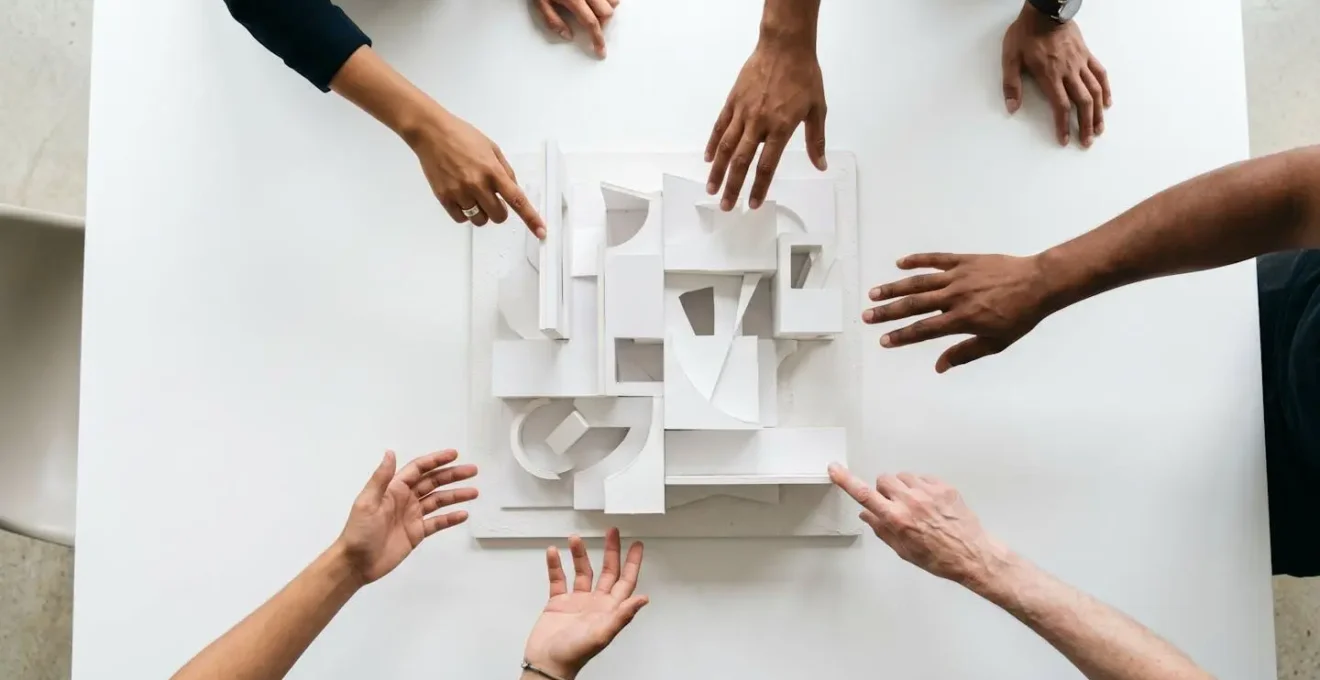
Action Plan: A Phased Consultation Strategy for Public Art
- Stage 1 – Define Purpose First: Engage people with ideas, not finished artworks. Before appointing an artist, hold community meetings with developers and design teams to discuss possible projects, themes, and desired outcomes.
- Stage 2 – Tailor Consultation Groups: Identify the specific « publics » for the commission. This isn’t a monolith. For a project in a residential area, presenting the brief and a shortlist of potential artists to Local Community Associations is vital.
- Stage 3 – Enable Meaningful Methods: Move beyond formal meetings. Use imaginative, participative approaches that reach people directly where they are. Expert guidance from organisations like Public Art Online confirms that earlier engagement is always better than late-stage consultation.
- Stage 4 – Iterate with Stakeholders: The consultation is not a one-time event. The selected artist should return their initial proposals to the consultation groups for feedback before full development, demonstrating that community input is genuinely shaping the outcome.
By staggering the engagement process and focusing on the « why » before the « what, » commissioners can transform the dynamic from a presentation to a partnership. This builds a foundation of trust that can withstand the inevitable debates and discussions that are a healthy part of any vibrant public art project.
Why Does Touching an Artwork Make Visitors 40% More Likely to Donate?
While the statistic about donations is often cited in museum studies, its underlying principle is profoundly relevant to the controversies in public art. The « 40% more likely » figure speaks to a fundamental human desire for connection. Touch, in this context, is a metaphor for access, intimacy, and the dissolution of barriers. Public art that is physically and conceptually inaccessible creates a sense of distance and alienation, while art that invites interaction fosters a sense of personal ownership and connection. This is the power of breaking down the invisible wall between the viewer and the art.
This principle was brilliantly embodied by artist Thomas J Price in his Windrush generation sculptures placed outside Hackney Town Hall. Price made the deliberate choice to install his powerful, nine-foot-tall bronze figures directly on the ground, without the traditional plinth. His reasoning was explicit: « to disrupt a sense of hierarchy that surrounds many public monuments. » By placing the figures at street level, he invited the public to stand with them, to get close, to see them not as distant idols but as an extension of themselves. This act of removing the plinth as a symbol of power fundamentally changed the relationship between the artwork and the community, turning it from an object of veneration into a subject of conversation.
Case Study: Thomas J Price’s Ground-Level Sculptures
By rejecting the plinth, Price’s sculptures « exist amongst the public and daily life. » They are not elevated above the community but are placed within its flow. This strategy invites a level of physical proximity and psychological connection that is impossible with a monument on a high pedestal. It allows for a more personal, tactile, and ultimately more meaningful engagement, transforming viewers into participants.
This desire for tactile connection was even voiced by Veronica Ryan regarding her own, more abstract, Windrush monument. « Some might wonder what they are, » she said. « Children might want to touch them, and hopefully they’ll sit on them and play around them. » This shared artistic impulse, across different styles, points to a universal truth: the most successful public art breaks down barriers. Whether it’s a literal plinth or a conceptual wall of obscure meaning, distance creates disengagement. Connection—tactile or emotional—is what builds a sense of shared ownership and turns a public space into a community home.
Why Does Your Anti-Racist Artwork Make Some White Viewers More Resistant?
When a piece of art explicitly confronts Britain’s colonial past or systemic racism, it can provoke a powerful backlash from some white audiences, even those who might consider themselves progressive. This resistance is often not a simple expression of racism, but a more complex psychological phenomenon rooted in national identity. It is a form of cognitive dissonance, triggered when the artwork’s message clashes with a deeply ingrained national narrative. For many, the story of Britain is one of « fair play, » of being on the « right side of history, » and of leading the abolition of the slave trade.
This prevailing self-image creates a significant psychological barrier to accepting art that presents a more critical and complicated history. As an analysis in Frieze magazine astutely pointed out in relation to the Windrush monuments, this narrative creates a « unique form of cognitive dissonance when confronted with art about Britain’s role in colonialism. » To accept the artwork’s premise—that Britain’s history is fraught with exploitation and racism that continues to this day—requires a painful re-evaluation of national and personal identity. For some, it is easier to attack the artwork or the artist than to engage in this difficult self-examination. The resistance is a defense mechanism.
A prevailing national story of ‘fair play’ and being on the ‘right side of history’ (e.g., abolishing the slave trade) creates a unique form of cognitive dissonance when confronted with art about Britain’s role in colonialism.
– Frieze Magazine Analysis, The National Windrush Monument Is a Bittersweet Tribute to Courage
The artwork becomes a mirror reflecting a part of the national story that many have been taught to ignore. The resulting discomfort is then projected onto the art as being « divisive, » « political, » or « anti-British. » Understanding this dynamic is crucial for artists and commissioners. The goal of such art is not necessarily to be universally loved, but to provoke thought and start a conversation. However, anticipating this cognitive dissonance allows for a more strategic approach, perhaps by framing the work with educational materials or facilitated dialogues that can help viewers navigate this discomfort productively, rather than allowing them to retreat into defensive resistance. It requires acknowledging that for some, you are not just asking them to look at a piece of art; you are asking them to rewrite their history.
Key Takeaways
- Public art controversies are usually about flawed processes and power imbalances, not just aesthetics.
- The debate over abstract vs. figurative art often masks deeper issues of community recognition and agency.
- Successful engagement moves beyond « consultation » to genuine « co-creation, » where power is shared from the start.
How Can Political Art Move Beyond Preaching to the Converted?
Political art often faces a frustrating paradox: it energises allies but fails to persuade or even engage opponents, effectively « preaching to the converted. » To break this cycle, art must move beyond simply stating a position and instead create an experience that fosters empathy or reveals a new perspective. However, the path is fraught with risk. When artists tackle sensitive historical issues without deep, respectful collaboration, they can inadvertently alienate everyone, including those they seek to support.
The ideal function of controversial public art is to provide a platform for marginalised voices to challenge power structures and insert their narratives into the mainstream. It aims to make the invisible visible. But the line between commentary and appropriation is dangerously thin. If the artist’s vision overrides the community’s voice, the project can backfire catastrophically, becoming an instrument of trauma rather than a tool for justice.
Cautionary Tale: Sam Durant’s ‘Scaffold’
Sam Durant’s ‘Scaffold’ was a large-scale sculpture referencing the gallows used in US public executions, including the mass hanging of 38 Dakota men in 1862. Installed in the Walker Art Center’s sculpture garden, it was intended as a critical commentary on racial injustice. However, for members of the local Dakota community, it was not a commentary; it was a re-enactment of trauma. The work, created without their consultation, was seen as profoundly insensitive. Following major protests, the work was dismantled. The controversy revealed a fundamental failure: the artist’s intent to critique historical violence was completely overshadowed by the real violence the work inflicted on the living descendants of that history.
The ‘Scaffold’ case is a powerful lesson. It shows that political art stops preaching to the converted and starts creating genuine dialogue not when its message is loudest, but when its process is most humble. It changes minds—or at least opens them—when it ceases to be a monologue from a singular artistic genius and becomes a platform for a polyphony of voices, especially those who have been silenced. For artists and policymakers, this means ceding control. It means accepting that the process of creation—the relationships built, the power shared, the stories listened to—may ultimately be more transformative and politically potent than the final object itself.
To move beyond these cycles of controversy, policymakers, artists, and communities must commit to a new model of engagement. The first step is to shift the focus from final product to foundational process, ensuring that the creation of public art builds community rather than simply decorating it.