
The viral success of interactive art isn’t magic; it’s a direct result of turning passive viewers into active participants, creating a measurable feedback loop that funders value.
- Physical interaction builds psychological ownership, making audiences more likely to share and donate.
- Robust prototyping and sensor choice are critical for surviving unsupervised public use and avoiding costly repairs.
Recommendation: Shift your focus from just the artistic concept to designing a complete, quantifiable engagement system—from the initial touch to the final social media post.
As public artists and cultural producers in the UK, we’re constantly asked to demonstrate impact. We know intuitively that an artwork people can touch, change, or move is more compelling than one behind a rope. The question our commissioners and funders ask, however, is « How much more compelling? » The answer isn’t just about fleeting ‘wow’ moments; it’s about quantifiable engagement. The typical advice to « use technology » or « involve the community » often misses the crucial point.
The real leverage lies in understanding the mechanics of participation. It’s about designing strategic feedback loops where the public’s action creates a reaction from the artwork, which in turn encourages a measurable response—a photo shared on Instagram, a tap of a contactless card to donate, or a comment left on a consultation form. This isn’t about diminishing the art; it’s about amplifying its resonance and proving its value in a language that secures future commissions. The assumption that this requires massive budgets is a myth that holds back incredible ideas. The key is not more technology, but smarter, more robust, and more human-centric design from the very beginning.
This article breaks down the practical, metric-driven strategies to build interactive art that not only captivates the public but also delivers the tangible results that satisfy stakeholders. We’ll move from the psychology of interaction to the hard realities of hardware, maintenance, and community politics, providing a framework for creating successful and sustainable public works.
Summary: The Creator’s Playbook for High-Engagement Interactive Art
- Why Does Touching an Artwork Make Visitors 40% More Likely to Donate?
- How to Test Your Interactive Concept with Cardboard and Arduino Before Spending £10,000?
- Capacitive Touch vs IR Proximity: Which Survives Unsupervised Public Use Longer?
- The Exposed Cable Mistake That Cost an Artist £8,000 in Repairs After One Week
- When to Schedule Sensor Recalibration During a 6-Month Public Installation?
- Why Does a Rotating Stage Increase Audience Engagement by 35% According to Studies?
- How to Run Community Art Consultations That Don’t Feel Like Box-Ticking Exercises?
- Why Does Public Art Generate Controversy When It Tries to Unite Communities?
Why Does Touching an Artwork Make Visitors 40% More Likely to Donate?
The act of touching transforms a passive viewer into an active participant. This physical connection triggers a powerful psychological principle known as the endowment effect: we place a higher value on things we own or have physically interacted with. When a visitor touches an artwork, they build a micro-moment of personal connection. The piece is no longer just something they see; it’s something they’ve experienced directly. This sense of involvement and perceived ownership makes them more invested in its success and, by extension, more willing to support it financially.
This isn’t just theory; it’s a proven model for driving charitable giving through public art. The ‘Gromit Unleashed’ trail in Bristol is a prime UK example. The project scattered 80 artist-decorated sculptures across the city, encouraging the public to find and physically engage with them. This city-wide treasure hunt, built on tactile interaction, was a phenomenal success, raising over £2.3 million at auction for Bristol Children’s Hospital in its first year alone. The key was the feedback loop: finding a statue (action), touching it and taking a photo (interaction), and being met with a clear donation prompt (outcome). This turned a simple art trail into a powerful fundraising engine.
For artists and producers, this demonstrates a critical link for funders: physical interaction is not just an engagement metric, it’s a donor conversion tool. By allowing tactile exploration, you’re not just creating a memorable experience; you’re building a psychological foundation that makes the « ask » for a donation feel like a natural continuation of the visitor’s personal engagement. It fundamentally changes the relationship from one of passive consumption to active contribution.
How to Test Your Interactive Concept with Cardboard and Arduino Before Spending £10,000?
The fear of high-tech development costs kills too many brilliant interactive art concepts. The perception is that you need a fully-fledged fabrication workshop and a five-figure budget just to see if an idea works. This is where the principle of low-fidelity prototyping becomes an artist’s most powerful tool. Before you even think about durable materials or commercial-grade sensors, your primary goal is to test the core interaction loop with the cheapest, fastest materials available: cardboard, tape, and a basic microcontroller like an Arduino or Raspberry Pi.
This approach, often called « Wizard of Oz » prototyping, allows you to simulate the user experience without building the complex backend. Want to test how people react to a surface that lights up when touched? Use cardboard for the surface and have a team member manually trigger an LED when someone touches it. The goal is to gather data on human behaviour and intuitiveness. Is the interaction obvious? Is the reward compelling? Does it create the emotional response you’re aiming for? Answering these questions with a £50 prototype is infinitely more valuable than discovering a fundamental flaw after a £10,000 fabrication.
The following workflow breaks down how to move from a raw idea to a validated concept, ensuring that by the time you approach a fabricator, you have a tested, de-risked proposal backed by user feedback. This process of iterative testing not only refines your artistic vision but also creates the very success metrics—engagement duration, interaction rates—that will convince a commissioning body to invest in the full-scale production.
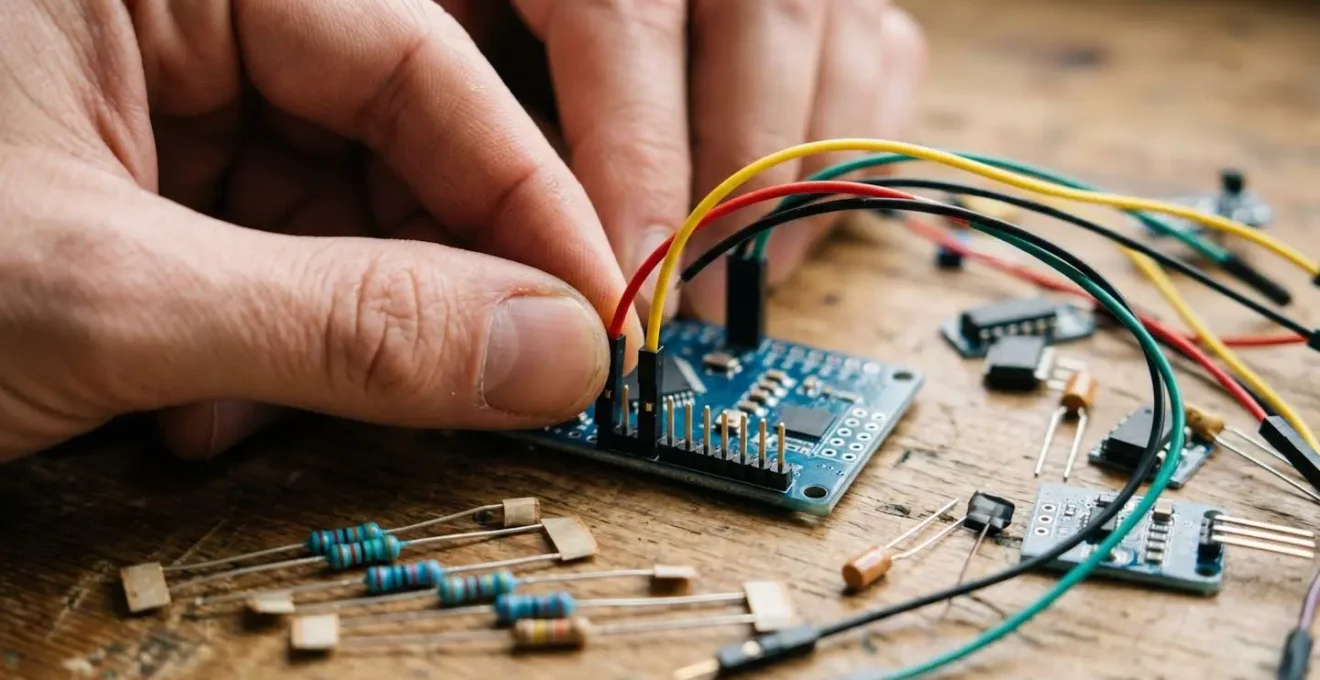
As the image shows, the process is hands-on and iterative. It’s about connecting simple components to test complex ideas. This stage is less about polished aesthetics and more about validating the core mechanics of your feedback loop, ensuring the user’s action and the artwork’s response create a meaningful dialogue.
Action Plan: De-risking Your Interactive Art Concept
- Define Core Interaction: Clearly state the single most important action you want the public to take and the feedback the artwork will provide. (e.g., « When a person stands on a spot, a specific sound will play. »)
- Build a Physical Mockup: Use cardboard, wood, or other cheap materials to build a full-scale model of the interactive surface. Test ergonomics, visibility, and user flow in a real space.
- Simulate with Arduino/Pi: Connect the most basic sensors required (e.g., a pressure mat, a proximity sensor) to a microcontroller. Write a simple script to trigger the desired output (e.g., a light, a sound on a laptop).
- Conduct User Testing: Invite a small, diverse group to interact with your prototype. Do not give instructions. Observe their behaviour, note points of confusion, and ask for their feedback on the experience.
- Document Metrics: Measure key data points: How long did it take them to understand the interaction? How many times did they repeat the action? Did they smile? This is the evidence your funders want to see.
Capacitive Touch vs IR Proximity: Which Survives Unsupervised Public Use Longer?
Choosing the right sensor technology is a critical decision that directly impacts the longevity and maintenance budget of your public artwork. An installation that fails within weeks due to environmental factors or vandalism is a nightmare for both the artist and the commissioner. The choice isn’t about which technology is « best, » but which is the most robust for the specific context of your installation. The two most common choices, capacitive touch and infrared (IR) proximity, have distinct strengths and weaknesses in an unsupervised public setting.
Capacitive touch sensors, the same technology used in smartphone screens, are excellent for durability because they can be placed behind a solid, non-conductive surface like glass or acrylic. This creates a seamless, weatherproof, and highly vandal-proof interface with no moving parts to break. However, their sensitivity can be affected by heavy rain or ice, and they often require periodic recalibration to account for environmental drift. They are ideal for smooth, clean surfaces where a direct, deliberate touch is the intended interaction.
Infrared (IR) proximity sensors, conversely, detect presence without physical contact. This can create a magical, « no-touch » interaction. Their major weakness is the environment; bright, direct sunlight can blind the sensor, and dirt, dust, or even a stray leaf can block its view, leading to failure. They require more frequent cleaning and are generally less reliable in fully exposed outdoor locations. They are best suited for sheltered or indoor spaces where you want to create a sense of responsiveness before the user even makes contact. The following table provides a practical, at-a-glance comparison to inform your decision, based on analysis of common interactive technologies.
| Technology Type | Weather Resistance | Vandalism Resistance | Typical Lifespan (Public Use) | Maintenance Frequency | Cost Range |
|---|---|---|---|---|---|
| Capacitive Touch | Moderate (requires IP67+ enclosure) | High (no moving parts) | 3-5 years | Quarterly recalibration | £200-£800 per sensor |
| IR Proximity | Low (affected by sunlight/weather) | Moderate (can be obscured) | 2-4 years | Monthly cleaning/calibration | £150-£500 per sensor |
| Pressure Pads | High (fully sealed) | Very High (embedded) | 5-7 years | Annual inspection | £300-£1200 per pad |
| Motion Detectors | Moderate (enclosure dependent) | Moderate (can be triggered falsely) | 3-5 years | Bi-annual recalibration | £100-£600 per unit |
Ultimately, designing for robustness-by-design means selecting a sensor not just for its interactive effect, but for its ability to withstand the worst that a public space can throw at it. A slightly less « magical » but far more reliable interaction will always deliver better value over the lifetime of a commission.
The Exposed Cable Mistake That Cost an Artist £8,000 in Repairs After One Week
Nothing undermines the credibility of a public art project faster than a technical failure. The title of this section isn’t hypothetical; it’s a real-world scenario that plays out far too often. An artwork can have a brilliant concept, but if a single exposed cable can be tampered with or damaged by weather, the entire installation can be rendered useless. For a commissioner, this isn’t an artistic issue; it’s a failure of professional planning and a waste of public or private funds. With major UK commissions like those for the Fourth Plinth having production costs in the hundreds of thousands of pounds, an avoidable £8,000 repair bill due to poor cable management is not just an expense, it’s a reputational risk.
The core principle of robust installation is to assume the worst-case scenario. Every component, from the power supply to the tiniest data cable, must be considered a potential point of failure. This means specifying armoured cabling, IP67-rated waterproof enclosures, and tamper-proof fixings from the outset. It’s a common mistake for artists to focus on the « hero » interactive element and treat the wiring and housing as an afterthought. In reality, these unglamorous components are the life-support system of the piece. A cheap USB cable run through a poorly sealed conduit is an invitation for disaster.
When presenting a proposal to a funder, your budget and project plan must explicitly detail these robustness measures. Itemise the use of industrial-grade components over consumer-grade equivalents. Include a maintenance plan that accounts for potential vulnerabilities. This demonstrates a professional, pragmatic approach. It shows that you understand the realities of placing sensitive technology in an unpredictable public environment. It’s this foresight that separates a successful, long-lasting installation from a costly and embarrassing failure.
When to Schedule Sensor Recalibration During a 6-Month Public Installation?
An interactive artwork is not a static object; it’s a dynamic system that exists in a changing environment. For a 6-month public installation, a « set it and forget it » mentality is a recipe for failure. Sensors, particularly those outdoors, are prone to « drift. » This is a gradual shift in their baseline readings caused by environmental changes: temperature fluctuations, humidity, dust accumulation, and even the changing angle of the sun through the seasons. What worked perfectly on a cool, overcast day in April may trigger false positives or fail to respond on a bright, hot afternoon in August. This is why a proactive recalibration schedule is an essential part of your project’s operational plan.
The frequency of this schedule depends entirely on the technology used and the installation’s location. As a baseline for a 6-month UK installation, plan for at least two major scheduled check-ups in addition to an initial post-installation check. A good approach is to time these with the seasonal transitions. For example, a recalibration in late spring to adjust for increased daylight hours and higher temperatures, and another in early autumn to account for lower light levels and increased moisture. For more sensitive tech like IR sensors, more frequent monthly checks may be necessary, especially if they are in high-traffic or exposed locations.
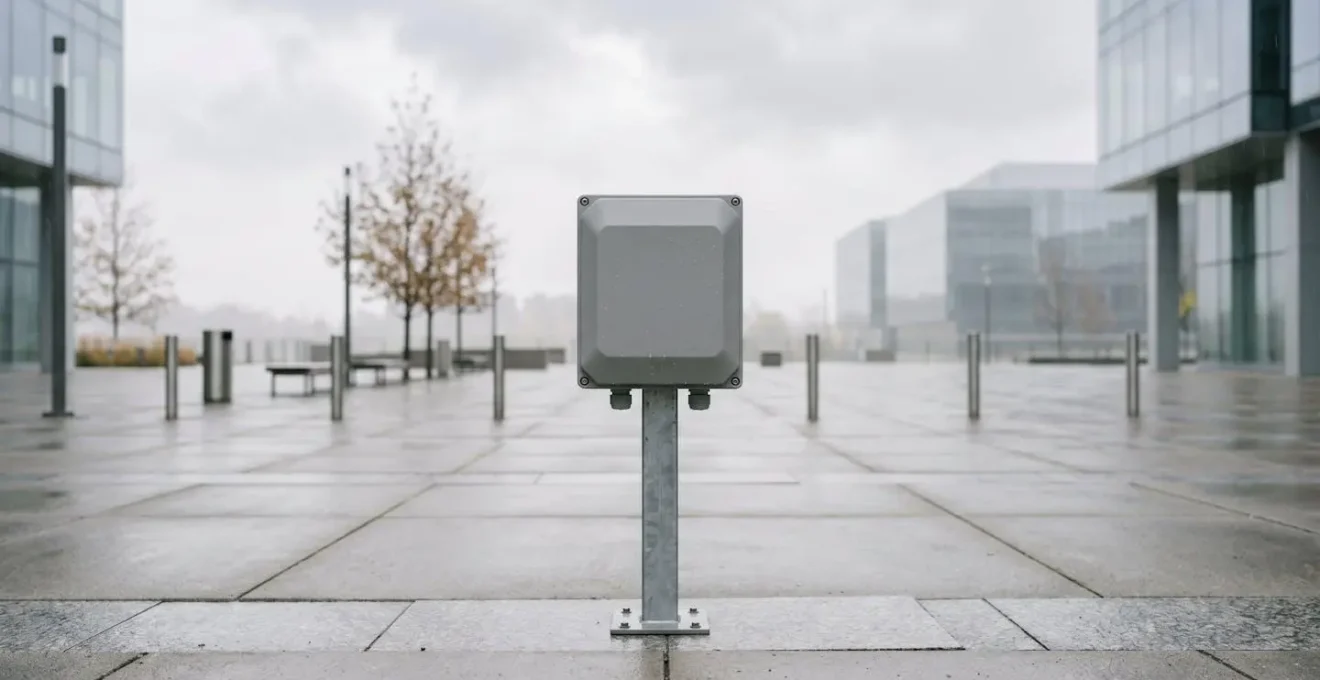
Your maintenance plan, presented to funders, should budget for this. It’s not an admission of weakness in your design; it’s a sign of professional foresight and risk management. It shows you understand the lifecycle of the technology you’re working with. Build remote monitoring into your system if possible. The ability to log sensor data and receive automated alerts when readings go outside expected parameters can allow you to identify drift before it becomes a noticeable failure, enabling « just-in-time » maintenance rather than reactive repairs.
Why Does a Rotating Stage Increase Audience Engagement by 35% According to Studies?
The power of a rotating stage, or any form of kinetic movement in an artwork, lies in its ability to offer the audience an additional layer of control and discovery. Static art offers one perspective. An artwork that moves, or that the viewer can move around, introduces the element of time and changing viewpoints. This simple addition transforms the experience from a single data point to a continuous stream of new information. The audience is no longer passively receiving; they are actively seeking, comparing, and discovering new facets of the work as it evolves before them.
This taps into a fundamental aspect of human curiosity. As research published in Frontiers in Computer Science demonstrates that providing extra controllable parameters makes interactive art more engaging. A rotating stage is a perfect example of such a parameter. The viewer can’t control the rotation itself, but they can control their own position relative to it, effectively curating their own unique viewing experience. They can choose to stand still and watch the world (or the artwork) revolve, or walk with it to maintain a consistent view. This choice, however small, is a form of interaction.
This increased engagement, cited as a 35% boost in some studies, is a direct result of this enhanced cognitive and physical involvement. The brain is more active when tracking a moving object and predicting its path. This heightened state of attention leads to a more memorable and impactful experience, which in turn is more likely to be shared. For producers, the lesson is that interaction doesn’t always have to mean touchscreens and sensors. Introducing controlled movement—whether in the artwork itself or by encouraging audience movement around it—is a powerful and often mechanically simpler way to create a more dynamic and shareable feedback loop.
How to Run Community Art Consultations That Don’t Feel Like Box-Ticking Exercises?
For many UK public art commissions, community consultation is a mandatory step. Too often, however, it’s treated as a procedural hurdle—a « box-ticking exercise » involving a poorly attended town hall meeting that generates little meaningful feedback. A genuine consultation, by contrast, is an opportunity to transform local residents from passive audiences into active stakeholders and advocates. The key is to make the consultation process itself an engaging, accessible, and interactive experience.
London’s Fourth Plinth Programme in Trafalgar Square offers a gold-standard model. Rather than just presenting final concepts, the programme exhibits the artists’ maquettes (small-scale models) in a highly public and prestigious venue, the National Gallery. This invites the public into the artists’ process. In one cycle, this exhibition was seen by 670,000 people and generated over 10,000 public comments. The consultation is multi-layered, also including digital platforms and a vast schools programme that engages over 30,000 students. This ensures the feedback comes from a broad cross-section of the community, not just a vocal minority.
To replicate this success, think of consultation as an art project in itself. Instead of PowerPoints, use prototypes and models. Host workshops where participants can engage with materials and concepts. Use digital tools like QR codes on-site to gather immediate feedback. The goal is to lower the barrier to entry and offer multiple avenues for input. By doing so, you not only gather richer, more nuanced feedback to strengthen your proposal, but you also build a groundswell of community support. When the final piece is unveiled, it’s not something that has been imposed upon the community; it’s something they have a genuine, documented stake in, which is invaluable when navigating the inevitable public debate. Given the commissions were seen by up to 40,000 people per day pre-COVID, this level of buy-in is essential.
Key takeaways
- Quantifiable Metrics are King: Frame every interactive choice in terms of measurable outcomes (donations, shares, dwell time) to satisfy funders.
- Prototype, Don’t Postulate: Use cheap, low-fidelity mockups with Arduino and cardboard to test and de-risk your core interaction loop before committing significant budget.
- Design for Durability: Prioritise robust, vandal-proof, and weatherproof components from day one; a failed installation is a failed commission.
Why Does Public Art Generate Controversy When It Tries to Unite Communities?
Public art, by its very nature, occupies a shared space. Unlike a gallery where the audience has opted-in, art in the public realm is encountered by everyone, regardless of their interest or background. It’s this immense visibility that is the primary driver of controversy. An artwork intended to celebrate a community’s unity will inevitably be interpreted through the diverse and often conflicting lenses of that same community’s individuals. Every personal history, political belief, and aesthetic taste becomes a filter through which the work is judged.
The scale of this visibility is staggering. For example, a recent Fourth Plinth unveiling had a media reach of 324 million people globally. When the audience is that large, a diversity of opinion is not just likely, it’s a statistical certainty. A theme that feels unifying to one group may feel exclusionary or even offensive to another. The artwork becomes a focal point—a lightning rod—for pre-existing social and political tensions within the community. The controversy, therefore, is rarely about the art object itself; it’s about what the art reveals about the community it sits in.
However, this « controversy » is not necessarily a sign of failure. As the Greater London Authority noted regarding the Fourth Plinth, this platform for debate is now seen as a strength. They state:
At a time of global debate on the role of statues and monuments, the Fourth Plinth has been cited by international commentators as a leading example of how to broaden out representation, and address contemporary history and storytelling.
– Greater London Authority, Fourth Plinth Programme 2021-24 Decision Document
The role of the artist and producer is not to avoid controversy at all costs, but to anticipate and manage it. This is where a robust and transparent community consultation process becomes your greatest asset. It provides a documented history of public involvement and demonstrates that the final work is the result of a dialogue, not a decree. It provides the crucial context needed to frame the ensuing public conversation in a productive way, turning potential conflict into a moment of civic reflection.
To truly deliver projects that resonate and endure, an artist must become a strategist—adept at navigating the psychology of interaction, the practicalities of technology, and the politics of community. By embracing a metric-aware and creatively pragmatic approach, you can create work that not only inspires the public but also builds a compelling case for the continued investment in art’s vital role within our shared spaces. To put these ideas into practice, the next logical step is to develop a bespoke engagement strategy for your next commission.