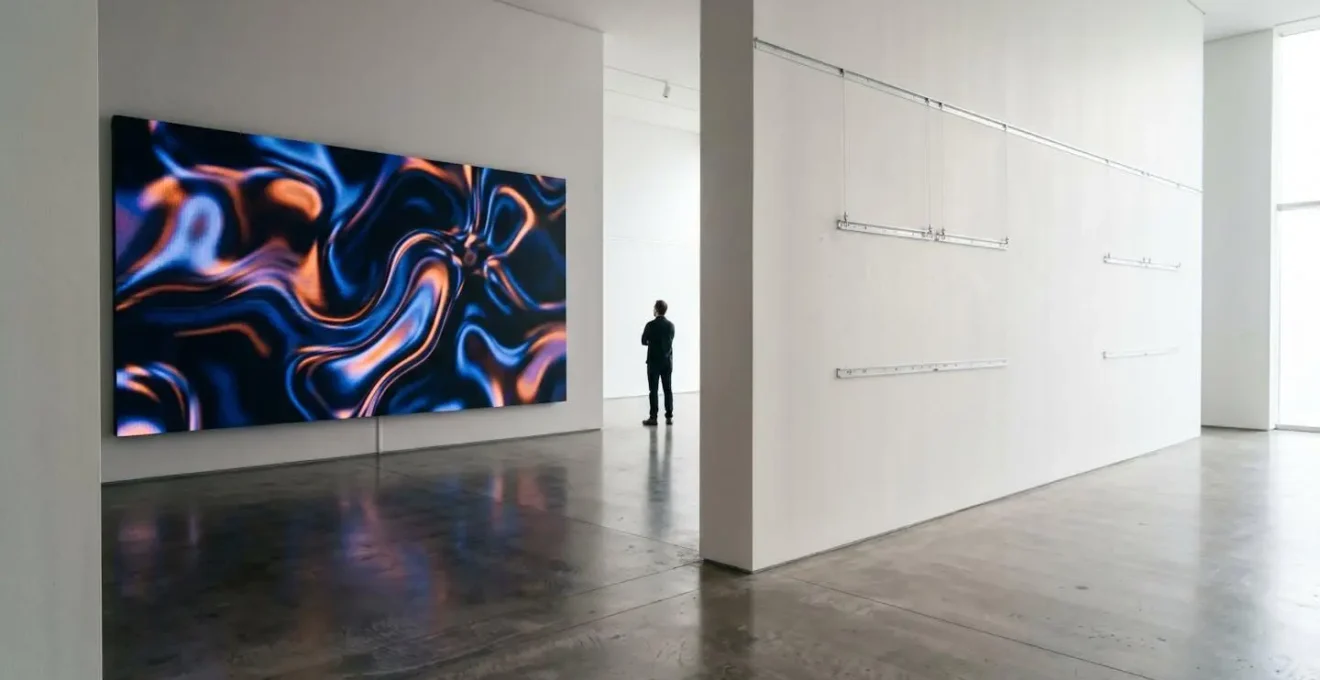
The art world’s pivot to screen-based work is not a personal rejection of painterly skill, but a systemic shift in how value, provenance, and collector engagement are defined. For the traditional British artist, the path forward isn’t to abandon their craft. It’s to strategically augment it with digital tools, reclaiming control over their career trajectory from a gallery system that is rapidly changing its rules.
There is a palpable anxiety spreading through the studios of traditionally trained painters across the UK. After years spent mastering the subtleties of oil on canvas, the viscosity of paint, and the alchemy of colour theory, a chilling realisation is dawning: the institutional goalposts have moved. Calls for exhibitions increasingly prioritise « new media, » gallerists speak a language of NFTs and projection, and major institutions seem to be dedicating ever-larger spaces to work that emits light rather than just reflecting it. The common advice—to simply « adapt to technology »—feels hollow, a dismissal of the very craft that defines one’s artistic identity.
This feeling of being sidelined is often mistaken for a simple, fleeting trend. Many artists hope to wait it out, believing that the pendulum will swing back to a pure appreciation of physical media. But what if this isn’t a trend? What if it’s a fundamental, systemic shift in the art market’s infrastructure? The key to navigating this new landscape is not to blindly resist or capitulate, but to understand the underlying economic and cultural forces at play. This analysis is not about learning to code; it’s about dissecting why a JPEG can have value, how digital tools can augment rather than replace painterly virtuosity, and when doubling down on traditional mastery becomes a powerful strategic choice in itself.
This article will deconstruct the tectonic plates moving beneath the art world. We will explore the institutional signals, the economic realities of gallery shows versus digital drops, the psychological friction of transitioning, and the strategic decisions that can define a painter’s career in the next decade. The goal is to replace anxiety with a clear-eyed strategy for career sovereignty.
Summary: The Painter’s New Playbook
- Why Did the Tate Modern Dedicate 40% More Floor Space to Digital Art This Year?
- How to Add Projection Mapping to Your Canvas Work Without Losing Painterly Integrity?
- Solo Gallery Show vs NFT Drop: Which Reaches More Collectors for Under £2,000?
- The Career Stall That Hits 70% of Traditional Artists After Their Third Solo Show
- When Should a Painter Refuse Digital Trends and Focus on Oil Mastery Instead?
- Why Did a JPEG Outsell a Francis Bacon Sketch at Phillips Last Autumn?
- Why Does Photoshop Feel Alienating When You Already Understand Colour Theory?
- Why Do Classically Trained Artists Fail Their First 3 Digital Projects?
Why Did the Tate Modern Dedicate 40% More Floor Space to Digital Art This Year?
The question in the title is, itself, a slight misdirection. The shift is even more dramatic. When Tate Modern opened its Blavatnik Building, it wasn’t a minor reshuffle. The expansion resulted in 60% more artworks from the Collection on display, with a significant portion of that new real estate deliberately allocated to what was once considered the fringe. This wasn’t an arbitrary curatorial whim; it was a powerful institutional signal acknowledging a fundamental change in artistic production. The space wasn’t just for more paintings, but for entirely new forms of expression that demand different environments: darkened rooms, specific acoustics, and digital infrastructure.
This move reflects a broader curatorial and critical consensus. As the editorial team at Artsy noted upon the opening, the new galleries represented a deliberate pivot. They wrote:
The new galleries demonstrate a decisive turn towards digital, aural, and live mediums as Tate opens its spaces to the most current genres of art.
– Artsy editorial team, The Magnificent New Tate Modern Opens with 50% Female Solos and More Non-Western Artists
For a painter, this can feel like a rejection. In reality, it is the institution catching up with the artists. The Tate’s decision is a lagging indicator of a systemic shift that has been occurring for years. Galleries and museums are not just showing art; they are validating it. By dedicating physical space to ephemeral media, they are confirming that value, significance, and cultural relevance are no longer exclusively tied to a physical, static object. This recognition is the primary reason the ground feels so unsteady under the feet of many traditional practitioners.
How to Add Projection Mapping to Your Canvas Work Without Losing Painterly Integrity?
The fear of digital tools often stems from the belief that they will erase the artist’s hand—the unique texture, the subtle imperfections, the very soul of a physical work. But this is a failure of imagination. The most compelling integrations of digital and traditional art don’t replace the canvas; they augment it. Projection mapping, for instance, can be approached not as a video playing *on* a painting, but as an ephemeral layer of glaze, a transient wash of light that interacts with the physical substance of the paint.
The key to maintaining painterly integrity is to treat the projected light with the same intentionality as a brushstroke. It should respond to the composition, colour, and, most importantly, the texture of the work beneath. This approach creates a dialogue between the permanent and the ephemeral, the physical and the digital. Consider how light can activate areas of thick impasto or sink into transparent glazes, creating a dynamic work that changes over time or in response to a viewer’s presence.
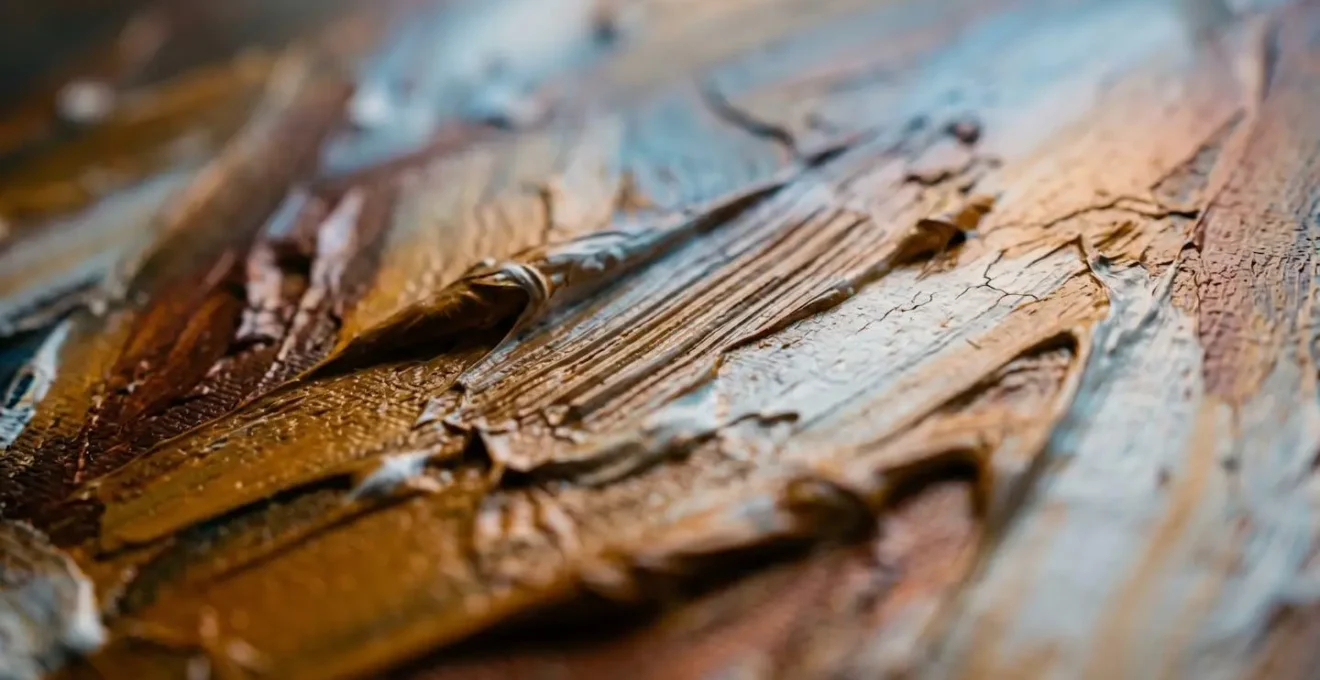
As the image above illustrates, the projected light becomes part of the painting’s material reality. It doesn’t flatten the surface; it accentuates its three-dimensionality. This is not about creating a screen, but about using light as a new kind of pigment. This concept of augmented virtuosity—where digital tools enhance, rather than supplant, traditional skill—is a powerful strategy for painters. It allows you to introduce elements of time, motion, and interactivity without sacrificing the material craft you’ve spent years honing. The canvas remains the anchor, the foundation upon which new, dynamic layers of meaning are built.
Solo Gallery Show vs NFT Drop: Which Reaches More Collectors for Under £2,000?
For an emerging artist, the financial barrier to entry into the traditional art market can be formidable. The dream of a solo gallery show often collides with the harsh reality of costs and commissions. Conversely, the world of NFTs, while shrouded in hype and technical jargon, presents a radically different economic model. A strategic comparison for an artist with a modest budget of under £2,000 reveals a stark contrast, shifting the conversation from « what is real art? » to « what is a sustainable business model? »
The single most disruptive factor is the commission structure. An analysis from industry experts highlights this disparity clearly. While traditional galleries typically take a 50% commission on primary sales, most NFT platforms operate on a much lower fee, often between 10-15%. This fundamentally alters the financial outcome for the artist, especially on lower-priced works. Beyond commission, the upfront costs diverge significantly, as a direct comparison shows.
The following breakdown, based on an industry analysis of NFT creation costs, compares the typical expenses for an emerging artist mounting a small show versus launching a modest NFT collection.
| Cost Category | Traditional Gallery Show | NFT Drop |
|---|---|---|
| Platform/Venue Commission | 50% of sales | 10-15% of sales |
| Upfront Minting/Setup Fees | £0 (gallery absorbs) | £0-£200 (gas fees variable) |
| Physical Production | £400-£800 (framing, printing) | £0 |
| Transport & Installation | £200-£400 | £0 |
| Marketing & Promotion | £300-£600 (opening event, printed materials) | £400-£800 (Discord management, Twitter ads, community building) |
| Resale Royalties | Rarely offered | 5-10% on secondary sales |
| Total Estimated Cost | £900-£1,800 + 50% commission | £400-£1,000 + 10-15% commission |
The table makes it plain: while a gallery absorbs some upfront risk, the artist pays dearly for it through commissions and still incurs significant costs for production and promotion. The NFT model, however, offers not only lower commissions but also the revolutionary potential of resale royalties. This prospect of earning from the secondary market grants artists a form of financial longevity that the traditional system has almost never provided. For an artist seeking career sovereignty, this economic argument is too powerful to ignore.
The Career Stall That Hits 70% of Traditional Artists After Their Third Solo Show
The provocative statistic in the title isn’t from a formal study, but it reflects a widely recognised pattern in the art world: the mid-career plateau. An artist can gain initial traction with one or two successful solo shows, but maintaining momentum is another challenge entirely. The gallery system, with its limited roster spots and demand for constant « newness, » often moves on. This is the point where many traditional artists feel their careers stall, stuck between being an « emerging » name and an « established » one. It is precisely at this juncture that the pivot to digital can act not as a desperate measure, but as a strategic catalyst for reinvention.
The fear of this transition is often rooted in the perceived learning curve. However, the reality is less daunting than it appears. Research on artists making this shift reveals that the process of achieving confident fluency, while retaining one’s unique artistic voice, typically requires 3-6 months of deliberate practice. This is because the foundational skills—colour theory, composition, form, and narrative—are entirely transferable. The challenge is not in learning art anew, but in adapting existing knowledge to a new set of tools.
Furthermore, the context of the digital art market is itself in flux. As digital art veteran Christopher Cant observes, the dynamic may be shifting in favour of traditionally skilled artists. He notes, « For the last couple of decades digital artists have been in greater and greater demand by the entertainment industry, and I think that particular pendulum is finally slowing down. » This slowdown in demand for purely commercial digital art creates a vacuum. It opens a space for artists with a fine art sensibility to enter the digital realm, bringing with them a depth and conceptual rigour that stands out. The career stall, therefore, can be reframed as an opportunity to leverage decades of painterly skill in a new arena, breaking the cycle of dependency on the traditional gallery calendar.
When Should a Painter Refuse Digital Trends and Focus on Oil Mastery Instead?
The argument for digital adaptation is not an argument for the universal obsolescence of traditional craft. In a market increasingly saturated with digital ephemera, a conscious and strategic refusal to engage can be a powerful act of positioning. Choosing to focus exclusively on mastering a physical medium like oil painting is not a Luddite retreat; it is a valid and potentially lucrative strategy, provided it is a deliberate choice rather than a fearful reaction. The key is to transform the perceived « disadvantage » of being non-digital into a mark of premium differentiation.
This path requires more than just continuing to paint as before. It demands a conscious effort to build a narrative around the value of craft, human touch, and material authenticity. It’s about making the process as important as the product. Instead of competing on the terms of the digital market (speed, scalability, global reach), you compete on grounds where digital is inherently weak: physical uniqueness, provenance demonstrated by human labour, and direct, personal connection. This involves a different set of business and marketing tactics designed to highlight the tangible and the real.
For painters who feel a deep, unshakable connection to their physical medium and find the digital world alienating, the answer may not be to force a transition. Instead, it is to double down on what makes their work unique. The following checklist outlines strategic actions for transforming traditional mastery into a distinct market advantage.
Action Plan: Auditing Your Commitment to Traditional Craft
- Document the Human Hand: Record your painting process. Use time-lapses and detailed shots to create accompanying content that proves human-made craft, creating a stark contrast to algorithmic or AI generation.
- Emphasise Physicality: Hand-embellish all prints sold. Make a deliberate move towards using traditional media like acrylics or oils in a way that highlights their unique material properties (texture, viscosity, sheen).
- Cultivate a Local Collector Base: Prioritise selling work face-to-face. Participate in local art fairs and studio tours to build deep, personal relationships with collectors who value the artist’s story as much as the art.
- Champion Quality Over Quantity: Embrace a slower, more deliberate creation process. Position your work as the result of time-intensive mastery, a quality that digital tools, designed for speed and volume, often struggle to replicate.
- Frame Mastery as the Ultimate Luxury: Actively position your traditional skill as a premium differentiator. In a market flooded with easily reproducible digital images, the demonstrably unique, physical object becomes a luxury good.
Choosing this path is an assertion of value. It is a declaration that in an age of digital abundance, the scarce, irreplaceable, and masterfully crafted physical object holds a unique and enduring power.
Why Did a JPEG Outsell a Francis Bacon Sketch at Phillips Last Autumn?
Events like a digital file outselling a drawing by a 20th-century master send shockwaves through the traditional art world, often leading to dismissive cries that « the market has lost its mind. » This reaction, however, misses the point entirely. It assumes both items were being judged by the same criteria and pursued by the same buyers. They were not. The sale doesn’t signal the death of drawing; it signals the arrival of a parallel value system built on entirely different principles.
The value of a Francis Bacon sketch is rooted in art history, connoisseurship, and physical provenance. Its worth is tied to the artist’s established legacy and the object’s tangible history. The value of a high-profile NFT, or « JPEG, » is rooted in verifiable digital scarcity, cultural relevance within a specific online community, and the radically transparent provenance of the blockchain. As Robert Norton, CEO of Verisart, explained in the wake of the NFT boom, the players themselves are different:
The people bidding $15 million for Beeple’s work at Christie’s aren’t traditional art collectors. They are people who have made money through cryptocurrency.
– Robert Norton, Verisart, ‘It’s Whiplash’: After a Record-Setting Run, NFT Artwork Prices Have Plummeted
This new class of collector operates within a native digital economy. For them, an asset’s value is authenticated not by a paper trail but by an immutable public ledger. The blockchain acts as the ultimate certificate of authenticity, solving the problem of reproduction that has plagued digital art for decades. It makes a specific file unique and ownable in a way that was previously impossible.
Understanding this is crucial. The JPEG didn’t win a fight against the sketch. They were competing in different sports. For the painter, this means recognising that digital art has its own logic of value, what can be called medium-agnostic value. The worth isn’t in the medium’s physical substance but in the certified, transparent, and culturally resonant story attached to it. It’s a paradigm shift from valuing the object to valuing the proof of ownership.
Why Does Photoshop Feel Alienating When You Already Understand Colour Theory?
For a classically trained painter, opening a program like Photoshop for the first time can be a deeply frustrating experience. You understand colour, light, and composition on a profound level, yet the tools feel clumsy and counter-intuitive. The disconnect doesn’t stem from a lack of artistic knowledge, but from a fundamental clash of workflows and the loss of tactile feedback. This is the psychological friction of transitioning from a physical to a digital medium.
Painting is a conversation between the hand, the eye, and the material. You feel the drag of a bristle brush, the slickness of oil, the absorption of water into paper. Your muscle memory is coded with these physical responses. Digital tools replace this with a smooth screen and a plastic stylus. The immediate, haptic loop is broken. The « Undo » command, while powerful, can also inhibit the happy accidents and intuitive mark-making that are central to many artists’ processes. The temptation to zoom in to an absurd degree, perfecting details no one will ever see, can kill the gestural energy of a piece.
The key to overcoming this alienation is to stop trying to make the digital tool perfectly mimic the physical one. Instead, the goal should be to translate the *principles* of your traditional practice into the new environment. This involves building a bridge between what you know and how the software operates. It’s not about finding the « perfect oil brush » preset; it’s about understanding how to achieve the *effect* of a soft edge or a transparent glaze using layers, masks, and opacity settings. You can remap your skills by focusing on these equivalences:
- Glazing and Washes: Instead of thinning paint, you use low-opacity brush strokes on new layers, using blend modes like ‘Multiply’ or ‘Color’ to achieve transparent colour interactions.
- Edge Control: The distinction between a hard and soft brush replaces the pressure and angle of a physical brush. Layer masks offer a non-destructive way to create precise edges, far more forgiving than scraping back wet paint.
- Palette Discipline: The infinite colour picker is a trap. A traditional painter’s strength is using a limited palette. You can replicate this by creating a small swatch of colours and using the eyedropper tool to mix and sample from within your own digital « palette. »
- Mark-Making: The gesture and energy of your hand can be translated by focusing on the pressure and tilt functions of a good stylus, varying line weight and opacity in a single, fluid stroke.
By focusing on translating concepts rather than replicating tools, you begin to build new muscle memory. You start working *with* the logic of the software, rather than fighting against it, allowing your deep understanding of art-making to finally express itself through the new medium.
Key Takeaways
- Institutional Validation: Major museums like the Tate are not just experimenting; they are structurally adapting to digital, aural, and live art forms, signalling a permanent shift.
- Economic Sovereignty: NFT platforms offer a powerful alternative to the traditional gallery model with significantly lower commissions (10-15% vs. 50%) and the potential for resale royalties.
- Strategic Adaptation: The choice is not simply « paint vs. pixel. » It’s about strategy—either augmenting physical work with digital layers or doubling down on traditional mastery as a premium differentiator.
Why Do Classically Trained Artists Fail Their First 3 Digital Projects?
Failure is an integral part of any learning process, but for an accomplished painter, the initial stumbles in the digital realm can feel particularly jarring and discouraging. It’s common for the first few attempts at digital art to feel sterile, « cheesy, » or simply a poor imitation of their physical work. This is not a sign of incompetence, but a predictable phase in the transition. Understanding the common pitfalls is the first step to moving past them and normalising the experience of being a beginner again, even as a master of another medium.
One of the most common traps is the seduction of digital shortcuts. A revealing testimony from a professional artist who transitioned in the 1980s perfectly captures this early pitfall: « ‘Two things I remember: Being seduced by the filters and other instant features and not realizing how cheesy it looked. Being glad to have a mess-free medium in which to create.' » This highlights the core mistake: relying on pre-packaged effects (lens flares, gradients, texture filters) instead of building an image from foundational principles. These shortcuts promise instant gratification but bypass the development of fundamental digital technique, resulting in work that lacks intent and personal style.
The second major cause of failure is unrealistic expectations about the timeline. While artistic principles transfer, technical fluency takes time. It is a process of building new motor skills and a new intuitive understanding of a toolset. Trying to create a masterpiece on day one is a recipe for frustration. Instead, the focus should be on deliberate practice and small, achievable goals. Setting a realistic timeframe is critical; as expert analysis indicates, it takes around 3-6 months for a skilled artist to achieve confident fluency while retaining their traditional voice. Accepting that the first projects are exercises, not portfolio pieces, allows for the freedom to experiment, make mistakes, and gradually build the skills needed to translate a mature artistic vision into the digital space.
The art world is not demanding that painters throw away their brushes. It is, however, rewriting the rules of value, visibility, and career progression. For the British artist standing at this crossroads, the choice is not a binary one between the canvas and the screen. The true path forward lies in strategic agency—in understanding these systemic shifts and making conscious decisions. Whether it’s by augmenting physical work with digital layers, leveraging new economic models for greater sovereignty, or defiantly championing the mastery of traditional craft as the ultimate luxury, the power remains where it always has: in the artist’s hands.